
Washdown areas are hard on casters. In food processing, pharmaceutical, beverage and chemical plants, most caster failures we see are not load failures at all — they are corrosion failures. A caster rated for 300 kg can still seize solid within six months because water, detergent and sanitizer worked their way into the swivel raceway and the bearing. The frame looked fine on the outside, right up until the cart stopped steering.
This guide explains why standard casters fail in wet environments, what a genuine stainless steel caster is made of, and how to specify brackets, bearings, wheels and brakes so the caster survives years of cleaning cycles instead of months.
1. Why Standard Casters Fail in Wet and Washdown Areas
Water alone is survivable. What destroys casters is the combination of water, cleaning chemicals, heat and mechanical agitation that a washdown cycle delivers two or three times a day.
- Coating failure at the mounting plate. Zinc plating and powder coating are barriers, not materials. Bolts, brackets and mounting plates rub against each other, the coating chips at the highest-stress points, and rust starts exactly where the caster carries the most load.
- Grease washout. A standard lithium grease is not water resistant. Detergent penetrates the raceway, emulsifies the grease, and the balls run on a water film instead of a lubricant film.
- Open raceways and open bearings.
- Galvanic corrosion between dissimilar metals. A stainless bracket with a zinc-plated axle is a battery in a wet environment. The zinc becomes the sacrificial anode and disappears.
The pattern is consistent: swivel action gets stiff first, then noisy, then the wheel stops turning while the cart is under load — usually at the worst possible moment for production.
2. What a “Stainless Steel Caster” Actually Means
Suppliers label a caster “stainless” when one part of it is stainless. Before you compare prices, confirm all four of these:
| Component | What to ask for |
| Bracket / fork | 304 or 316 stainless, formed and welded, no painted edges |
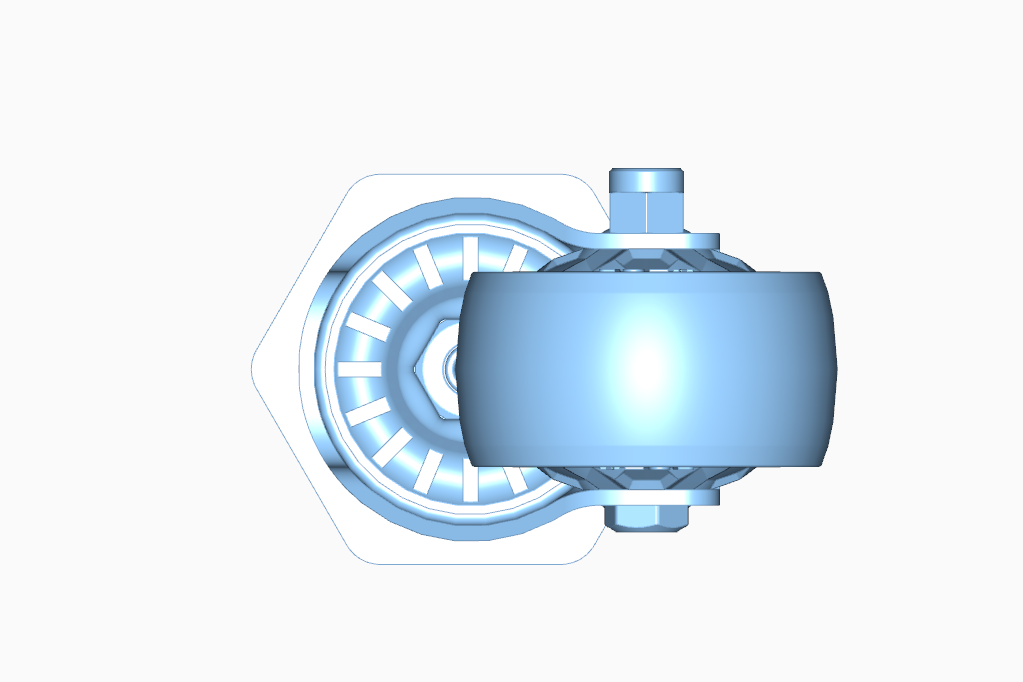
| Swivel raceway | Double-row ball race in stainless, with a lip seal and grease nipple |
| Axle and nut | Stainless axle, stainless nyloc nut — not zinc-plated |
| Bearing | Sealed (2RS) stainless or food-grade grease packed |
304 vs 316. 304 handles potable water, most detergents and general washdown duty and is the practical default for food and beverage plants. Move to 316 when chlorides are present — brine, dairy, seafood, saline cleaning agents, or coastal plants — because chloride pitting attacks 304 quickly. 316 costs roughly 30–50% more, so specify it only where the chemistry demands it.
3. Sealed Bearings and Raceway Protection
The bearing is where water does its damage fastest. Three specifications matter:
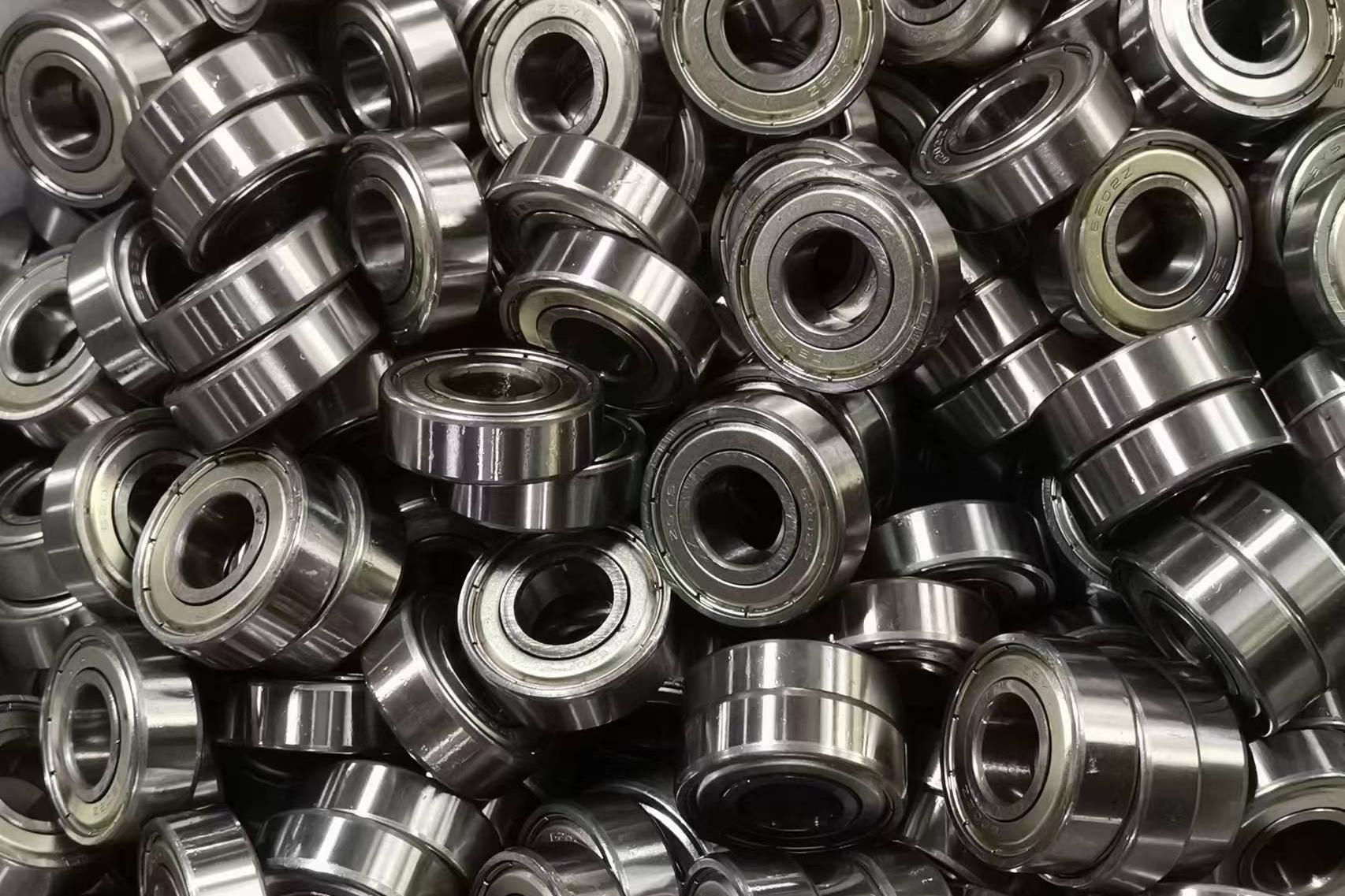
- Sealed, not shielded. A metal shield slows dust but not water. A rubber lip seal (2RS) keeps liquid out and grease in, and it is the minimum for any washdown area.
- Stainless or coated bearing rings. Standard chrome steel rings will spot-rust in a wet caster even when sealed, simply from condensation during cleaning cycles.
- Roller vs ball. Ball bearings give lower push force and quieter running; roller bearings take higher radial loads and tolerate shock better but roll harder. For carts under 400 kg per caster, ball bearings are usually the better trade.
The swivel raceway deserves equal attention. A double-row ball race with a lip seal, a grease fitting and a stainless kingpin is the configuration that survives years of washdown. Single-row open raceways will develop play within a season, and once the raceway has play, the caster starts to shimmy and the brake alignment goes off.
4. Choosing the Wheel Compound for Wet Floors
Stainless hardware solves half the problem. The wheel compound decides the other half — grip, noise, floor marking and how the wheel behaves when the floor is wet.
| Compound | Wet-floor behaviour | Best use |
| Polyurethane (PU) | Excellent water and oil resistance, non-marking, does not absorb water | Food, pharma, washdown, mixed wet/dry floors |
| Nylon / PA6 | No water absorption, but low wet grip and the loudest option | High-load dry areas, not washdown zones |
| Rubber / TPR | Good grip, quiet, but swells and degrades with some chemicals | Quiet transport on dry floors, light chemical exposure |
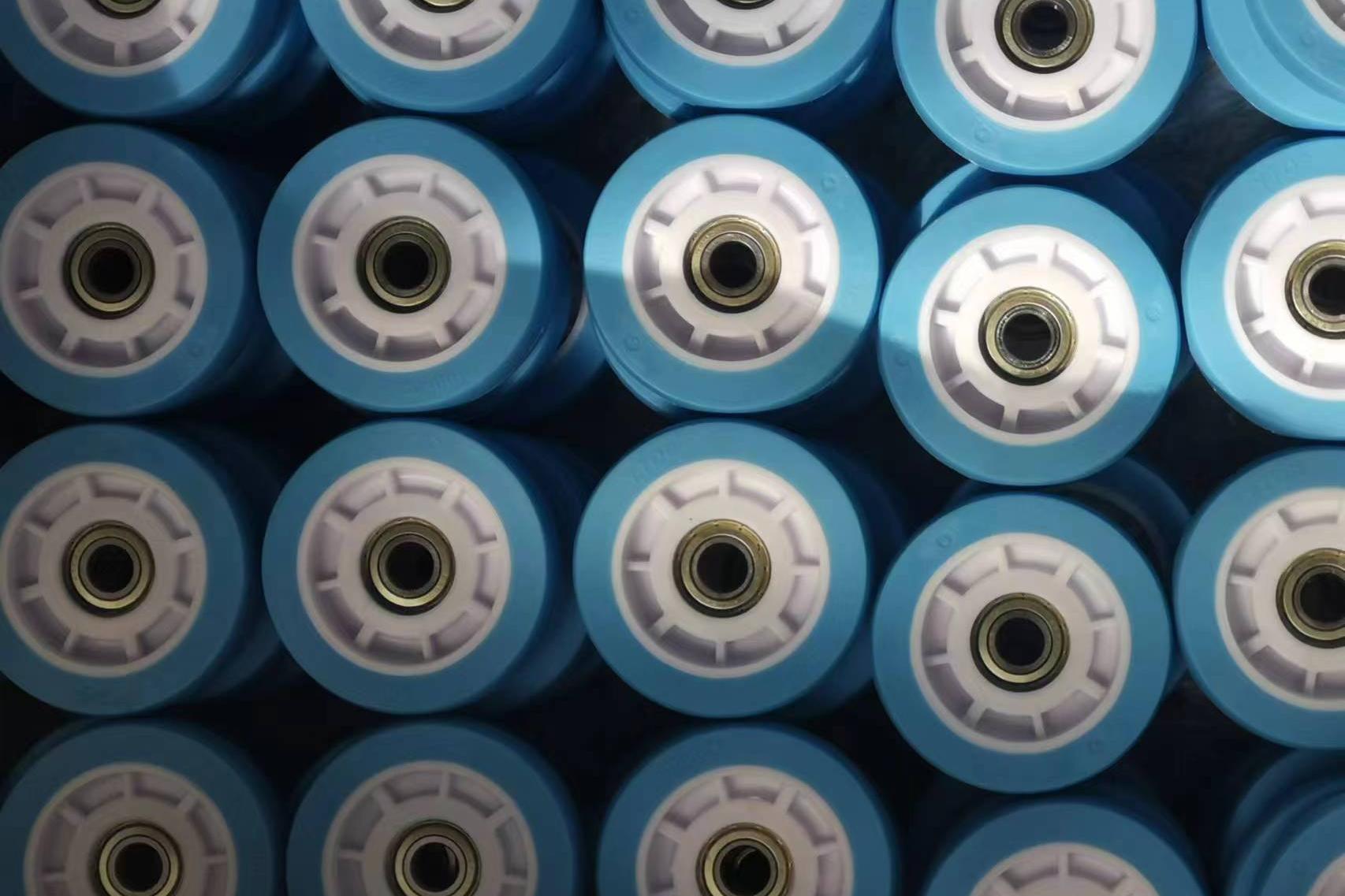
For washdown duty, PU at 92–95 Shore A is the default: it does not absorb water, does not mark epoxy floors, and holds up against dilute acids and alkaline cleaners. Where the load is heavy and the floor dry, nylon wins on push force. Where noise matters more than chemical resistance, TPR is the quiet option.
5. Load Ratings, Mounting and Brake Options
A caster’s published load rating is a dry, static-room number. In a washdown environment, derate it by 20–25% and then apply the normal four-wheel rule: assume only three wheels carry the load on an uneven floor, so the cart capacity is roughly three times the per-caster rating, not four.
Mounting details fail quietly in wet areas. Use stainless bolts of the correct grade, a plate that fully contacts the frame, and a thread-locking compound rather than a split washer. Threaded-stem casters are common on racks and shelving; plate casters are standard for carts and cabinets. Whichever you choose, the mounting interface is the first place water sits.
For brakes, specify a stainless pedal and stainless linkage. A total-lock brake that locks both the wheel and the swivel is the right choice for washdown carts — a wheel-only brake still allows the cart to rotate around the locked wheel on a wet floor. Check that the brake arm can be operated with a wet or gloved hand.
6. Cleaning, Sanitation and Maintenance
- Design out the crevices. Smooth brackets, no exposed threads, no blind holes facing upward. Every recess catches product residue and is a sanitation risk.
- Drain paths. A caster that holds water inside the fork keeps the bearing wet long after the washdown ends.
- Do not steam-clean sealed bearings directly. High-pressure steam at close range will push past any lip seal. Use a lower-pressure rinse at the caster and dry the area.
- Re-grease on a schedule. Two or three pump strokes of food-grade grease through the raceway fitting every quarter prevents the grease-washout failure mode entirely.
- Inspect quarterly: swivel play, wheel wobble, brake engagement, and rust at the plate interface. Catch it at the “stiff” stage, not the seized stage.
7. Selection Checklist
- Confirm the chemistry: water only, detergents, or chlorides? Chlorides mean 316.
- Confirm temperature: standard washdown 0–70°C; steam or hot wash needs high-temperature bearings and grease.
- Calculate the real load: cart + product weight, divided by three wheels, with a 20% wet-environment derate.
- Specify sealed stainless bearings and a sealed double-row swivel raceway.
- Choose PU for wet and non-marking duty, nylon for heavy dry loads, TPR for quiet.
- Require a total-lock stainless brake if the cart is parked on wet or sloped floors.
- Plan the maintenance: grease fittings, quarterly inspection, food-grade lubricant.
Related Reading
Looking for more in-depth caster guides and industrial mobility resources? Explore these related articles:
- Acid and Alkali Corrosion in Electroplating Workshops — how aggressive chemicals attack caster hardware, and which materials survive.
- What Is 8-Level Powder Coating? — a practical look at coating grades and where coating protection ends and stainless steel begins.
Explore our complete range of heavy-duty casters (150-610kg) and super heavy-duty casters (700-1600kg) for diverse industrial applications, or contact our engineering team for expert caster application knowledge and selection guidance.
Post time: Nov-10-2026