
Excavators, loaders and road rollers don’t ship with casters — but the tool carts, parts transport vehicles and mobile work platforms that support them on site certainly do. Construction sites are nothing like a workshop floor, and caster selection cannot copy workshop standards.
Site floors are the starting point. Mud, gravel and potholes swallow ordinary workshop wheels. Impact loads from loading bounce far exceed static figures — the instantaneous force during a sudden stop or start can be twice the rated load. Dust is heavy and turns to mud when wet, continuously testing bearing and swivel sealing. Stack these together and supporting equipment casters must be chosen for “special working conditions,” not catalog averages.
Tread: Follow the Floor
Tread material selection follows the ground. Large solid rubber wheels absorb impact and handle gravel — a common choice for site tool carts. Heavy polyurethane wheels wear slowly and carry high loads, suiting hard floors and heavy duty. Pneumatic wheels cushion well and cross muddy ground, but puncture easily — decide based on whether sharp gravel is present. If the site is mostly gravel and mud, solid rubber or heavy polyurethane is generally more reliable; if the surface is well compacted, polyurethane’s wear advantage pays off.
Wheel Diameter: Lean Large
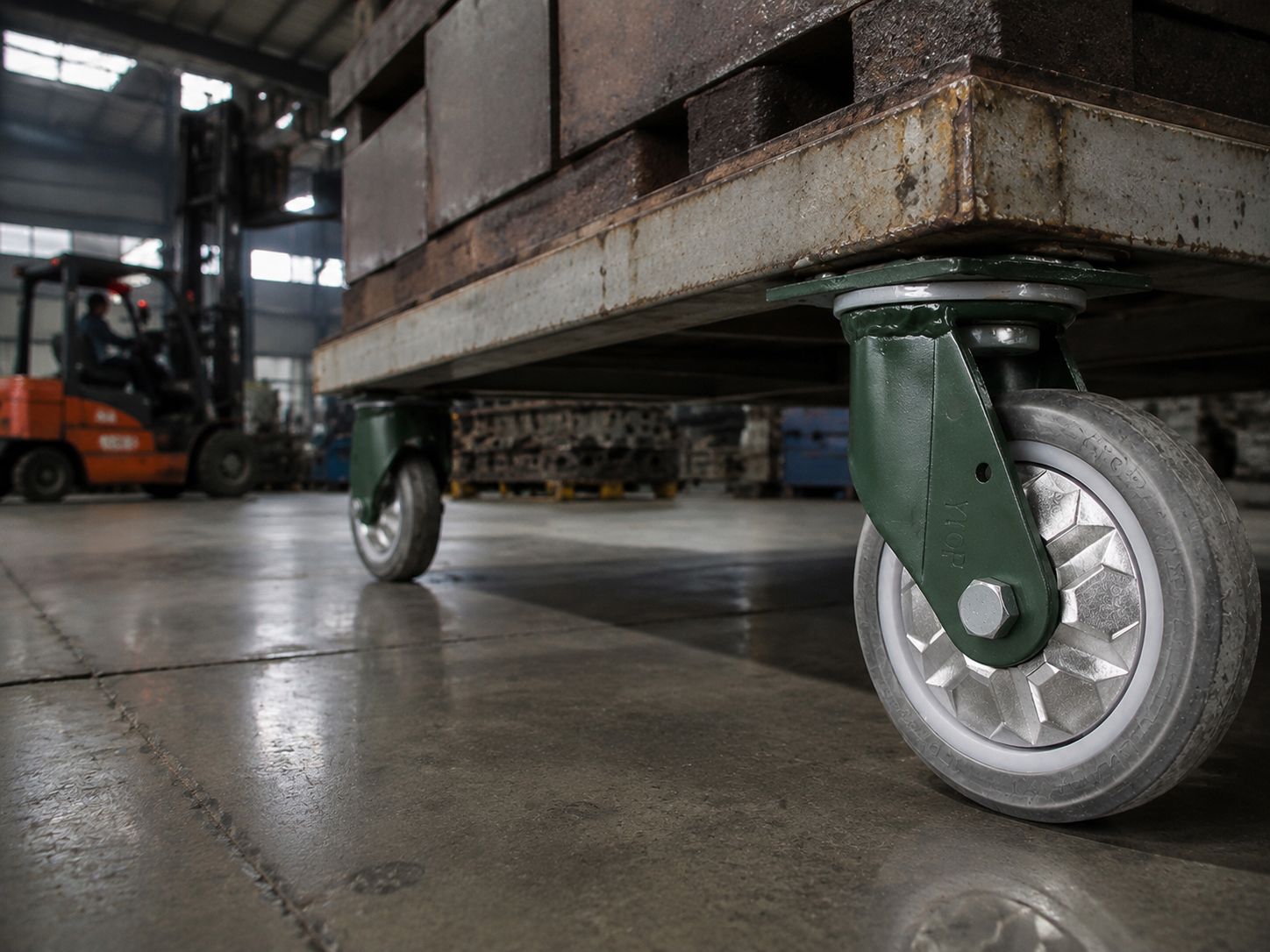
On construction sites, err toward larger diameters. Large wheels cross obstacles better and rarely jam on potholes and gravel piles. Small diameters are fine on flat workshop floors, but “it won’t push” on a site is usually a diameter problem. Going larger means the bracket and bearing specifications must keep up too — otherwise the mechanical advantage turns into structural wear.
Bracket Strength: Size for Impact, Not Static Load
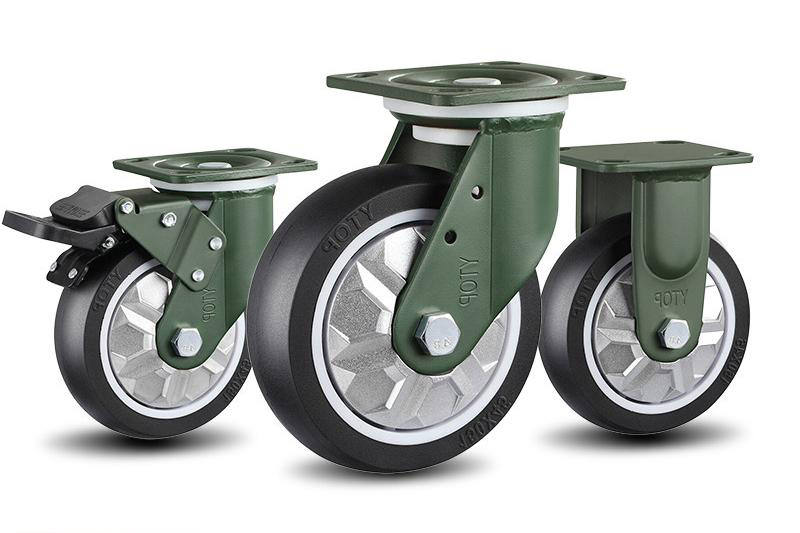
Bracket strength must be calculated against impact load, not just static load. Bouncing and impact hit the bracket repeatedly; size it by static load and bracket life drops noticeably. The mounting base plate sees concentrated force under heavy impact — thickened base plates hold load more stably than standard ones.
Sealing Decides Service Life
Sealing is the single biggest lever on site caster life. Sealed bearings keep dust and mud out and last far longer than open bearings. If the swivel is unsealed, mud enters and steering stiffens — in severe cases the wheel simply stops turning. Surface protection matters just as much: powder coating or galvanizing does not rust readily after getting wet and clearly extends service life.
Common Selection Mistake
The usual error is applying workshop standards to site conditions. Workshop floors are flat, loads stable and the environment clean, so selection is simple. Sites are harsh, impact is heavy and mud is everywhere — the same wheel may fail within two to three months. Select by impact load and harsh environment, lean toward larger diameter, seal properly, and leave margin in structural strength. Only then will site casters last a full replacement cycle.
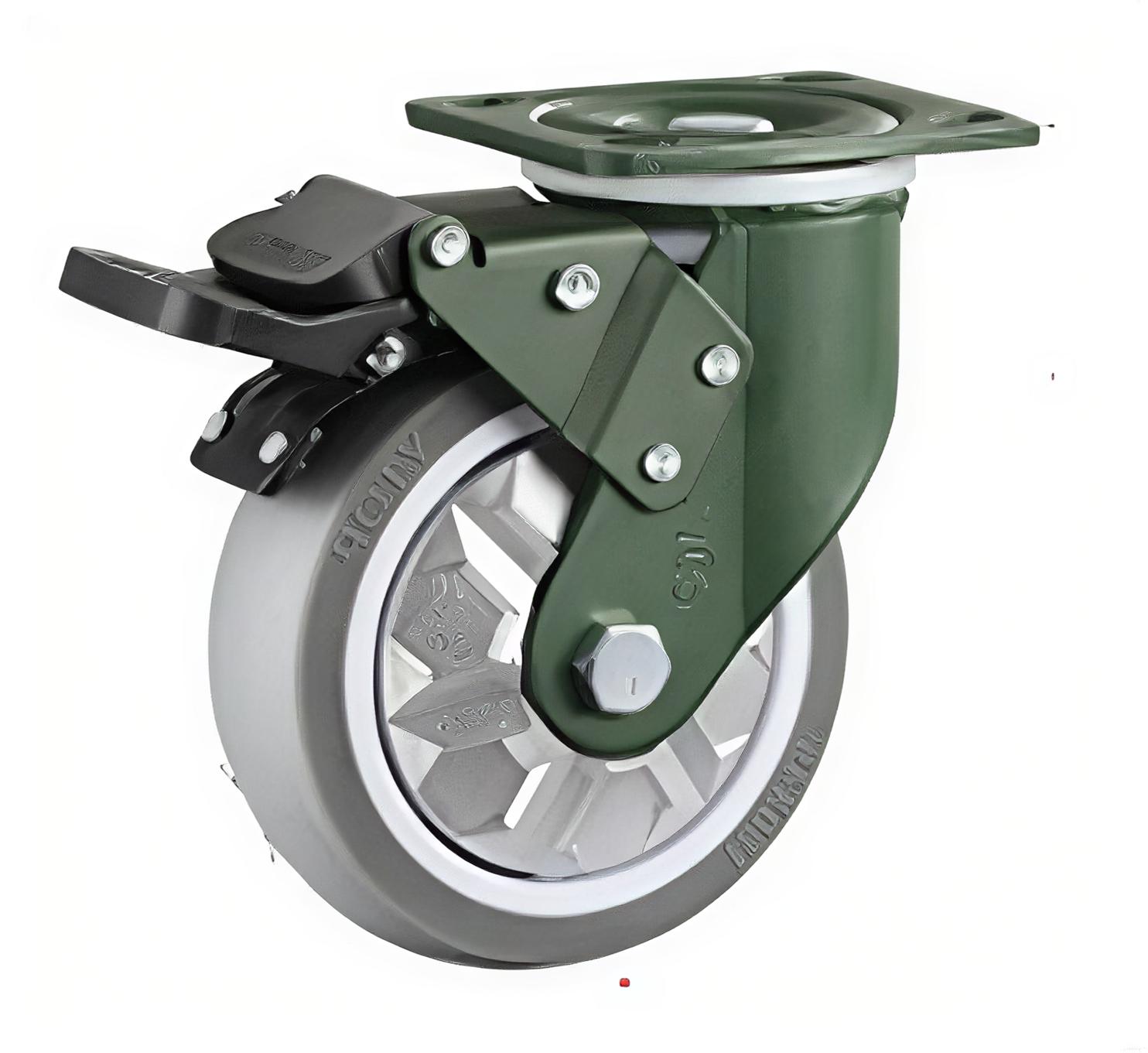
Zhuoye manganese steel casters for construction machinery support equipment are specified the same way: impact load and harsh environment first. Report your site floor conditions, load magnitude and operating environment, and the manufacturer can configure for the real duty cycle — far more reliable than ordering by workshop standards.
Related Reading
Looking for more in-depth caster guides and industrial mobility resources? Explore these related articles:
- Casters for Mine Tunnel Transport: Impact-Resistant Heavy-Duty Solutions — How impact duty changes caster specification.
- Caster Wheel Diameter: Large vs Small for Obstacle Crossing — The physics behind choosing a larger wheel.
Explore our super heavy-duty casters (700-1600kg) built for impact duty, or contact our engineering team for construction site caster selection.
Post time: Nov-09-2026