
When purchasing, it is tempting to calculate simply: this wheel is 20 yuan cheaper, so buy this one. That account is far too short. Casters are consumables, and their real cost is not the purchase moment — it is everything spent across their entire service life. The industry calls this TCO (Total Cost of Ownership). Once you run the full cycle, many “cheap” wheels turn out to be the most expensive option.
What Is TCO? Calculate the Full Bill
TCO is not the unit purchase price — it is the sum of every expense from installation to scrapping. The basic formula:
TCO = Purchase price + (Replacement labor × Replacement count) + Downtime loss + Maintenance consumables
Buying a cheap wheel saves 20 yuan upfront, but if it fails three times a year and each replacement costs 200 yuan in labor and downtime, that 20 yuan saving disappears within the first few months — and keeps losing money afterward.
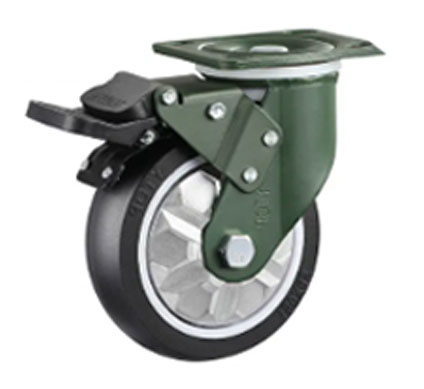
Why Solid Configuration Costs Less Over 3 Years
Using a 3-year cycle with example numbers (the logic holds regardless of exact figures):
| Cost Item | Low-Price Wheel | Solid Configuration Wheel |
| — | — | — |
| Purchase price per wheel | 40 yuan | 90 yuan |
| Replacements in 3 years | 6 times | 2 times |
| Labor + downtime per replacement | 80 yuan | 80 yuan |
| **3-year total cost** | **40×6 + 80×6 = 720 yuan** | **90×2 + 80×2 = 340 yuan** |
Same three years, and the cheap wheel’s total cost is more than double. The more demanding the working conditions, the wider this gap becomes.
Where Durability Comes From
To judge whether a caster will last, look at four points:
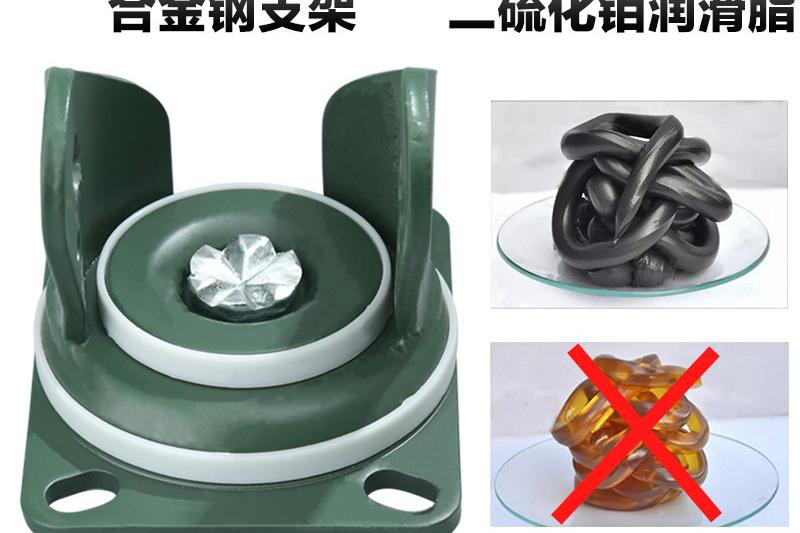
• Base material strength — does it deform under rated load?
• Surface corrosion protection — does it rust and seize in humid or oily environments?
• Bearing lubrication quality — how long until the bearing needs re-greasing?
• Batch consistency — is every wheel the same, or does quality vary from batch to batch?
Casters that pass all four points typically need fewer replacements and less maintenance. Batch consistency is especially important: one bad batch of wheels causing unexpected downtime costs far more than the per-unit price difference between suppliers.
Build a Simple Caster Ledger
Concepts alone are not enough — you need your own data. The ledger does not need to be complex; three columns suffice:
• Purchase price — how much per wheel
• Replacement date — month and year replaced
• Failure reason — worn tread, rusted bracket, or seized bearing
After one year of recording, which workstation’s casters are burning money and which configuration offers the best value becomes immediately visible. This data is far more reliable than comparing unit prices on a quote sheet.
Procurement Recommendation
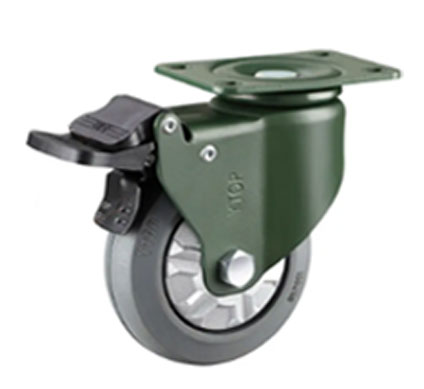
When calculating by full life cycle, durability is the real money-saver. Before purchasing, run a three-year TCO calculation: unit price, expected replacement frequency, per-replacement cost, and downtime loss — fill in all four, then decide.
For heavy-load, high-frequency, and harsh-environment applications, never use unit price as the sole criterion. The price premium on a quality caster is recovered by a single avoided downtime event. Zhuoye manganese steel casters’ durability under heavy and high-frequency conditions should be verified against actual working conditions and ledger data, not judged by the material name alone.
Related Reading
Looking for more in-depth caster guides and industrial mobility resources? Explore these related articles:
- When Should Worn Casters Be Replaced? Scrap Standards Guide — Know the exact wear thresholds to avoid premature or delayed replacement.
- Caster Load Capacity Classes: Light, Medium, Heavy, Extra-Heavy Explained — Match the load rating to your actual load to avoid premature failure.
Explore our heavy-duty casters built for long service life, or contact our engineering team for a TCO analysis tailored to your application.
Post time: Nov-04-2026