
Regarding the manufacturing process of caster bracket, the following steps need to be followed rigorously and standardized. The caster bracket is a critical component that provides structural support, load distribution, and mounting interface for caster wheels. The quality and precision of bracket manufacturing directly impact caster performance, load capacity, durability, and service life. This article covers the key steps in the caster bracket manufacturing process, from design and material selection through fabrication, surface treatment, and quality control.
Introduction to Caster Bracket Manufacturing
The caster bracket is the structural component that connects the wheel to the equipment, providing support, load distribution, and mobility. Bracket manufacturing is a precision process that requires careful attention to design, material selection, fabrication techniques, and quality control to ensure that the final product meets the required specifications for load capacity, durability, and performance. The manufacturing process typically involves several distinct stages, each with its own requirements and quality standards. Rigorous adherence to standardized processes at each stage is essential for producing high-quality caster brackets that perform reliably in demanding applications.
The importance of caster bracket quality cannot be overstated. The bracket is responsible for transferring the load from the equipment to the wheel, and any weakness or defect in the bracket can lead to premature failure, equipment damage, or safety hazards. Bracket design and manufacturing must account for factors including static and dynamic load conditions, impact forces, fatigue resistance, corrosion protection, and compatibility with wheel and bearing components. By following rigorous and standardized manufacturing processes, caster manufacturers can ensure that their brackets meet the highest quality standards and provide reliable performance in the field.
Design and Engineering Phase
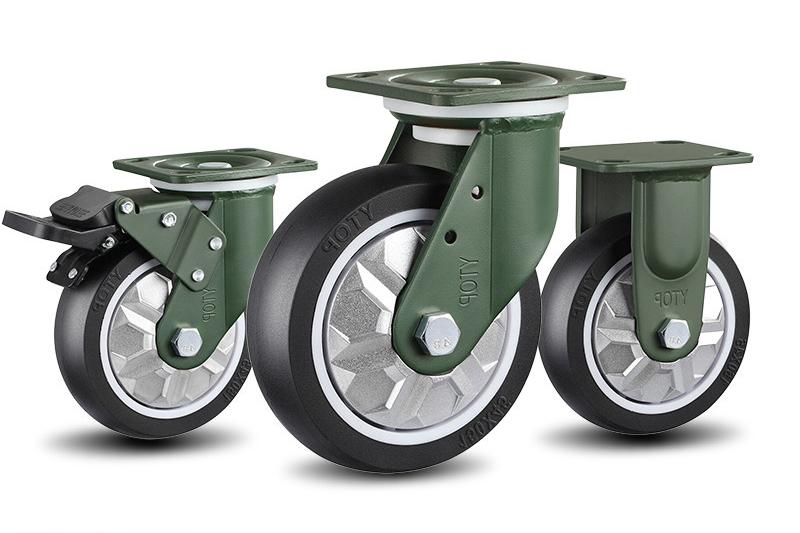
First, according to the actual use of the demand for the design of caster bracket. In the design process, we need to fully consider the weight of the equipment, the use of the environment and mobility requirements and other factors. Accurate design is the key to ensure that the caster bracket can meet the actual use requirements. The design phase typically involves engineering analysis including load calculations, stress analysis, fatigue life prediction, and dimensional compatibility with equipment mounting interfaces and wheel components. Computer-aided design (CAD) and finite element analysis (FEA) tools are commonly used to optimize bracket design for strength, weight, and manufacturability.
Key design considerations include the required load capacity (both static and dynamic), the intended application environment (temperature, moisture, chemical exposure, floor conditions), the required mobility characteristics (swivel radius, turning radius, maneuverability), the mounting type and dimensions (top plate, stem, bolt hole pattern), the wheel size and bearing compatibility, and any special requirements such as brakes, locks, or shock absorption. The design must also account for manufacturing feasibility, including material availability, forming capabilities, welding requirements, and surface treatment compatibility. By carefully considering all these factors during the design phase, engineers can create caster bracket designs that meet performance requirements while being efficient and cost-effective to manufacture.
Material Selection
Steel Grade Options for Brackets
Material selection is a critical step in caster bracket manufacturing that significantly impacts the strength, durability, corrosion resistance, and cost of the final product. The most common material for caster brackets is steel, with various grades and formulations available depending on the application requirements. Carbon steel is commonly used for standard duty applications, offering good strength and formability at a reasonable cost. High-strength steel or manganese steel may be used for heavy duty applications requiring enhanced strength, wear resistance, and impact resistance. Stainless steel is used for applications requiring corrosion resistance, such as food service, medical, or marine environments. Aluminum may be used for lightweight applications where weight reduction is a priority, although aluminum typically has lower load capacity than steel.
Material selection must consider factors including the required load capacity and strength, the operating environment and corrosion resistance requirements, the expected service life and durability, the manufacturing process compatibility (forming, welding, surface treatment), the weight requirements, and the cost constraints. The material must also be compatible with the selected surface treatment process, whether that is powder coating, zinc plating, chrome plating, or other finishing methods. Material certification and traceability are important quality considerations, particularly for critical applications where material properties must be verified. By selecting the appropriate material for each application, manufacturers can ensure that caster brackets provide the required strength, durability, and corrosion resistance while optimizing cost and performance.
Cutting and Forming Process
The cutting and forming process transforms raw material into the basic shape of the caster bracket. Cutting is typically performed using methods such as shearing, blanking, laser cutting, plasma cutting, or waterjet cutting, depending on the material thickness, required precision, and production volume. Shearing and blanking are commonly used for high-volume production of standard bracket designs, offering efficient material utilization and consistent dimensional accuracy. Laser cutting provides high precision and flexibility for complex shapes or low-volume production, while plasma cutting is suitable for thicker materials. The cutting process must ensure clean, burr-free edges and accurate dimensions that meet the design specifications.
After cutting, the material is formed into the three-dimensional shape of the caster bracket using processes such as bending, stamping, deep drawing, or roll forming. Bending is used to create the basic bracket shape, including the mounting plate, vertical support, and wheel fork arms. Stamping may be used to create features such as reinforcement ribs, mounting holes, or decorative elements. Deep drawing may be used for complex bracket shapes that require significant material deformation. The forming process must be carefully controlled to ensure accurate dimensions, consistent angles, proper material flow, and avoidance of defects such as cracking, wrinkling, or excessive thinning. Press brakes, stamping presses, and specialized forming equipment are used to achieve the required shapes with consistent quality. Proper tooling design and maintenance are essential for ensuring consistent forming quality over production runs.
Welding and Assembly
Welding Techniques and Fixturing
Welding and assembly join the various components of the caster bracket into a complete, structurally sound assembly. Many caster bracket designs require welding to join components such as the mounting plate to the vertical support, the swivel raceway to the bracket, or reinforcement elements to the main structure. Common welding methods include MIG (Metal Inert Gas) welding, TIG (Tungsten Inert Gas) welding, spot welding, and projection welding, each with its own advantages and suitable applications. MIG welding is commonly used for general bracket assembly, offering good strength and efficiency. TIG welding provides high-quality, precise welds for critical applications or thin materials. Spot welding and projection welding are used for joining sheet metal components efficiently in high-volume production.
Welding quality is critical for caster bracket structural integrity, as weld defects can lead to premature failure under load. Welding procedures must be qualified and welders must be certified to ensure consistent quality. Weld inspection may include visual inspection, dimensional verification, non-destructive testing (such as magnetic particle inspection or ultrasonic testing for critical applications), and destructive testing of sample welds. After welding, the bracket assembly may require additional processes such as grinding or deburring to remove weld spatter, smooth weld beads, and prepare surfaces for finishing. Assembly may also include installation of components such as swivel raceways, bearings, bushings, grease fittings, or brake mechanisms. Proper assembly techniques and torque specifications must be followed to ensure that all components are securely installed and function correctly.
Surface Treatment and Finishing
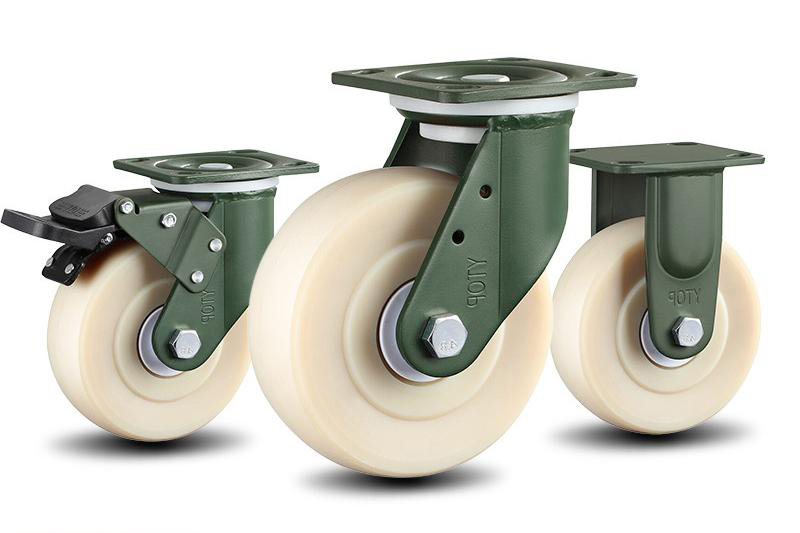
Surface treatment and finishing protect the caster bracket from corrosion, enhance its appearance, and improve its durability in service environments. The most common surface treatment for caster brackets is powder coating, which involves applying a dry powder coating to the bracket surface and then curing it under heat to form a durable, protective finish. Powder coating offers excellent corrosion resistance, good durability, a wide range of color options, and environmental advantages over liquid painting. Other common surface treatments include zinc plating (electroplating or hot-dip galvanizing), which provides good corrosion protection through a sacrificial zinc layer; chrome plating, which provides a decorative, highly corrosion-resistant finish; and e-coating (electrophoretic coating), which provides excellent coverage and corrosion protection, often used as a primer under powder coating.
Proper surface preparation is essential for ensuring good coating adhesion and corrosion protection. Surface preparation typically includes cleaning to remove oil, grease, and contaminants; rinsing to remove cleaning residues; acid pickling or phosphating to remove rust and create a conversion coating; and drying before coating application. The surface treatment process must be carefully controlled to ensure consistent coating thickness, proper adhesion, complete coverage (including recessed areas and corners), and freedom from defects such as runs, sags, pinholes, or orange peel. Quality control for surface treatment may include coating thickness measurement, adhesion testing, salt spray testing for corrosion resistance, and visual inspection for appearance and defects. Proper surface treatment ensures that caster brackets maintain their appearance and structural integrity throughout their service life, even in challenging environmental conditions.
Quality Control and Testing
Quality control and testing are essential throughout the caster bracket manufacturing process to ensure that the final product meets the required specifications and performance standards. Quality control begins with incoming material inspection, including verification of material certifications, dimensional checks, and visual inspection for defects. In-process quality control monitors each manufacturing step, including cutting dimensions, forming angles and radii, weld quality, surface preparation, and coating thickness. Final inspection verifies that completed brackets meet all dimensional, visual, and performance requirements before shipment.
Performance testing may include load testing to verify that brackets can withstand the rated static and dynamic loads without deformation or failure; fatigue testing to verify long-term durability under repeated loading; impact testing to verify resistance to shock loads; corrosion testing (typically salt spray testing) to verify corrosion resistance of surface treatments; and functional testing to verify proper operation of swivel mechanisms, brakes, or other functional components. Testing may be performed on a sampling basis for routine production or on 100% basis for critical applications. Detailed quality records and traceability are maintained for each production batch, including material certifications, process parameters, inspection results, and test reports. By implementing rigorous quality control and testing throughout the manufacturing process, caster manufacturers can ensure consistent product quality, reliable performance, and customer satisfaction.
Conclusion
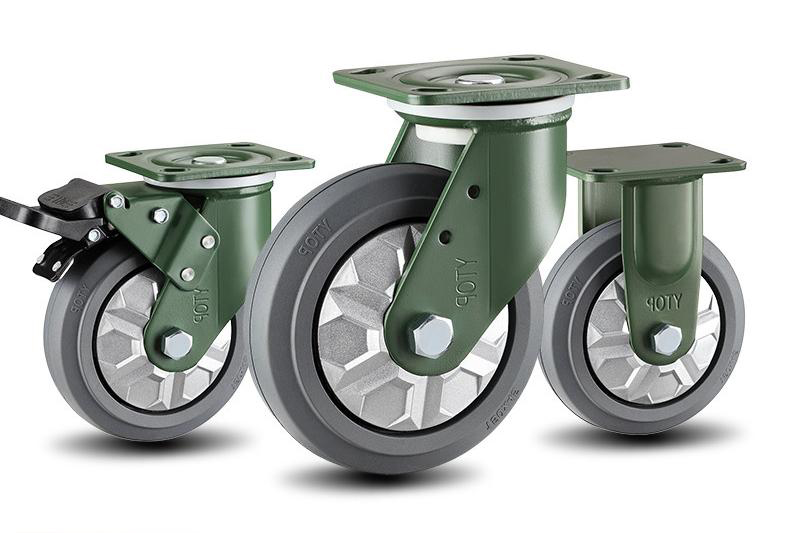
The manufacturing process of caster brackets is a complex, multi-stage process that requires rigorous attention to design, material selection, fabrication, assembly, surface treatment, and quality control. Each stage of the process contributes to the final quality, performance, and durability of the caster bracket. By following standardized, rigorous manufacturing processes and implementing comprehensive quality control measures, caster manufacturers can produce high-quality brackets that meet the demanding requirements of industrial and commercial applications. The investment in proper manufacturing processes and quality control pays dividends in the form of reliable product performance, long service life, customer satisfaction, and brand reputation.
For purchasers and users of casters, understanding the caster bracket manufacturing process provides valuable insight into the factors that affect caster quality and performance. When selecting casters, consider the manufacturer’s manufacturing capabilities, quality control processes, material specifications, and testing procedures to ensure that you are getting a high-quality product that will provide reliable performance in your application. By choosing casters from manufacturers that follow rigorous and standardized manufacturing processes, you can ensure that your caster equipment will provide safe, reliable, and durable service throughout its expected life.
Frequently Asked Questions
What steel is used for heavy duty caster brackets?
Heavy-duty caster brackets are typically made from cold-rolled steel sheet (SPCC/Q235), hot-rolled steel, or stainless steel (304/316) for corrosive environments. Thickness ranges from 4mm to 10mm depending on load rating.
How is a caster bracket manufactured?
The standard process involves: material cutting (laser or blanking), bending/stamping into shape, welding of the swivel raceway and fork, machining of bearing surfaces, surface treatment (zinc plating or powder coating), and final assembly with bearings and wheels.
What is the difference between stamped and cast caster brackets?
Stamped brackets use sheet metal formed by dies — they are lighter and more cost-effective for medium-duty loads. Cast brackets use molten iron or steel poured into molds — they offer superior strength and impact resistance for super heavy-duty applications above 700 kg per caster.
How long does it take to manufacture caster brackets?
Mass-produced brackets take days through automated stamping lines. Custom or prototype brackets typically require 15–30 days for tooling, production, and finishing. At YTOP, our manganese steel caster line delivers consistent quality at scale.
Related Reading
Explore More About Caster Manufacturing
- How Industrial Trolleys Work — Understand how brackets and casters power material handling.
- Caster Bracket Manufacturing Process — This guide covers every production stage in detail.
- Double Brakes vs Side Brakes — Brake systems built on precision-manufactured brackets.
- TPU vs Rubber Universal Wheels — Wheel materials paired with quality brackets.
- TPR Material Explained — Learn why TPR is chosen for many caster applications.
Discover YTOP’s heavy-duty casters (150–610 kg) and super heavy-duty casters (700–1600 kg), built on precision-engineered brackets. Contact us for custom bracket manufacturing.
Post time: May-13-2024