
Introduction to TPU vs Rubber in Universal Wheels
Universal wheels (also called swivel casters) are one of the most widely used caster types in material handling, office furniture, medical equipment, and industrial trolleys. When selecting a universal wheel, one of the most critical decisions is choosing the right wheel tread material. The two most common options are TPU (thermoplastic polyurethane) and rubber. Each material has distinct characteristics that make it suitable for different environments and load requirements.
What Are Universal Wheels?
A universal wheel, or swivel caster, features a swivel bearing that allows the wheel to rotate 360 degrees in any direction. This makes it highly maneuverable compared to rigid (fixed) casters. Universal wheels are used on shopping carts, office chairs, hospital beds, industrial carts, and equipment stands. The wheel tread material determines how the caster performs on different floor surfaces, how much noise it generates, and how long it lasts under load.
Why Material Choice Matters
Selecting the wrong material can lead to floor damage, excessive noise, premature wear, or reduced maneuverability. A hard TPU wheel on soft tile floors may leave scuff marks, while a soft rubber wheel on a rough concrete floor may wear out quickly. Understanding the trade-offs between TPU and rubber is essential for making an informed decision.
Understanding TPU Wheels
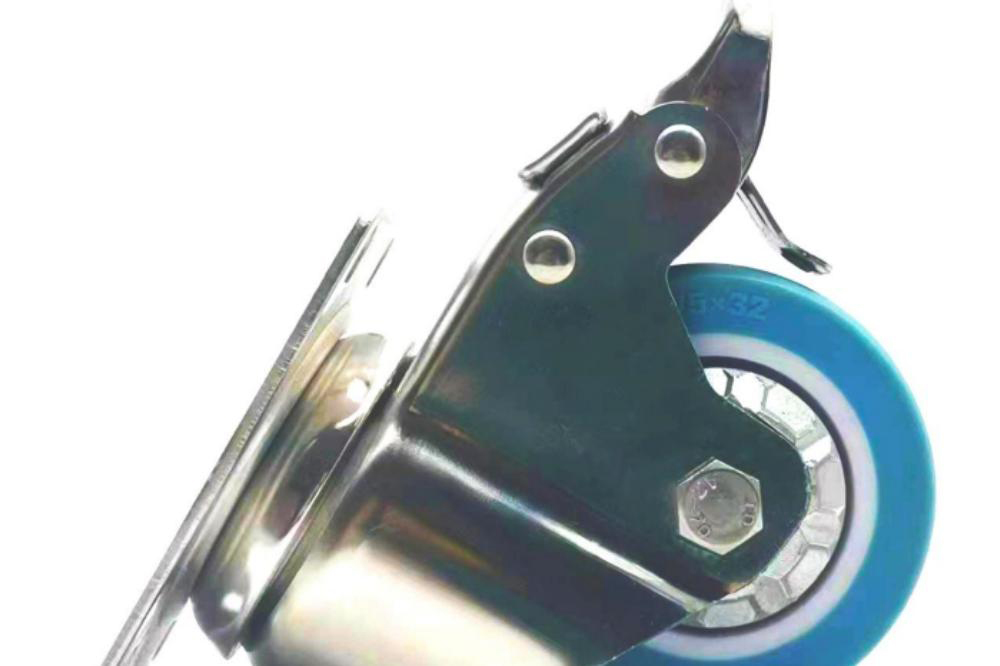
TPU, or thermoplastic polyurethane, is a high-performance elastomer that combines the best properties of plastics and rubber. It is produced by reacting diisocyanates with polyol chains to create a material that can be melted and reshaped, unlike thermoset rubber. TPU is widely used in caster manufacturing because of its excellent wear resistance and load-bearing capacity.
Key Properties of TPU
TPU wheels offer a hardness range of Shore A 85 to Shore D 55, making them harder than most rubber compounds. They have low rolling resistance, excellent abrasion resistance, and good chemical resistance to oils, greases, and many solvents. TPU also has high elasticity, meaning it can flex under load and return to its original shape without permanent deformation.
Advantages of TPU Wheels
TPU universal wheels excel in several areas. First, they have significantly higher load capacity than rubber wheels of the same size — often 2–3 times greater. Second, they resist abrasion and wear much longer, making them ideal for high-frequency-use environments. Third, TPU does not mark or stain floors, leaving clean lines on epoxy, tile, or hardwood surfaces. Finally, TPU wheels run quietly and smoothly, with low noise output even at higher speeds.
Limitations of TPU Wheels
TPU is not perfect. It can be more expensive than rubber upfront. On very rough or debris-covered floors, hard TPU wheels transmit more vibration to the cart contents. TPU also performs poorly at extreme temperatures — it becomes brittle below -20°C and softens above 60°C. Additionally, TPU has lower grip than soft rubber on wet or oily surfaces.
Understanding Rubber Wheels
Rubber wheels have been the traditional choice for casters for decades. Natural rubber and synthetic rubber (such as SBR — styrene-butadiene rubber) are molded or vulcanized onto a hub to create a resilient, grippy tread. Rubber is prized for its elasticity, shock absorption, and quiet operation.
Key Properties of Rubber
Rubber wheels typically range from Shore A 60 to Shore A 90 in hardness. They offer excellent grip on both smooth and rough surfaces, absorb shocks and vibrations effectively, and operate quietly. Rubber is also resistant to many environmental factors and performs well across a wide temperature range.
Advantages of Rubber Wheels
Rubber universal wheels are known for their quiet roll and excellent floor grip. They are the preferred choice for outdoor use, uneven surfaces, and applications where vibration isolation is important. Rubber wheels are also generally less expensive than TPU wheels, making them a budget-friendly option. Their natural grip makes them safer on inclines and wet surfaces.
Limitations of Rubber Wheels
Rubber has lower load capacity than TPU, meaning a larger wheel diameter is needed to handle the same load. Rubber wheels also wear faster on rough surfaces and may leave black scuff marks on light-colored floors. Oil and grease can degrade rubber over time, causing swelling and premature failure. Finally, rubber wheels have higher rolling resistance than TPU, requiring more effort to push loaded carts.
Direct Comparison: TPU vs Rubber
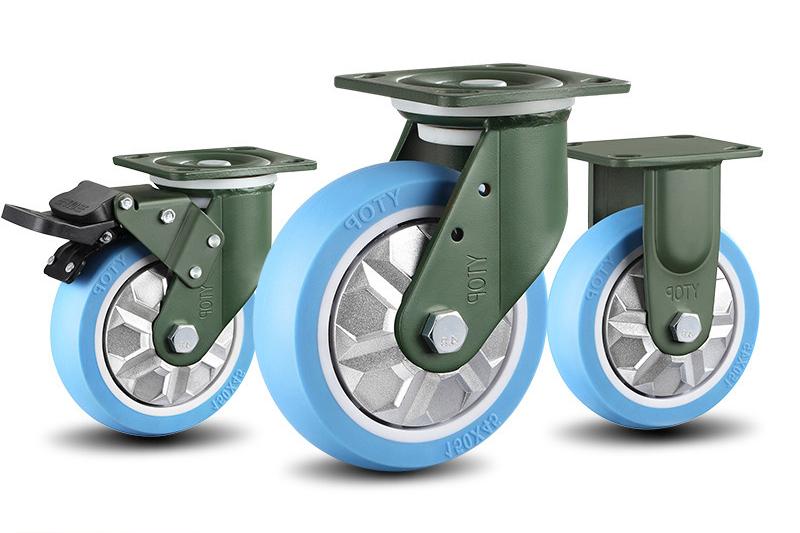
When choosing between TPU and rubber for a universal wheel, several factors should be compared side by side.
Load Capacity and Durability
TPU clearly wins in load capacity. A 4-inch TPU universal wheel can typically carry 150–250 kg, while a same-size rubber wheel carries only 80–120 kg. TPU also outlasts rubber in abrasive environments — lab tests show TPU wears 3–5 times slower on concrete floors. For heavy-duty applications in warehouses and factories, TPU is the more practical choice.
Floor Protection and Noise
Both materials protect floors, but in different ways. TPU is non-marking and smooth-rolling, making it ideal for clean indoor environments like hospitals, laboratories, and offices. Rubber offers better noise dampening and shock absorption, which matters when rolling over thresholds, expansion joints, or cracked concrete. In sound-sensitive areas, rubber may be preferred despite its slightly shorter lifespan.
Chemical and Temperature Resistance
TPU resists oils, grease, and many chemicals better than natural rubber, which can swell and degrade when exposed to petroleum products. However, rubber handles extreme temperatures better, performing reliably from -40°C to 80°C, while TPU starts to soften above 60°C. In cold storage or freezer environments, rubber is often the safer choice.
Cost Considerations
Rubber wheels typically cost 20–40% less than equivalent TPU wheels at the time of purchase. However, when total cost of ownership is considered — including replacement frequency, downtime, and maintenance — TPU often proves more economical over the long run because it lasts significantly longer. At YTOP (Quanzhou Zhuoye Caster Manufacturing Co., Ltd.), we offer both TPU and rubber universal wheels to suit different budget and performance requirements.
Choosing the Right Material for Your Application
There is no universal winner between TPU and rubber — the best choice depends on your specific use case.
When to Choose TPU
Choose TPU universal wheels when: (1) you need high load capacity in a compact wheel size, (2) the floor is smooth and clean (epoxy, tile, hardwood), (3) noise must be kept to a minimum, (4) the environment involves oils or chemicals that would degrade rubber, or (5) long wheel life is more important than upfront cost.
When to Choose Rubber
Choose rubber universal wheels when: (1) the application is outdoor or on rough, uneven surfaces, (2) vibration dampening is important, (3) temperatures fall outside TPU’s comfortable range (below -20°C or above 60°C), (4) budget constraints favor lower upfront cost, or (5) maximum grip on wet or oily floors is required.
Surface and Environmental Considerations
Beyond material properties, the physical environment where the universal wheel will operate plays a decisive role. Smooth indoor floors like epoxy or PVC favor TPU, which rolls with minimal resistance and leaves no marks. Rough outdoor surfaces like asphalt, gravel, or cracked concrete favor rubber, which absorbs impacts and grips uneven terrain. Temperature also matters: unheated warehouses, cold storage rooms, and freezers require rubber compounds rated for low-temperature flexibility, while TPU can become stiff and crack below its rated threshold.
Chemical exposure is another factor often overlooked. In automotive workshops, printing plants, or chemical processing facilities, oil and solvent spills are common. TPU resists these better than natural rubber, which can swell and soften upon prolonged oil contact. In contrast, food and pharmaceutical environments may prefer rubber because some TPU formulations are not FDA-compliant, while certain food-grade rubber compounds are approved for incidental contact.
Frequently Asked Questions
Is TPU better than rubber for universal wheels?
It depends on the application. TPU offers higher load capacity, longer wear life, and better floor protection, making it ideal for indoor, heavy-duty use. Rubber provides better grip, shock absorption, and lower cost, making it better for outdoor or rough-terrain applications.
Do TPU wheels damage hardwood or tile floors?
No. TPU is a non-marking material that will not scuff or stain hardwood, tile, or epoxy floors. In fact, TPU wheels are specifically recommended for environments where floor protection is critical, such as museums, hospitals, and cleanrooms.
Can I replace rubber wheels with TPU wheels on my existing cart?
Yes, as long as the mounting plate or stem dimensions match. TPU wheels are typically harder than rubber, so they may transmit more vibration on rough floors. Check the load rating to ensure the new TPU wheels can handle your cart’s load.
How long do TPU universal wheels last compared to rubber?
In typical indoor warehouse use, TPU wheels last 3–5 times longer than rubber wheels of the same size and load rating. On smooth floors, TPU can easily exceed 50,000 cycles before showing significant wear.
Related Reading
Explore More About Caster Materials
- TPU Material on Casters: Advantages & Applicability — Deep dive into TPU properties and caster applications.
- Synthetic Rubber Materials in Caster Production — How synthetic rubber is used in caster manufacturing.
- Rubber vs Nylon Casters — Compare two common caster wheel materials.
- PP vs TPR Casters — Compare polypropylene and TPR caster materials.
- Synthetic Rubber: The Magical Material — Discover why synthetic rubber is a caster favorite.
Browse YTOP’s medium-duty casters (100–190 kg) and heavy-duty casters (150–610 kg), available in both TPU and rubber wheel options. Need help choosing? Contact our material engineering team for personalized recommendations.
Post time: Dec-15-2023