
When a universal wheel (swivel caster) starts looking shiny, flattened or chunked at the tread edge long before the bracket bends, the problem is almost never the steel fork — it is the wheel material. Wear resistance is the single most important property of a caster tread, because it determines how long the wheel stays round, how well it keeps rolling quietly, and how often your carts have to be pulled off the line for replacement.
Buyers often ask the same question: what kind of material should a universal wheel use if it needs to be wear-resistant? The honest answer is that no single material wins in every application. The right choice depends on your load, your floor, your speed, your environment and your noise budget. This guide compares the common universal wheel tread materials side by side, explains why some wear out fast and others last years, and helps you pick the material that will actually hold up on your own carts.
What Does “Wear-Resistant” Actually Mean for a Universal Wheel?
Wear resistance is not the same as hardness. A wheel that is too hard may roll fine on smooth concrete but chip and crack on rough floors. A wheel that is too soft may be quiet but wear away quickly under heavy loads. In caster engineering, wear resistance is usually measured by how much tread material is lost after a standardized rolling distance under a defined load — the lower the mass loss, the better the wear resistance.
The Three Wear Mechanisms That Kill Casters
Universal wheels fail by wear in three typical ways. Abrasive wear happens when dirt, sand or metal shavings between the tread and the floor act like sandpaper. Adhesive wear happens when the tread heats up under load and bonds locally to the floor surface, tearing small bits away. Fatigue wear happens over thousands of cycles as the tread flexes and micro-cracks propagate until chunks break out. A good wear-resistant wheel material must resist all three mechanisms at the same time.
Why Universal Wheels Wear Faster Than Rigid Casters
A swivel caster pivots on its vertical axis while rolling. Every turn means the tread is being twisted against the floor, not just rolled. That twisting action accelerates abrasive and adhesive wear, which is why universal wheels in four-wheel swivel sets usually need a more wear-resistant tread than the two rigid wheels on the same cart.
The Main Universal Wheel Tread Materials Compared
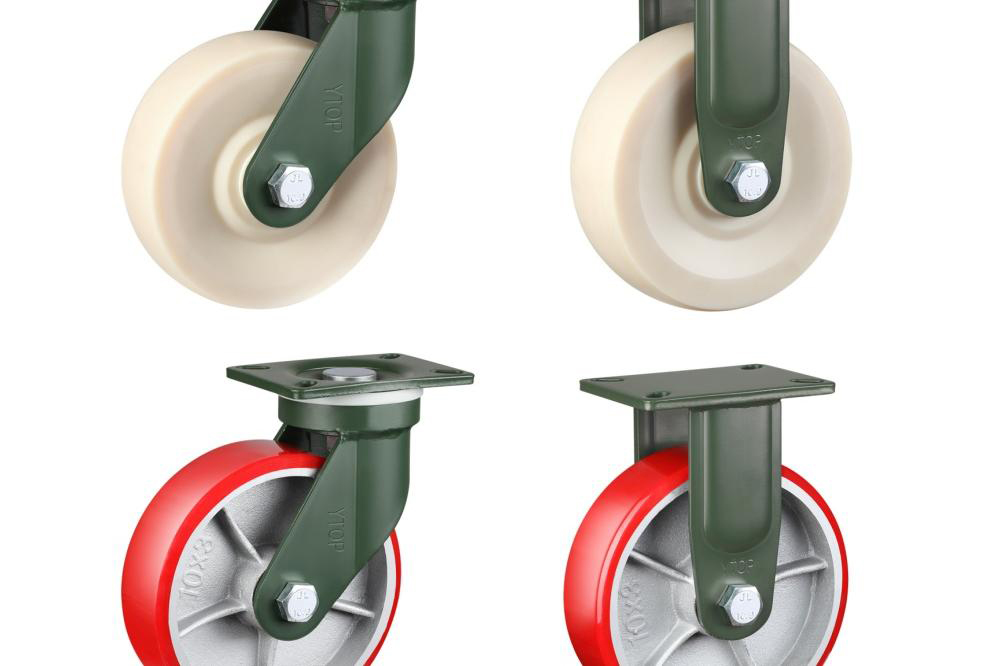
Almost every industrial universal wheel on the market uses one of five tread materials. Each one has a different wear profile, so choosing the wrong one shows up very quickly in the field.
Nylon Wheels (PA6 and MC Cast Nylon)
Nylon is the workhorse of heavy-duty universal wheels. Extruded PA6 nylon is tough, low-friction, and naturally resistant to oils, greases and chemicals. MC cast nylon (mono-cast nylon, also called cast nylon 6) is denser, has lower water absorption, and outperforms PA6 on abrasion by a significant margin. Nylon rolls very easily on smooth, clean floors, does not mark the surface, and carries very high loads at a low rolling resistance. Its weakness is noise on rough concrete and a tendency to feel “hard” on cracks.
Polyurethane Wheels (PU, TPU, PU-on-Nylon)
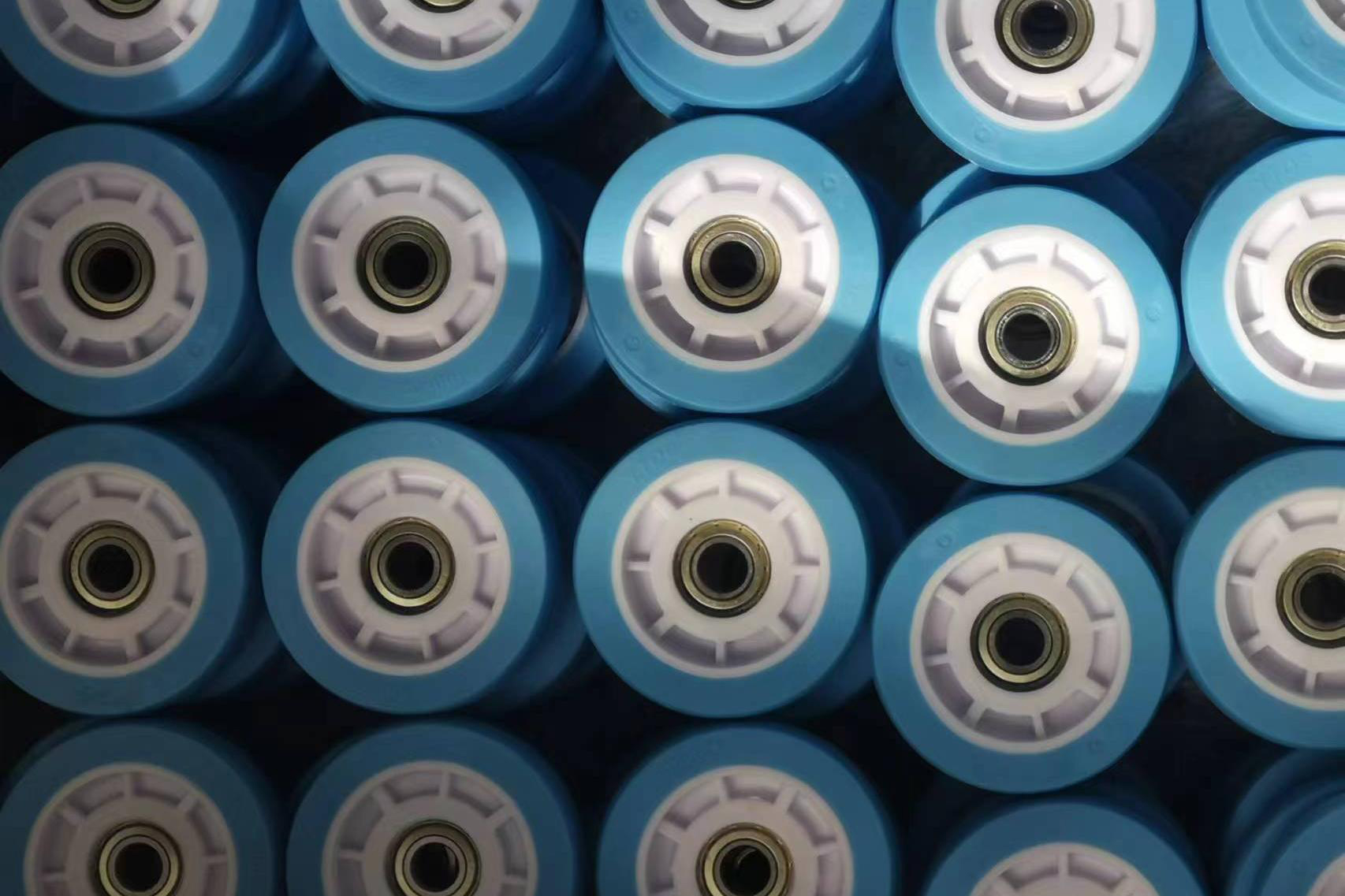
Polyurethane is the gold standard for wear resistance on medium- and heavy-duty swivel casters. Elastomeric PU has an extremely high abrasion-loss resistance, meaning it loses very little material per kilometer of rolling. It also grips the floor, is quiet, does not mark epoxy or polished concrete, and resists oils. The best industrial universal wheels use a PU tread bonded or cast onto a hard nylon or cast-iron core, which combines the wear life of PU with the strength of the core. TPU (thermoplastic polyurethane) is a slightly softer cousin used for lighter duty wheels.
Rubber Wheels (Natural, Synthetic and Ebonite)
Rubber is quiet and floor-friendly but wears faster than PU on heavy loads. Soft natural rubber is great for indoor floors and low speeds, while hard synthetic rubber (ebonite, solid rubber) handles medium loads but still loses tread faster than PU or MC nylon over long distances. Rubber is best reserved for noise-sensitive or floor-protective applications where absolute wear life is not the top priority.
PP, TPE and TPR Wheels
Polypropylene, TPE and TPR are budget materials for light-duty furniture, appliance and supermarket cart wheels. They roll quietly and cheaply, but their wear life under continuous industrial use is short. They are acceptable for occasional indoor use but not for loaded carts running kilometers a day.
How to Pick the Most Wear-Resistant Material for Your Application
There is no universal “best” wheel material. The right choice is a function of four application parameters.
Match the Tread to Your Floor
On smooth epoxy, stainless or tile floors, PU and TPU are the quietest and most floor-friendly options. On rough concrete in warehouses, MC cast nylon rolls easier and resists abrasive grit better. On outdoor asphalt or rough pavement, solid rubber or thick PU-on-iron absorbs shocks better than hard nylon.
Match the Tread to Your Load and Speed
Under 150 kg per wheel, almost any material works. Between 150 and 600 kg per wheel, PU-on-nylon or MC nylon is the standard. Above 600 kg per wheel, super-heavy-duty universal wheels almost always use MC cast nylon or thick PU on cast-iron cores, because they must support high point loads without deforming or chunking. Higher rolling speeds also favor PU, because it stays cooler under continuous rolling.
Account for Chemicals and Environment
If your cart runs through oil, cutting fluid, food-service washdown or outdoor rain, nylon and PU both hold up well; rubber degrades faster under UV and ozone. For washdown or food-contact applications, choose stainless brackets with PU or nylon treads that are easy to clean.
Why the Same Material Still Wears Out Faster on Some Carts
Even when the tread material is right, real-world wear is often driven by details that have nothing to do with the polymer itself.
Load Per Wheel vs Rated Load
Rule of thumb: never load a universal wheel above about 80% of its rated load. Overloading flattens the tread, heats it up, and accelerates both adhesive and fatigue wear. A cart that carries 50% more than the caster rating will wear out 3 to 5 times faster, regardless of tread material.
Bearing Quality and Swivel Race Condition
When the swivel race is stiff or the wheel bearing is dry, the tread is dragged sideways rather than rolled. That dragging action multiplies abrasive wear. Lubricating the swivel race and keeping bearings free-running often doubles the tread life even on the same wheel material.
Surface Finish and Core Bonding
On PU wheels, the bond between the PU tread and the inner core is the failure point. A poorly bonded PU layer peels off the core in months; a properly vulcanized or cast PU layer lasts years. Ask your supplier how the tread is bonded, and look for evidence of peel tests in their quality reports.
YTOP’s Wear-Resistant Universal Wheel Lineup
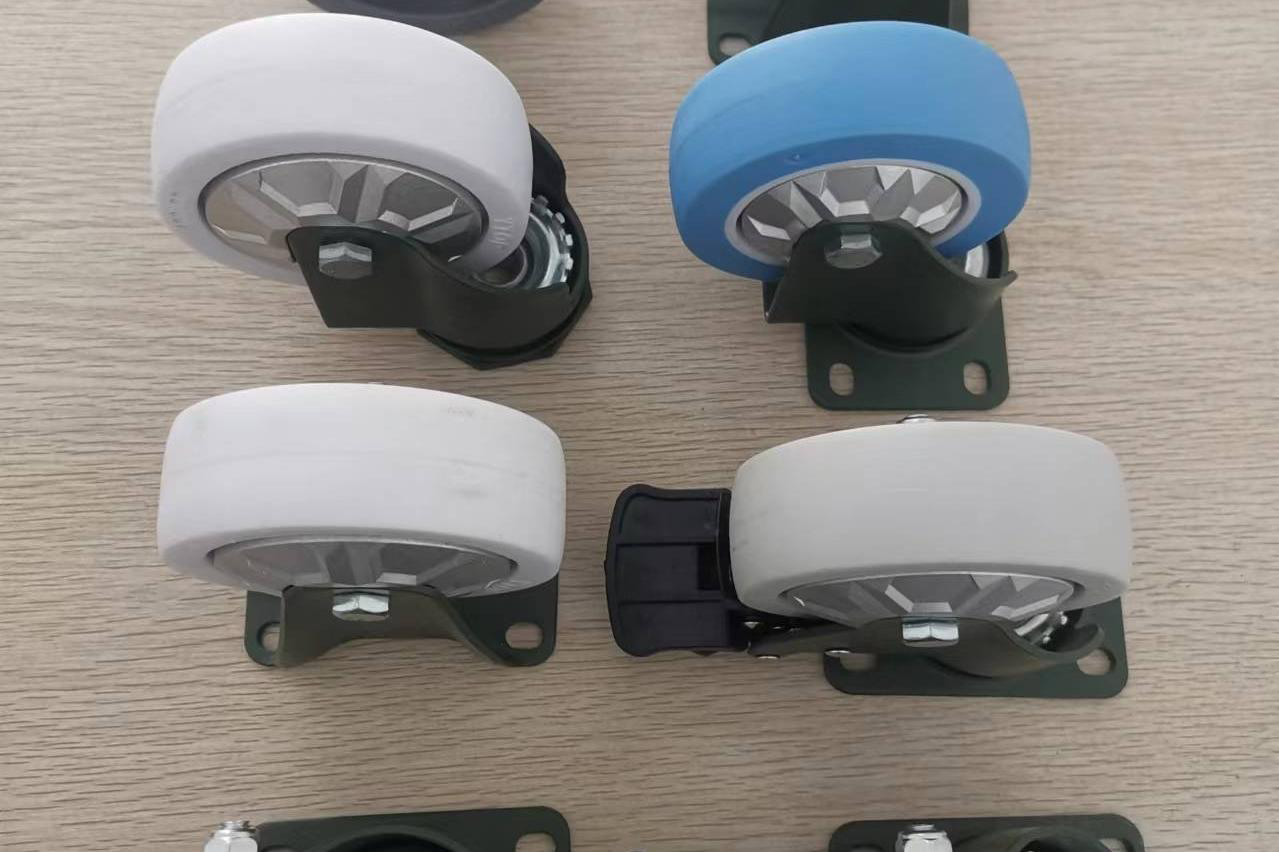
At YTOP Zhuoye, every universal wheel tread is selected against the application it is designed for. Medium-duty swivel casters use TPU and PU-on-nylon treads for quiet, floor-friendly indoor rolling. Heavy-duty swivel casters use thick PU on nylon cores or MC cast nylon wheels for load ratings from 150 to 610 kg per wheel. Super heavy-duty swivel casters (700–1600 kg per wheel) use MC cast nylon or extra-thick PU on cast-iron cores, built for AGV frames, steel carts and heavy machinery bases. Every batch goes through rolling fatigue and salt-spray testing before packing.
Frequently Asked Questions
What is the most wear-resistant universal wheel material?
For most industrial applications, polyurethane (PU) tread bonded onto a nylon or cast-iron core offers the best combination of abrasion resistance, quiet rolling and floor protection. For very heavy loads on rough concrete, MC cast nylon is the next-best choice.
Is nylon or PU better for a swivel caster?
Nylon rolls easier on smooth floors and handles chemicals well; PU is quieter, grips the floor better and lasts longer under continuous rolling. Most buyers pick PU for universal wheels, and nylon for rigid wheels on the same cart.
How do I make my universal wheels last longer?
Stay under 80% of the rated load per wheel, keep the swivel race and bearings lubricated, avoid dragging the cart sideways, and clean grit and metal shavings off the floor regularly. These four steps usually double tread life.
Do PU wheels leave marks on epoxy or polished concrete?
No. High-quality non-marking PU wheels are specifically formulated to be floor-safe on epoxy, polished concrete, tile and marble. Cheap rubber wheels are the ones that leave black marks.
Can I replace just the tread on my universal wheels?
Most stamped-bracket universal wheels are sold as a complete assembly, because replacing a tread usually requires pressing it off the bearing hub. It is usually more cost-effective to replace the whole caster, especially once the bracket or swivel race shows wear.
Related Reading
Keep learning about caster materials, wheel performance and selection:
- What is the difference between Nylon PA6 and Nylon MC for casters? — deep dive into two common nylon tread materials.
- Polyurethane vs Nylon Swivel Casters: Wear Resistance, Load, Resilience Comparison — direct side-by-side test data.
- Why Do AGV Casters Love to Use Polyurethane? — why PU dominates automated material handling.
- What is a PU wheel and what are its characteristics? — introduction to polyurethane tread basics.
- What Are the Caster Performance Tests for Zhuo Ye Manganese Steel Casters? — how wear resistance is verified on the factory floor.
Explore our medium-duty casters (100–190 kg) and heavy-duty casters (150–610 kg) with PU and nylon wear-resistant treads, or contact our engineers for a material recommendation on your specific cart.
Post time: Nov-06-2023