
If you have ever compared two “nylon” caster wheels that look identical in a photo but behave very differently on the floor, you were almost certainly looking at PA6 nylon on one and MC cast nylon on the other. Both are nylon, both are white, both are cheap-looking in product photos, but they are made by completely different processes and have very different mechanical properties.
This is one of the most common confusions in caster sourcing. Buyers specify “nylon wheels” and get a quote, then wonder why the wheels they receive are either brittle, water-absorbent, or simply too soft for the load. The difference is not marketing — it is in the polymer chemistry and the molding process. This guide breaks down PA6 vs MC nylon for casters, side by side, and tells you which one to order for which application.
What Is Nylon, and Why Is It Used on Casters?
Nylon (polyamide, PA) is a family of tough, self-lubricating engineering thermoplastics. For caster wheels, nylon is valued for four reasons: low rolling resistance on smooth floors, excellent chemical resistance to oils and greases, natural wear resistance, and a clean, non-marking surface. It is also one of the few polymers that can carry very high point loads at a small wheel diameter without deflecting.
Why Not Just “Nylon”?
“Nylon” is a family name, not a material spec. PA6, PA66, PA12, MC cast nylon, glass-filled nylon and oil-filled nylon are all different materials with different properties. On a caster datasheet, “nylon wheel” without the grade is as vague as saying “steel bracket” without the plate thickness. The two grades that matter most in industrial casters are PA6 and MC cast nylon.
How Each Grade Is Made
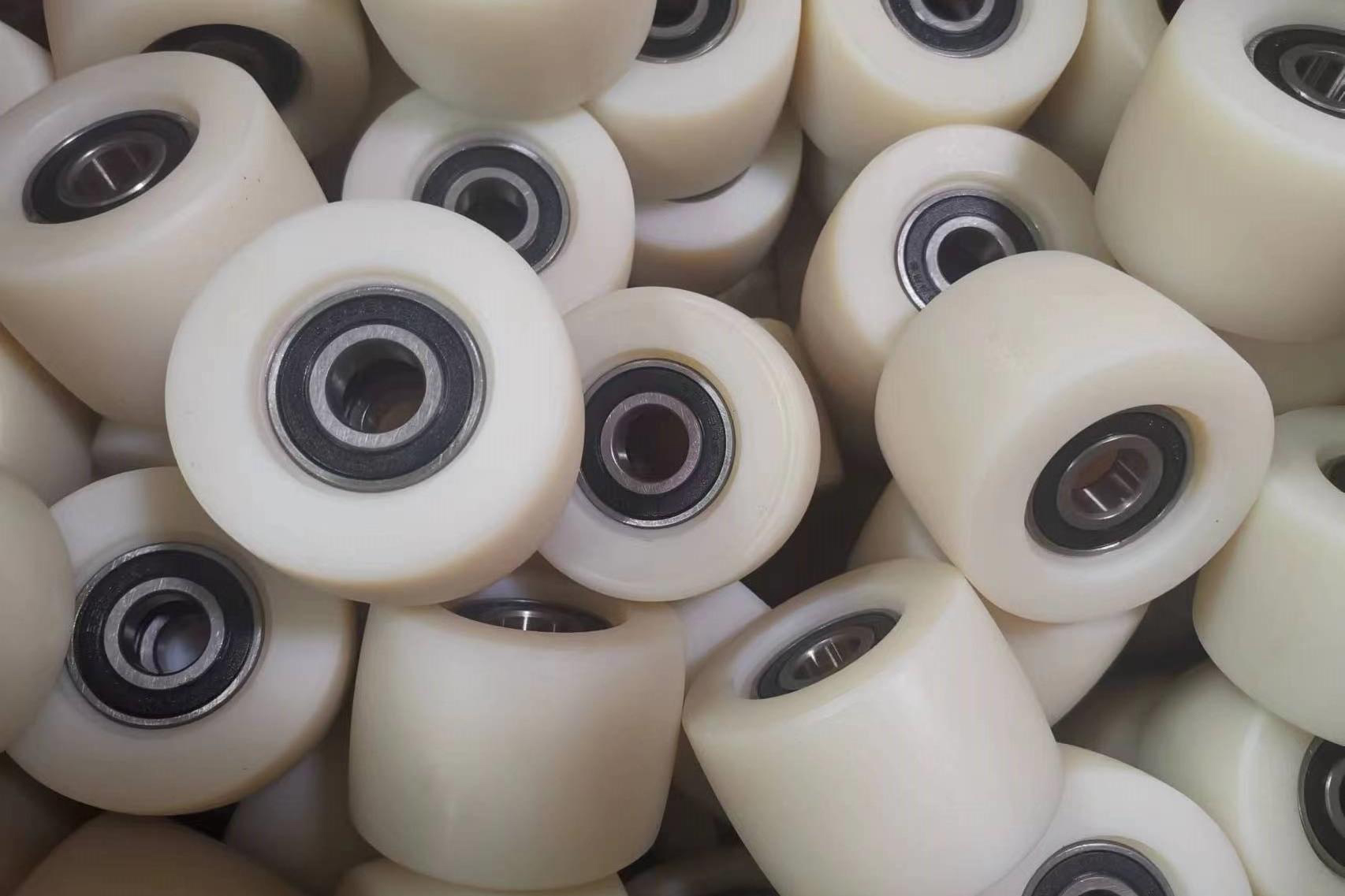
PA6 (polyamide 6, also called nylon 6) is usually produced by extrusion or injection molding from polymer pellets. The pellets are melted, injected into a mold, cooled and ejected. It is a fast, high-volume process that produces consistent, dimensionally accurate wheels at low cost.
MC cast nylon (often called monomer casting nylon, cast nylon 6, or MC901) is produced by casting liquid monomer directly into a heated mold, where it polymerizes in place. The cast part cools slowly under controlled conditions, producing a denser, more crystalline structure than injection molding can achieve. It is slower and more expensive, but the resulting wheel is significantly stronger.
Mechanical Property Comparison
The two materials look similar but perform differently under load.
The table below summarizes typical engineering values for the two grades. Exact figures vary by manufacturer, additives and wheel design, so treat these as indicative ranges rather than fixed specifications and confirm against the supplier’s material data sheet.
| Property | PA6 (Injection-Molded Nylon) | MC Cast Nylon |
|---|---|---|
| Density | ~1.13–1.15 g/cm³ | ~1.15–1.17 g/cm³ |
| Water absorption (24 h) | ~1.6–1.8% | ~0.6–1.0% |
| Tensile strength | ~70–85 MPa | ~80–95 MPa |
| Rockwell hardness | ~R110–120 | ~R115–125 |
| Continuous-use temperature | ~80–90 °C | ~100–120 °C |
| Relative load rating (same wheel size) | Baseline | ~20–40% higher |
| Typical caster duty | Light to medium | Medium to super-heavy |
Load Capacity
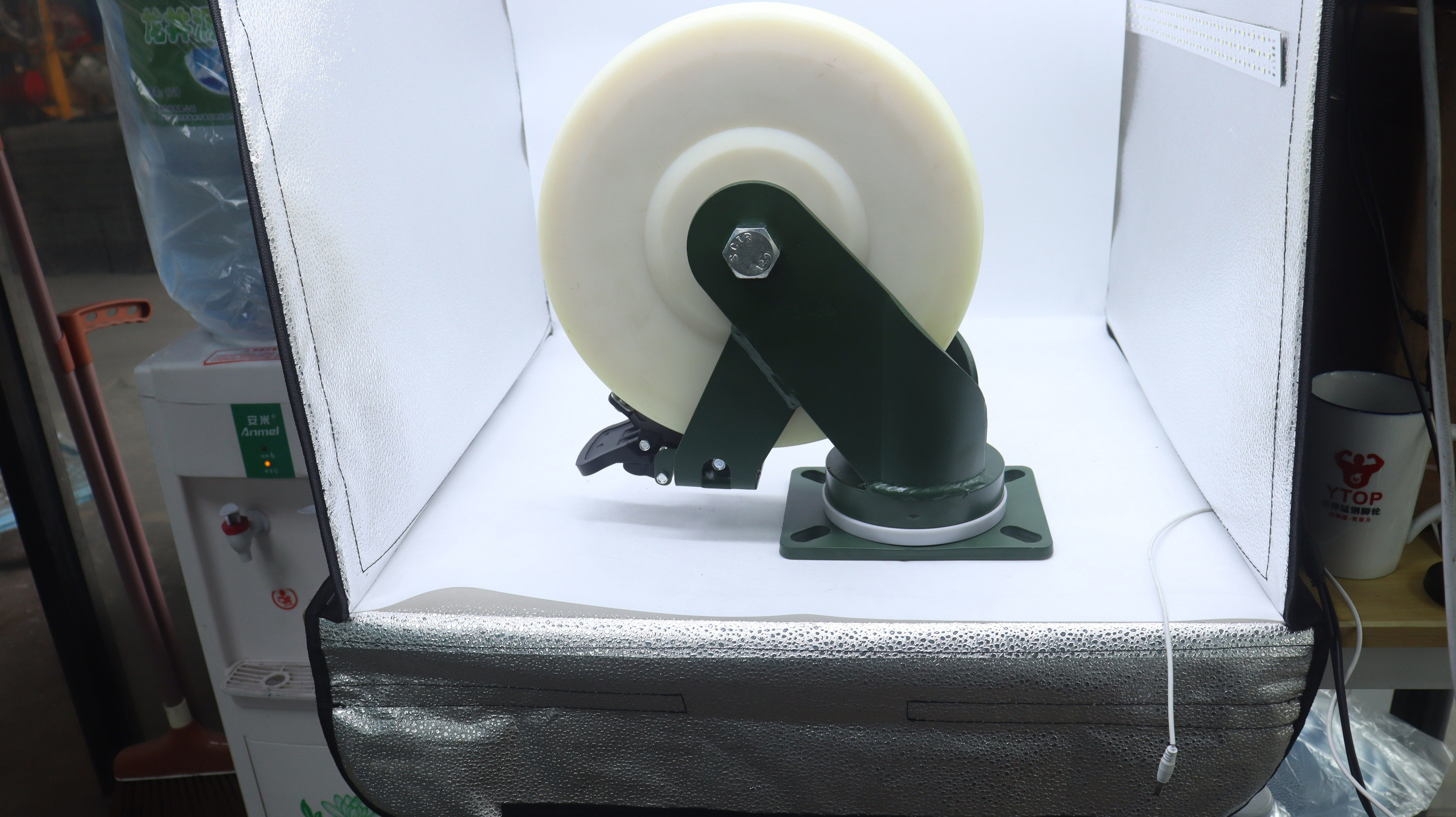
For the same wheel size, MC cast nylon typically carries 20–40% more load than PA6. The higher crystallinity and lower internal porosity give MC a higher compressive strength, which is what matters when a heavy cart sits still for long periods. This is why super-heavy-duty casters (700–1600 kg per wheel) almost always use MC nylon, not PA6.
Wear Resistance
Both materials wear well on smooth, clean floors, but MC cast nylon has a lower abrasion-loss rate. Over months of rolling on concrete with fine dust, MC wheels keep their round profile longer, while PA6 wheels start to show flat spots and glazing earlier. The difference is not dramatic on short runs, but it shows up clearly on continuous-duty carts.
Water Absorption and Dimensional Stability
This is one of the biggest practical differences. PA6 absorbs more moisture from the air, which makes it swell slightly and soften over time, especially in humid warehouses. MC cast nylon absorbs less moisture, so its dimensions and hardness stay more stable across seasons. For equipment that must roll true at all times, that stability matters.
Temperature and Chemical Resistance
Both grades resist oils, greases and most common industrial chemicals well. MC nylon has a slightly higher continuous-use temperature and better creep resistance, meaning it holds its shape better under long-term static load. PA6 is fine for normal warehouse temperatures; MC is preferred near ovens, autoclaves or under constant high point loads.
Cost and Supply Differences
The mechanical gap between PA6 and MC is real, but it comes with a price gap.
Why PA6 Is Cheaper
PA6 wheels are injection-molded at very high cycle volumes, which spreads the mold cost over thousands of parts. The material pellets are also commodity-grade. This makes PA6 wheels the standard choice for light-duty furniture, supermarket carts and general-purpose medium-duty casters where the load is well below the wheel’s limit.
Why MC Costs More
MC cast nylon wheels are produced in lower volumes, with slower cycles and more hand finishing. The casting process is also more sensitive to temperature and humidity, so production yield is lower. You pay roughly 30–60% more per wheel, but you get a substantially stronger and longer-lasting part.
When the Price Gap Is Worth It
The premium is worth it when (a) the wheel is near its rated load, (b) the cart runs long distances every shift, (c) the cart sits heavily loaded for long periods, or (d) the floor is rough enough to cause abrasive wear. If your cart runs lightly on smooth floors, PA6 is absolutely fine.
How to Tell Them Apart in the Field
A buyer receiving a box of white nylon wheels cannot always tell PA6 from MC by looking. But there are a few practical tells.
Weight and Density
MC cast nylon is denser, so a same-size MC wheel feels noticeably heavier than a PA6 wheel. Put two wheels of the same diameter on a scale and the difference is obvious.
Surface Finish and Sound
Injection-molded PA6 wheels often have a very smooth, slightly glossy surface. Cast MC wheels tend to have a slightly matte, porous-looking surface and a “deader” sound when tapped. Both are normal; neither is a defect.
Ask the Supplier for a Material Spec
The only reliable way is to ask the supplier directly for the polymer grade on the drawing or datasheet. A serious caster factory will list “MC cast nylon” or “PA6 injection” explicitly. If they only say “nylon,” ask again.
Which One Should You Choose?
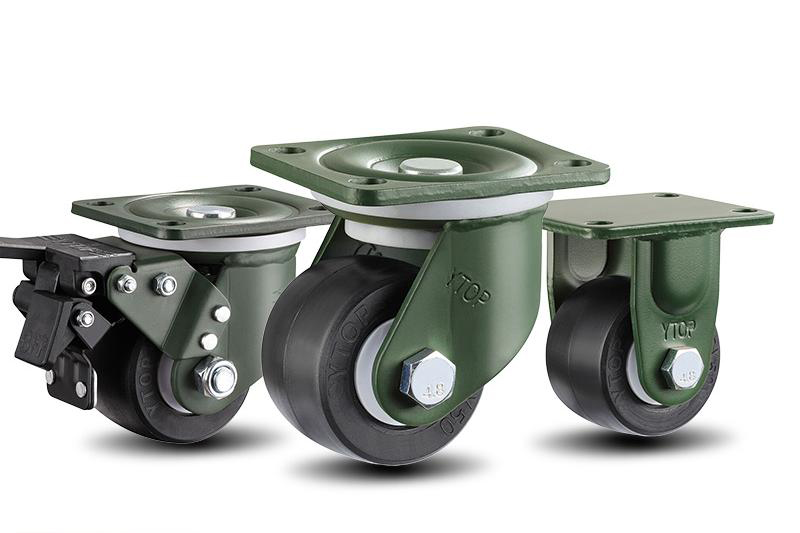
The short answer: choose PA6 for light and medium duty, and MC cast nylon for heavy and super-heavy duty. For loads up to about 200 kg per wheel on smooth indoor floors, PA6 wheels will outlast your expectation and save money. For loads above 300 kg per wheel, for continuous-duty carts, or for any application where a flat-spotted wheel would stop production, specify MC cast nylon on the drawing and pay the premium.
If you are unsure, the safest compromise is PU-on-nylon: a polyurethane tread cast over a nylon core. You get the wear life of PU and the strength of the nylon core, with no need to choose between PA6 and MC for the tread itself.
Frequently Asked Questions
Is PA6 or MC nylon better for casters?
For heavy loads and long service life, MC cast nylon is better. For light to medium loads on smooth floors, PA6 is perfectly good and significantly cheaper.
Can I use PA6 wheels outdoors?
PA6 resists oils and chemicals well, but it absorbs moisture and is sensitive to UV. For outdoor use, PU tread or rubber tread is usually a better choice than bare nylon.
Why are my nylon wheels developing flat spots?
Flat spots usually mean either the wheel is overloaded, the bearing has seized, or the wheel has been sitting in one position under heavy load for weeks. Check the load per wheel and the bearing condition first.
Does MC cast nylon need special storage?
No, but like all nylon it should not be stored in direct sunlight or next to heaters. Room-temperature indoor storage is fine for years.
Can I mix PA6 and MC wheels on the same cart?
It is technically possible, but not recommended. The two materials roll slightly differently and wear at different rates, which can make the cart pull to one side. Use the same grade on all four wheels.
Related Reading
Dig deeper into caster materials and selection:
- What Kind of Material Is the Universal Wheel Wear-Resistant? — compare nylon, PU, rubber and TPE treads.
- Polyurethane vs Nylon Swivel Casters: Wear Resistance, Load, Resilience Comparison — direct side-by-side data.
- How Much Load Can 8-Inch Heavy-Load Casters Bear? — load ratings in practice.
- What Are the Caster Performance Tests for Zhuo Ye Manganese Steel Casters? — how material grades are verified.
- How Are Industrial Caster Loads Graded? — match your load to the right caster class.
Browse our heavy-duty casters (150–610 kg) and super heavy-duty casters (700–1600 kg) in PA6 or MC nylon, or ask our engineers which nylon grade fits your cart.
Post time: Nov-14-2023