
A low center of gravity (low-CG) caster is a caster designed so that the load it supports sits as close to the floor as possible, rather than high up on a tall fork. It sounds like a small design detail, but it changes how a cart behaves the moment you push it. High carts become less tipsy, heavy loads stay stable on turns, and the operator pushes with less effort and less fear of a spill.
If you have ever pushed a loaded four-wheel cart that felt wobbly at corners, or watched a machine base rock forward when it started or stopped, you have felt the problem that a low center of gravity caster is engineered to solve. This guide explains what a low-CG caster actually is, how it differs from a standard caster, where it pays off, and how to spec one correctly.
What Exactly Is a Low Center of Gravity Caster?
The center of gravity (CG) of any rolling object is the point where its total weight can be considered to act. The higher that point sits above the support wheels, the more easily the object tips when it turns, accelerates or hits a bump. A low center of gravity caster lowers the effective CG of the whole load by physically shortening the distance between the load surface and the floor.
How It Is Built Differently
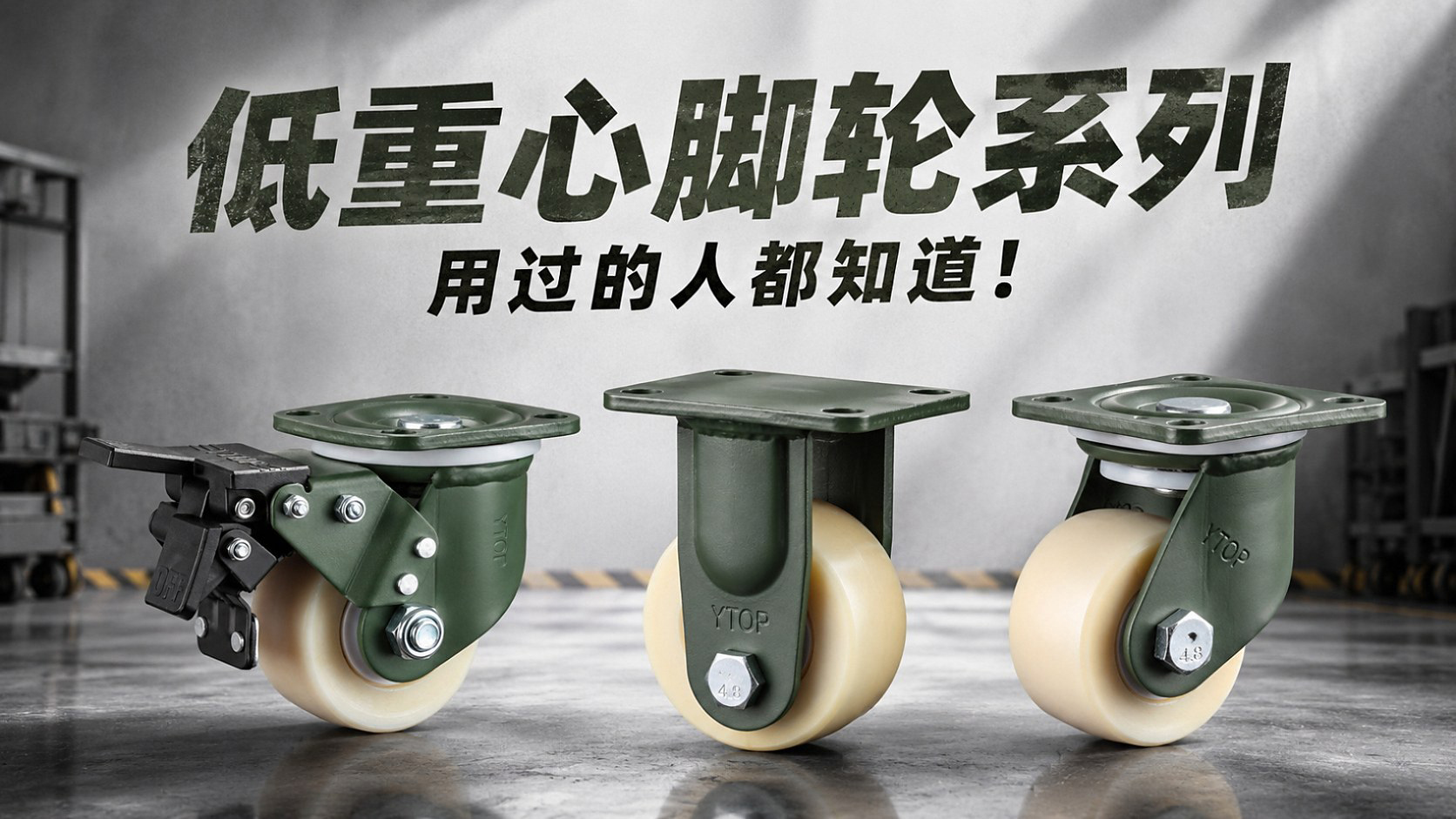
A standard caster has a tall vertical leg connecting the top plate to the wheel axle. A low-CG caster flattens and folds that geometry: the bracket is shorter, the wheel diameter is usually smaller for the same rated load, and the swivel race is tucked closer to the plate. The top plate ends up sitting much closer to the floor than on a conventional caster of the same wheel size, so any equipment bolted to that plate drops with it.
What “Low” Actually Means in Numbers
A typical medium-duty swivel caster with a 4-inch wheel might have an overall mounting height of around 130–140 mm. A low-CG version of the same load class may drop that mounting height to 95–110 mm. On a four-wheel cart, that 30–40 mm drop cuts the tipping moment on corners by roughly 20–30%, which is the difference between a stable cart and a scary one.
Why Low CG Matters More Than You Think
Most caster selection guides talk only about load rating and wheel diameter. CG height is the missing number on the datasheet, and it is the reason two casters with the same rating can behave so differently in service.
Resists Tipping and Sways
When a loaded cart turns, centrifugal force tries to lift the inside wheels. A high CG makes that lift happen with a small angle; a low CG requires a much sharper turn to produce the same effect. On narrow aisles, ramps or crowded factory floors, that margin is what keeps product, operators and equipment safe.
Improves Push and Pull Effort
Surprisingly, a lower mounting height also tends to make a cart easier to push. The operator’s hands sit closer to the load center, the pushing vector lines up better with the floor, and less of the pushing force is wasted fighting the cart’s tendency to rock. On long shifts, that lower effort reduces fatigue and repetitive-strain injury.
Better Stability on Uneven Floors
Low-CG casters also perform better over expansion joints, cracks and minor thresholds. Because the wheel is smaller and the bracket is stiffer, the whole assembly is less likely to “top out” on a bump, which keeps all four wheels in contact with the floor instead of bouncing.
Where Low-CG Casters Are Most Often Used
Low-CG design is not a universal upgrade — it is a trade-off that wins in specific applications.
Material Handling Carts and Trolleys
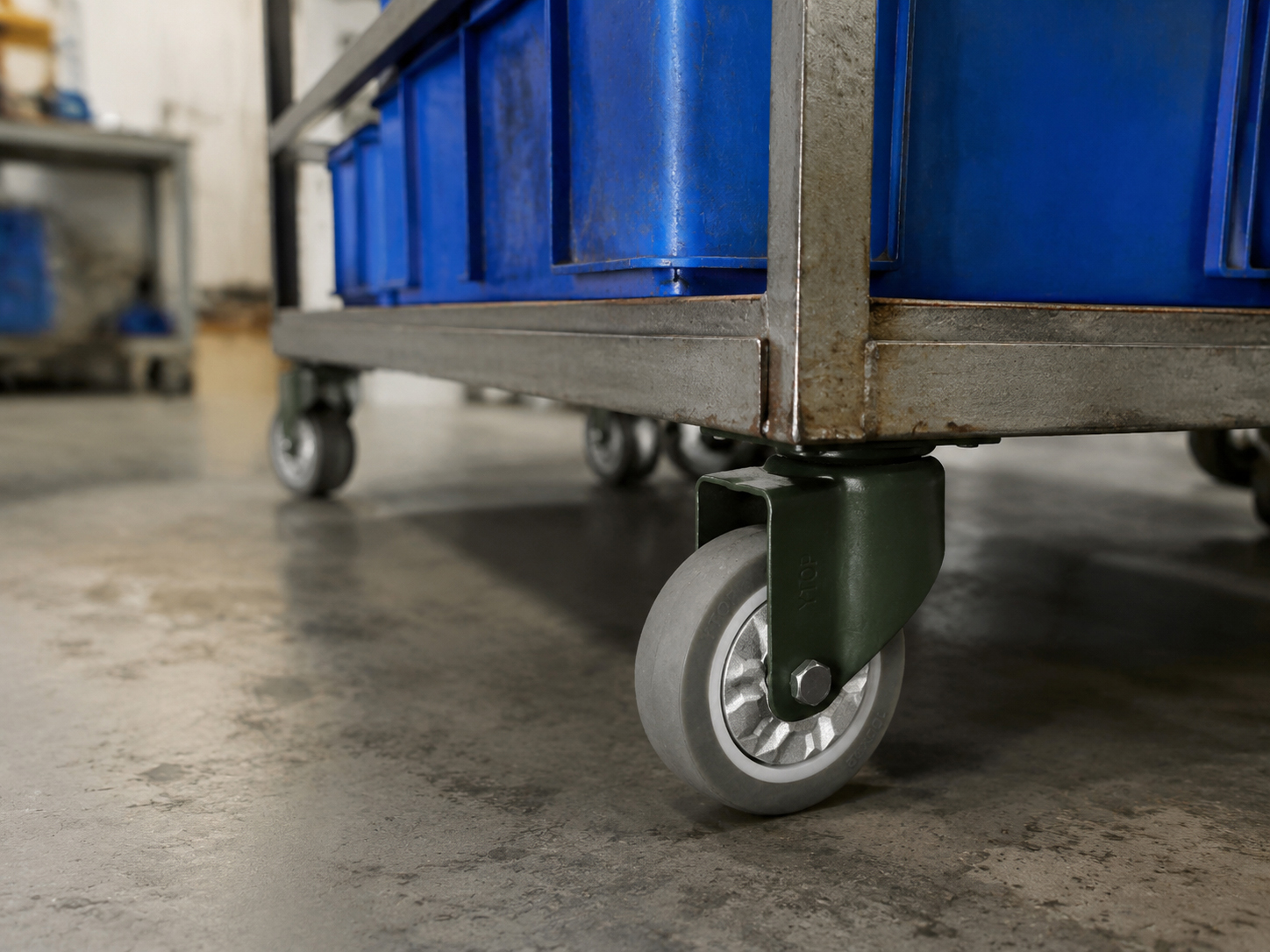
Four-wheel platform carts, shelf trolleys and warehouse picking carts all carry tall, top-heavy loads. A low-CG swivel caster on the front pair (and matching rigid at the back) turns a tipsy cart into a stable one. This is the most common application.
Medical, Lab and Cleanroom Equipment
Medical carts, anesthesia trolleys, lab benches and display racks often carry expensive or sensitive instruments. A low center of gravity protects the equipment if the cart hits a door frame, and it also makes the cart feel more “solid” to the operator pushing it.
Machine Bases and AGV Frames
When a heavy machine or AGV frame must be rolled into position but still sits low to the floor, a low-CG caster is the only way to keep the whole unit’s CG inside the support footprint. This is especially true for AGVs that start and stop suddenly.
How a Low-CG Caster Is Engineered
The visual difference is small, but the engineering inside is what makes a low-CG caster reliable under load.
Stiff Bracket Geometry
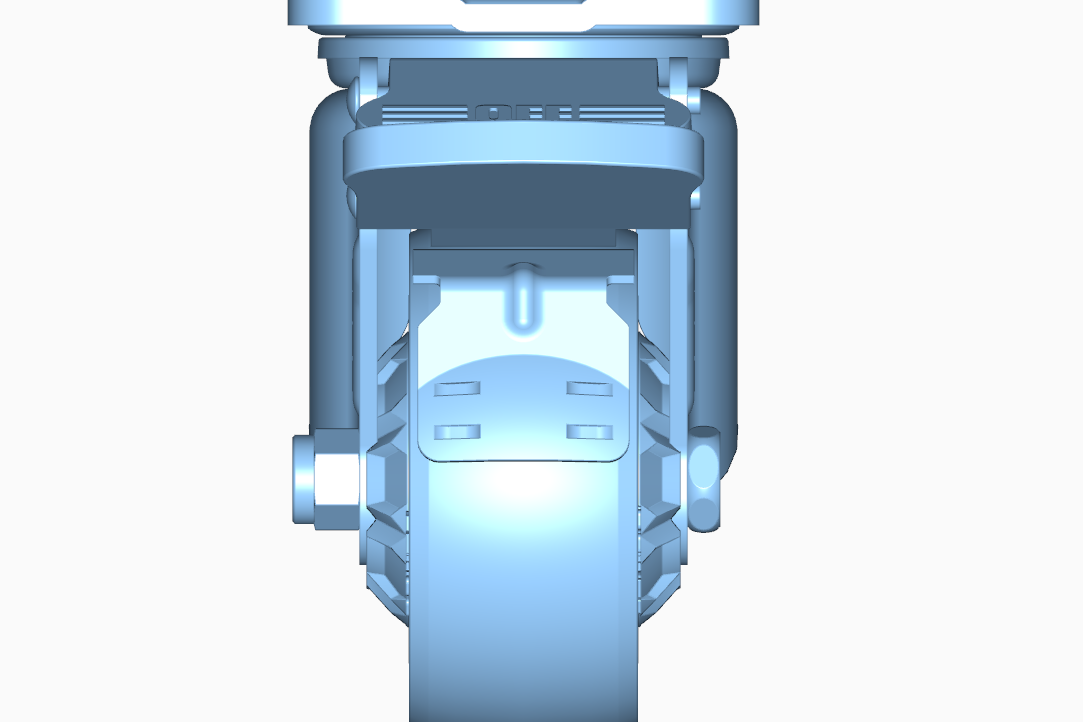
Because the bracket is shorter, it can be made stiffer without adding height. Low-CG brackets are usually formed from thicker steel plate or manganese steel, so the fork does not flex sideways under lateral load. That stiffness is what keeps the wheel tracking straight instead of wandering.
Optimized Swivel Race and Bearing
The swivel race on a low-CG caster is typically a dual-ball-track design, hardened and pre-loaded to eliminate play. Even a tiny bit of slop in the swivel race feels like the cart is “wandering” at low CG, so the race has to be precision-made.
Wheel Tread Selection
The wheel tread on a low-CG caster is usually PU or nylon, because those materials run easily on smaller-diameter wheels. Rubber on a small wheel would roll too hard and wear too fast. The tread choice also affects the overall mounting height, so it is part of the design, not an afterthought.
Trade-Offs and Limitations
Low CG is not free. It is a design trade that you should only make when stability matters more than other parameters.
Smaller Wheel, Lower Obstacle Clearance
A low-CG caster usually uses a smaller wheel diameter for the same load. That means it climbs over expansion joints, cables and thresholds less easily than a larger wheel. If your floor is rough, plan for the smaller wheel or choose a slightly larger low-CG variant.
Load Rating May Be Lower for the Same Mounting Height
Because the wheel is smaller, the contact patch is smaller and the bearing load is higher. A low-CG caster is usually rated slightly below a full-height caster of the same bracket size. Always check the actual rated load, not just the bracket size.
Not Ideal for Very High Speeds
At very high rolling speeds, small wheels heat up faster and bearings wear faster. Low-CG casters are designed for walking-speed material handling and stationary machine movement, not for high-speed AGV travel.
How to Specify a Low-CG Caster
When you shortlist low-CG casters, compare four numbers side by side: rated load per wheel, mounting height, swivel radius and tread material. The mounting height is the number that defines how “low” the caster really is — ask the supplier for it directly, not just for the wheel diameter. Also ask whether the bracket is stamped steel, forged steel or manganese steel, and what the swivel race looks like. A quality low-CG caster should have a visible hardened ball track and sealed bearings.
Frequently Asked Questions
What is a low center of gravity caster?
It is a caster designed with a shorter bracket and smaller wheel so the top plate sits close to the floor. It lowers the CG of the whole load, making carts and equipment more stable on turns and stops.
Are low-CG casters less load-bearing?
For the same wheel diameter, no. For the same mounting height, they usually are, because smaller wheels carry less. Always compare the rated load per wheel on the datasheet, not the bracket size.
Can I replace standard casters with low-CG ones?
You can, but the mounting height will change. Measure the old mounting height carefully and confirm the new one fits your floor clearance and any door gaps before ordering.
Are low-CG casters better for electric carts?
Yes, for walking-speed electric carts and AGVs, a lower CG reduces tip-over risk during acceleration, braking and turning. This is one of the fastest-growing use cases for low-CG design.
What wheel size is typical for a low-CG caster?
Most low-CG medium-duty casters use 3 to 5 inch wheels; heavy-duty low-CG designs use 5 to 6 inch wheels. Larger diameters defeat the purpose, because they raise the mounting height back up.
Related Reading
Continue exploring caster design, stability and selection:
- Low Center of Gravity Casters: Innovative Technology to Improve Stability and Handling — deeper look at low-CG engineering.
- Single-Brake vs Dual-Brake Casters: Braking Principle and Application Scenarios — how brakes interact with a stable chassis.
- Advantages of Dual-Wheel Structure for Ultra-Heavy Load Casters — another stability-first caster design.
- How Are Industrial Caster Loads Graded? — match your load to the right caster class.
- What Core Parameters Need Attention in Industrial Caster Selection? — full selection checklist.
Browse our medium-duty casters (100–190 kg) and heavy-duty casters (150–610 kg) with low-CG designs, or contact our engineers to discuss your cart stability requirements.
Post time: Nov-06-2023