
Introduction to Universal Wheels
A universal wheel — also called a swivel caster — is a caster that can rotate 360 degrees around a vertical axis while the wheel itself rolls around a horizontal axle. This dual-axis rotation allows the equipment it is mounted on to move in any direction: forward, backward, sideways, or rotate in place without requiring additional space around it. Universal wheels are everywhere — on shopping carts, office chairs, hospital beds, platform trolleys, and industrial racks worldwide.
How a Universal Wheel Is Constructed
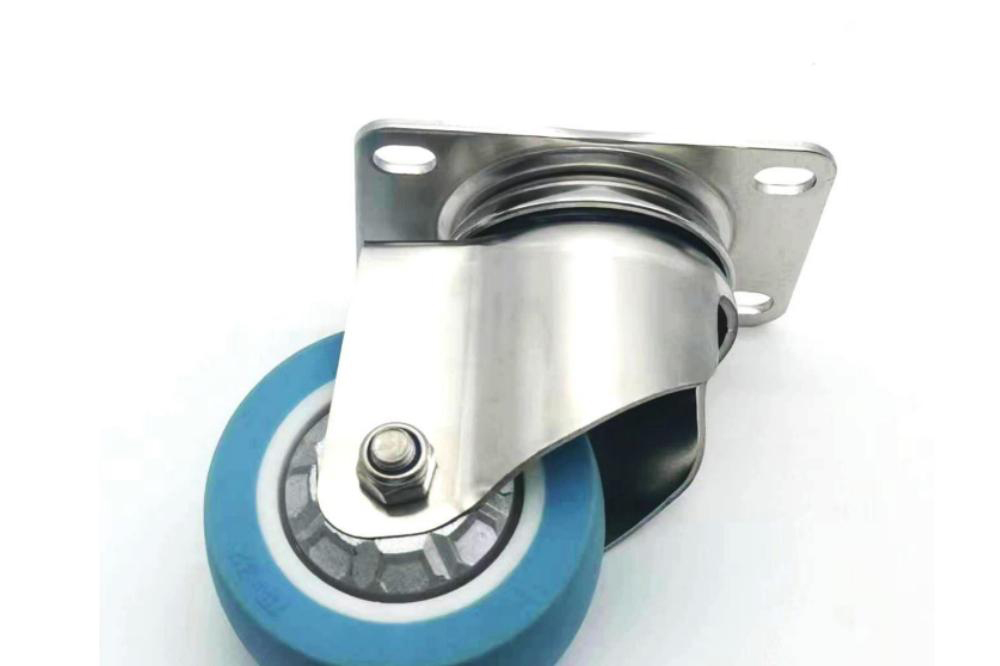
A universal wheel consists of a mounting plate or stem, a swivel horn (fork), a wheel, a wheel axle, and a swivel raceway. The raceway contains precision steel ball bearings that allow the horn to pivot smoothly. This construction is what gives the universal wheel its characteristic flexible movement, making it indispensable for mobile equipment.
What Is a Directional (Rigid) Wheel?
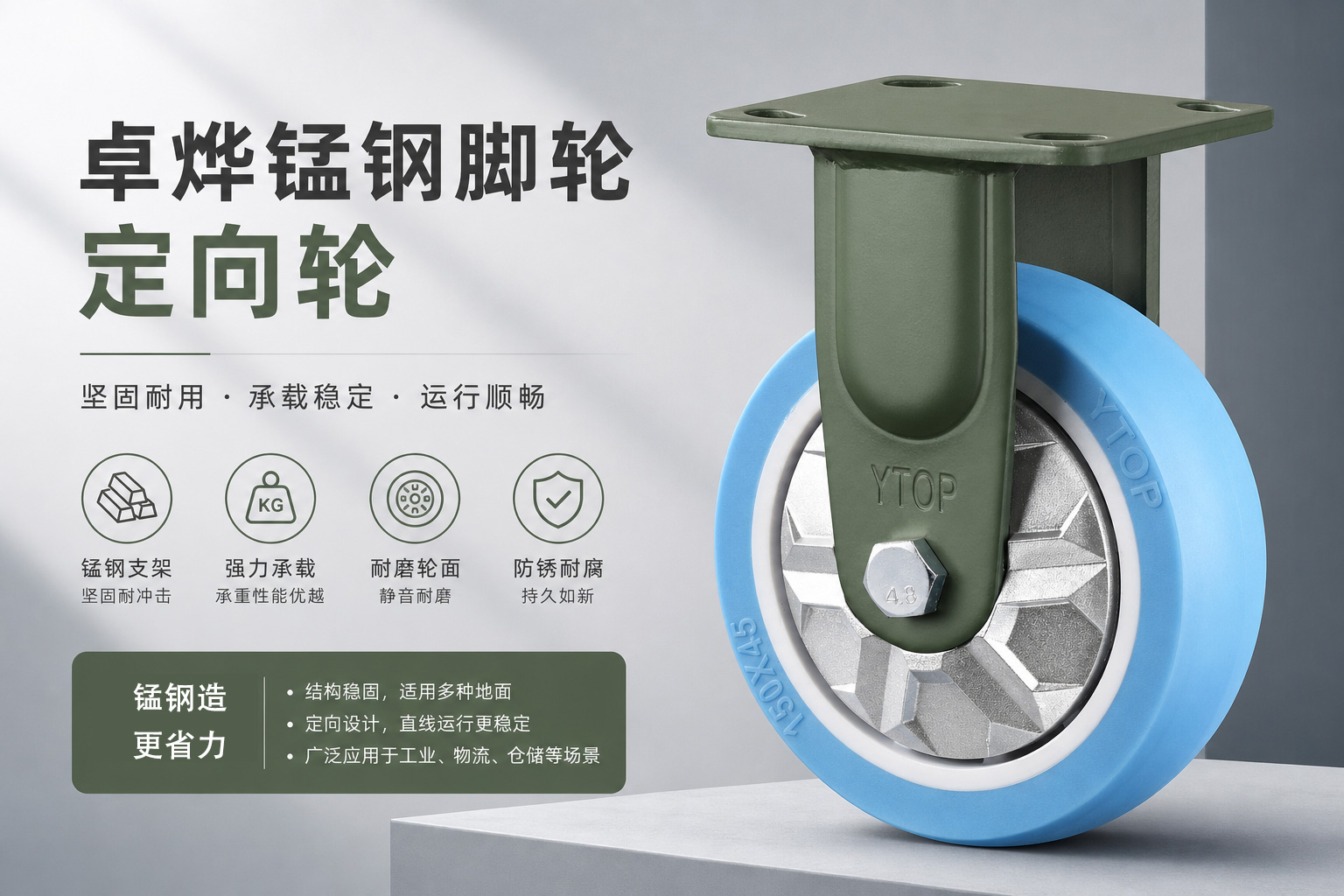
A directional wheel — also called a rigid caster or fixed caster — has a fork that is welded or bolted in a fixed orientation. The wheel rolls forward and backward along a single fixed axis but cannot pivot around the vertical axis at all. Directional wheels provide excellent straight-line tracking and stability but offer no lateral maneuverability whatsoever.
Characteristics of Rigid Casters
Rigid casters are simpler in construction — no swivel raceway, no ball bearings for rotation around the vertical axis. This makes them less expensive, more durable, and capable of carrying higher loads per unit physical size. They are the preferred choice when equipment needs to move along a fixed path repeatedly, such as on assembly lines.
Key Differences Between Universal and Directional Wheels
Understanding the differences between these two caster types is essential for correct equipment design.
Mobility and Turning
The most obvious difference is mobility. A universal wheel can turn in place and navigate tight corners. A directional wheel can only roll forward and backward. On a four-wheel cart, using two universal wheels (at one end) and two directional wheels (at the other) provides a balance: stable straight-line tracking from the rigid casters and easy steering from the swivel casters.
Load Capacity and Durability
For the same overall size, a rigid caster typically has a higher load rating than a swivel caster because there is no weak point in the swivel raceway. The swivel bearing adds extra height and mechanical complexity. This is why super-heavy-duty applications (over 1,000 kg) often use rigid casters where possible, with swivel casters reserved for the steering end. Zhuoye’s super-heavy-duty caster line (700–1,600 kg per caster) is available in both swivel and rigid configurations to suit these demanding needs.
Cost and Maintenance
Directional casters are cheaper and require less maintenance — there is no swivel bearing to lubricate. Universal casters have more moving parts and need periodic lubrication of the swivel raceway. However, the maneuverability they provide often justifies the additional cost and maintenance in most workplace applications where carts must navigate around obstacles and personnel.
Which Configuration Should You Choose?
The choice depends on how the equipment will be used.
All-Four-Swivel Configuration
Using four universal wheels on a cart provides maximum maneuverability — the cart can move sideways, rotate in place, and navigate the tightest spaces. However, all-four-swivel carts are harder to steer in a straight line because every wheel independently self-aligns. This configuration is best for equipment used in confined spaces where pushing in any direction is needed by operators.
Two Swivel + Two Rigid Configuration
This is the most common industrial cart configuration, used across warehousing, manufacturing, and distribution. Two swivel casters (usually with brakes) at the handle end provide steering, while two rigid casters at the far end track straight. This is sometimes called a “pedestrian steer” arrangement. It offers a good balance of stability and maneuverability.
All-Four-Rigid Configuration
Four rigid casters are used on equipment that moves along a fixed track or rail, or on heavy machinery that rarely needs to turn. This configuration is also used on industrial trailers towed by forklifts. This configuration provides maximum stability and load capacity but requires a tow motor or push to change direction. It is commonly seen on trailer dollies and heavy machine transport carts.
Combining Casters with Brakes and Locks
Universal wheels are often combined with total-lock brakes that lock both the wheel rotation and the swivel rotation. This converts a swivel caster into a rigid caster when engaged, allowing the operator to choose between maneuverability and stability. Rigid casters can be fitted with wheel brakes but cannot be converted to swivel configuration in any way.
Real-World Examples: Where Each Type Shines
Practical scenarios illustrate when to choose universal or directional casters.
Warehouse Picking Carts
A warehouse order-picking cart needs to navigate narrow aisles and turn frequently. Two swivel casters with brakes at the handle end, two rigid casters at the front, provide stable travel down the aisle and easy maneuvering at the picking face. This is the standard configuration in most e-commerce fulfillment centers and retail distribution warehouses worldwide.
Heavy Machinery Skates
When moving a 2,000 kg machine tool across a factory floor, rigid casters on a low-profile skateboard provide maximum load capacity and predictable straight-line movement. Swivel casters would introduce lateral play that is dangerous at these weights.
Hospital Beds and Medical Carts
Hospital beds use four swivel casters, often with total-lock brakes, because they need to be positioned precisely in any direction around patient rooms. Wheelchairs and mobile medical equipment also use swivel casters for the same reason — small spaces require omnidirectional movement. The smaller footprint of a hospital room demands omnidirectional movement.
Caster Configuration Best Practices
Following proven configuration rules ensures safe, efficient operation.
Spacing and Placement
Place casters as close to the corners of the equipment frame as possible to maximize stability. The distance between swivel and rigid casters should be at least 600 mm to provide enough caster trail for self-centering. For longer carts, consider adding a center caster to prevent sagging.
Load Distribution
Ensure the load center of gravity falls within the footprint of the casters. If heavy items are placed too far to one end, the cart will be tip-prone. A well-designed cart has 60% of its weight on the swivel end for optimal steering feel.
Zhuoye Caster Solutions
Quanzhou Zhuoye Caster Manufacturing Co., Ltd. (YTOP) produces both swivel and rigid casters across light, medium, heavy, and super-heavy duty ranges. Our manganese steel caster series provides from 100 kg to 1,600 kg per caster, with options for total-lock brakes, thread guards, and custom wheel materials. Contact our engineering team for configuration recommendations tailored to your equipment.
Understanding Caster Trail and Self-Centering
The geometric relationship between the swivel axis and the wheel contact point determines how a universal wheel behaves in motion.
What Is Caster Trail?
Caster trail is the horizontal distance between the vertical swivel axis and the exact point where the wheel contacts the ground. This offset creates a torque that self-aligns the wheel in the direction of travel — exactly like the front wheel of a bicycle. Too little trail causes the wheel to wander and shimmy; too much trail makes steering heavy.
Why This Matters in Practice
When pushing a four-wheeled cart, the two swivel casters naturally align themselves in the direction of motion. If the cart is pushed straight, both swivel casters face forward. When the operator turns, the swivel casters pivot to follow. This self-centering behavior is what makes the two-swivel-two-rigid configuration so stable and intuitive for operators.
Swivel Radius and Clearance Requirements
Universal wheels require clearance around their mounting area to pivot freely.
Swell Radius Measurement
The swivel radius (or swell radius) is the maximum horizontal distance the caster fork sweeps when rotating 360 degrees. This must be measured and compared to available clearance around the mounting location. If other equipment or frames block the swivel radius, the caster will bind or break.
Clearance Rules of Thumb
Leave at least 10 mm of clearance around the swivel radius of any universal caster. On carts with side skirts or shelves, cut notches or use offset mounting brackets to accommodate the swivel path. Zhuoye provides detailed swivel radius drawings for every caster model in our catalog. These are available as downloadable PDF or CAD files on request, helping equipment designers integrate casters correctly from the initial layout stage.
Maintenance Differences: Swivel vs Rigid
Lubrication Needs
Swivel casters require periodic lubrication of both the wheel axle and the swivel raceway. Rigid casters only need axle lubrication. A regular maintenance schedule — typically every 3–6 months — extends caster life by 2–3x.
Common Failure Modes
Swivel casters commonly fail due to worn raceway bearings (stiff swivel) or broken horn welds. Rigid casters fail due to bearing wear or wheel damage. Inspect both types regularly for cracks, flat spots, and loose mounting bolts. In dirty environments with metal chips or sawdust, install thread guards around swivel races to prevent debris intrusion. Zhuoye offers sealed double-ball raceway casters that are virtually maintenance-free for up to two years in normal service.
Frequently Asked Questions
What is the main difference between a universal wheel and a directional wheel?
A universal (swivel) wheel can rotate 360 degrees around a vertical axis, allowing the cart to change direction freely. A directional (rigid) wheel only rolls forward and backward — its fork is fixed. Universal wheels provide maneuverability; directional wheels provide straight-line stability.
Can I use all four universal wheels on my cart?
Yes, but the cart may wander and be hard to steer in a straight line. For most applications, two swivel + two rigid is recommended. Use all-four-swivel only for equipment that needs to move in tight, irregular paths such as assembly line tooling carts or mobile workstations.
Which has higher load capacity — swivel or rigid casters?
For the same size, rigid casters typically have higher load ratings because they lack the swivel raceway. However, heavy-duty swivel casters with double ball bearings can still carry 1,000+ kg per caster.
Can I convert a rigid caster to a swivel caster?
No. The swivel mechanism is integrated into the fork design. You must replace the entire caster unit. When retrofitting, ensure the mounting plate pattern matches and that the new swivel caster has sufficient load capacity. Zhuoye offers both swivel and rigid versions of the same caster model to allow easy conversion.
Related Reading
Learn more about caster types, selection, and working principles:
- Working Principle of the Universal Wheel — Understand swivel caster mechanics.
- Brake Wheel vs Universal Wheel — Compare braking and swivel caster functions.
- Common Types of Hand Trolleys — See caster configurations on different trolley types.
- What Is a Ground Bolt? — Learn floor locks for mobile equipment.
- Improving Caster Rotational Flexibility — Optimize swivel caster performance.
Explore our medium-duty casters (100-190kg) and heavy-duty casters (150-610kg) in both swivel and rigid configurations, or contact our caster experts for configuration advice.
Post time: Nov-27-2023