
When equipment weighing several tons presses down on a few casters, a single-wheel solution cannot hold up, and the answer many manufacturers give is a dual-wheel structure. Two wheels side by side may look like just one extra wheel, but behind it is a complete force logic. Explaining the forces clearly means you won’t just look at the surface when choosing.
Where Single Wheels Get Stuck Under Ultra-Heavy Loads

Single wheels cannot hold up under ultra-heavy loads because several physical conditions simultaneously reach their limits.
Load is concentrated on one tread surface, and the pressure per unit area is too great — the tread will be crushed; to reduce pressure, you need to increase wheel diameter, but wheel diameter is limited by equipment mounting height and often cannot be increased; bearings are the same — a single-wheel bearing must absorb the entire load, and its lifespan is greatly shortened. These three are interrelated, and the single-wheel solution basically has no room to maneuver in ultra-heavy-load scenarios, which is why dual wheels become the common solution.
How Dual Wheels Spread the Load

The core of dual wheels is the word “distribution.” With two wheels mounted under the same bracket, vertical load is borne jointly by two sets of treads and two sets of bearings; the contact area nearly doubles, tread unit pressure drops significantly, and crushing risk decreases; one more support point also adds one layer of redundancy — when one wheel has a problem, the other can temporarily hold up the equipment without instantly losing balance. After the load is spread, the working intensity of each component decreases, and overall lifespan is actually longer than with a single wheel.
However, it should be noted that the distribution effect of dual wheels is conditional. Many cheap dual-wheel solutions perform poorly not because the dual-wheel structure itself is bad, but because the supporting components don’t keep up — insufficient bracket rigidity, inconsistent wheel heights, inadequate bearing specifications — and the distribution is discounted.
Three Easily Overlooked Points in Force Details
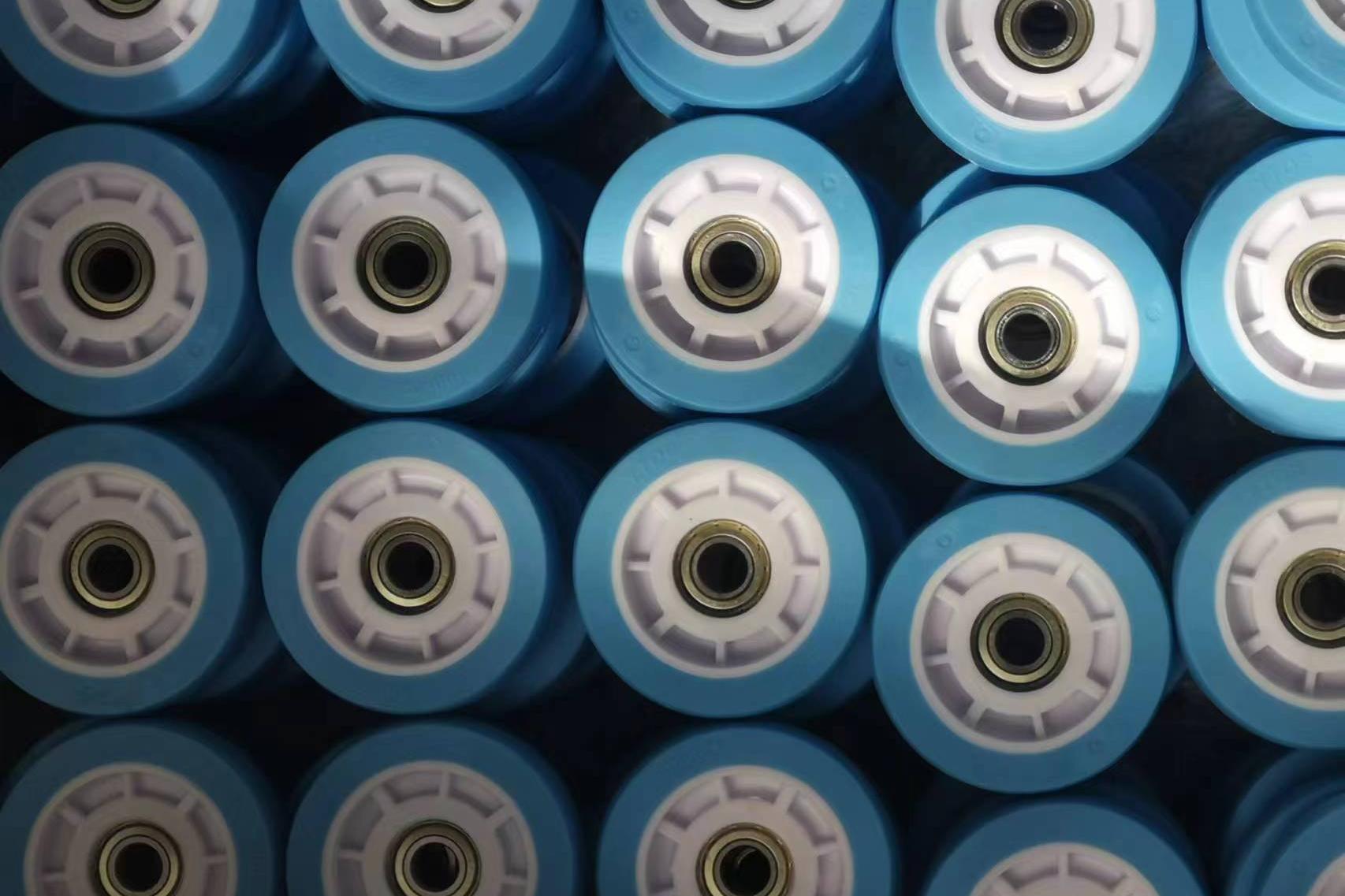
The forces on dual-wheel casters involve one detail and two prerequisites. The detail is: under uneven floor conditions, load will shift to one side wheel, and a single wheel may instantly absorb most of the load — the so-called “dual-wheel distribution” is not average at that instant. The two prerequisites are: first, bracket rigidity must be sufficient — if the bracket is soft, the two wheels “do their own thing,” and the distribution effect is directly discounted; second, mounting precision must be sufficient — if the two wheels differ in height by a significant amount, the higher one does not bear load, and the dual wheel effectively becomes a single wheel.
Therefore, dual-wheel structures have higher requirements for bracket rigidity and mounting precision than single wheels — this is also why you can’t just look at the number of wheels.
Selection Focus: Bracket, Bearings, Wheel Spacing
For ultra-heavy-load dual-wheel selection, three areas cannot be skipped. First is the bracket — if the bracket is weak, dual wheels are pointless; in heavy-load scenarios, prioritize confirming the bracket’s material and structural strength. Second is bearings — the bearings of both wheels should have their specifications calculated separately according to load, not just total load. Third is wheel spacing — wheel spacing directly affects stability and turning radius, determined by equipment center of gravity and road conditions.
The essence of ultra-heavy-load dual wheels is trading structure for lifespan: two wheels distribute the load, pressure decreases, bearings are relieved, and overall lifespan is extended. The specific wheel diameter and bracket structure to configure requires reporting equipment weight, floor conditions, and mounting height together to the manufacturer for calculation. Zhuoye manganese steel casters also first calculate load before determining bracket rigidity and bearing specifications for heavy-load dual wheels.
Related Reading
- Super Heavy Duty Casters (700-1600kg)
- Heavy Duty Caster Load Capacity Guide
- Low Center of Gravity Casters: Stability Solutions
Post time: Sep-19-2026