
As an important mobility device, industrial casters are widely used in various industrial scenarios. According to the different use scenarios, choosing the right industrial casters is the key to ensure the efficient movement and safe operation of the equipment.
First, smooth ground scene:
In the smooth ground scene, the main task of industrial casters is to provide low friction and smooth movement. Common smooth ground including indoor floors, concrete floors and so on. For this kind of scene, it is recommended to choose industrial casters with the following characteristics:
Low friction: Choose casters made from hard materials such as polyurethane or rubber. These materials have a low coefficient of friction, which reduces resistance when pushing or pulling equipment and improves mobility.
Quiet operation: In order to maintain a quiet indoor environment, choose industrial casters with shock absorption and cushioning effects. Rubber and polyurethane casters can effectively reduce floor vibration and noise.
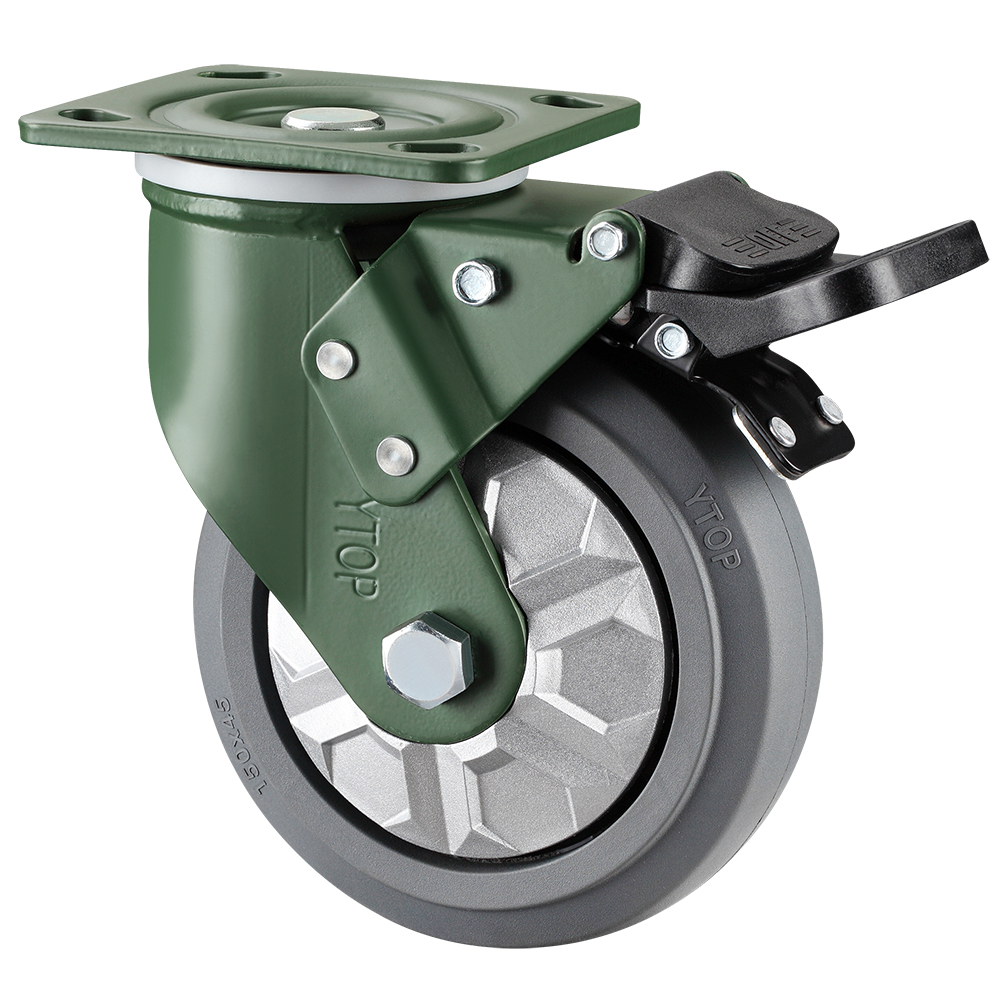
Second, the uneven ground scene:
In uneven ground scenarios, industrial casters need to deal with challenges such as uneven ground and particles. Common uneven ground includes poorly paved ground, earthy ground and construction sites. For this scenario, it is recommended to choose industrial casters with the following characteristics:
Abrasion resistance: Choose caster materials with abrasion resistance, such as those made of nylon. These materials can withstand greater impact and friction on uneven ground, extending the service life of casters.
High load capacity: Considering the challenges of uneven floors, choose industrial casters with high load capacity. This will ensure that the equipment remains stable under heavy loads or uneven ground to avoid accidents.
Adaptability: Industrial casters should have the ability to adapt to different floors. Choose casters with adjustable heights or swivels so that they can be adjusted according to the ground conditions to ensure smooth movement of the equipment.
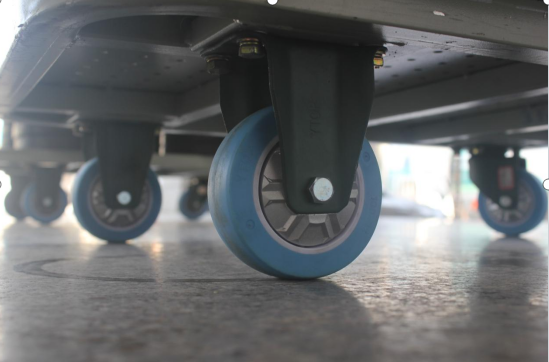
Third, high temperature or chemical environment scenarios:
In high temperature or chemical environment scenarios, industrial casters need to be able to withstand high temperatures, corrosion and chemical substances. Common high temperature or chemical environment including stoves, chemical plants, laboratories and so on. For this scenario, it is recommended to choose industrial casters with the following characteristics:
High Temperature Resistance: Choose casters that can work in high temperature environments, such as high temperature polyimide or high temperature resistant metal materials. These materials have good heat resistance and can maintain the performance and stability of casters in high temperature environments.
Corrosion resistance: In chemical environments, choose caster materials that can resist corrosion, such as stainless steel or chemically inert materials. These materials can prevent the erosion of chemicals on the casters and extend the service life.
Anti-static capability: In scenarios such as laboratories or electronic manufacturing, choose casters with anti-static capabilities to avoid static damage to equipment or products.
Related Reading
Explore more industrial caster selection, scenario, and purchasing guides:
- How to Choose Casters: A Guide to Key Selection Factors — Learn about key caster selection factors including load and environment.
- Caster Selection Guide: Fixed Casters/Swivel Casters — Learn about fixed vs swivel caster selection for various scenarios.
- Common Casters Selection Guide — Learn about common caster selection including various applications.
- Industrial Casters Purchasing Guide: Easy to Understand — Learn about industrial caster purchasing including selection tips.
- Caster Selection Strategy: Material and Brand Double Consideration — Learn about caster selection strategy including material and brand.
Explore our complete range of versatile heavy-duty casters (150-610kg) and medium-duty casters (100-190kg) for various industrial scenarios, or contact our sales team for expert caster selection guidance.
Post time: Dec-15-2023