
Some workshops run all-metal wheels with a clanging noise; others run all rubber-coated wheels, rolling quietly. The metal wheel vs rubber-coated wheel debate has no universal answer — it depends entirely on your workshop floor, load, and environment.
The Core Difference
A metal wheel’s tread is made directly of metal — cast iron, cast steel, or stainless steel — relying on the metal’s own strength and hardness to carry the load. A rubber-coated wheel has a metal wheel core with a layer of rubber or polyurethane bonded to the outside: a metal base with a soft surface touching the floor.
One is pure metal against the floor; the other is metal plus a soft cushion. Their personalities could not be more different.
Where Metal Wheels Excel and Where They Fall Short
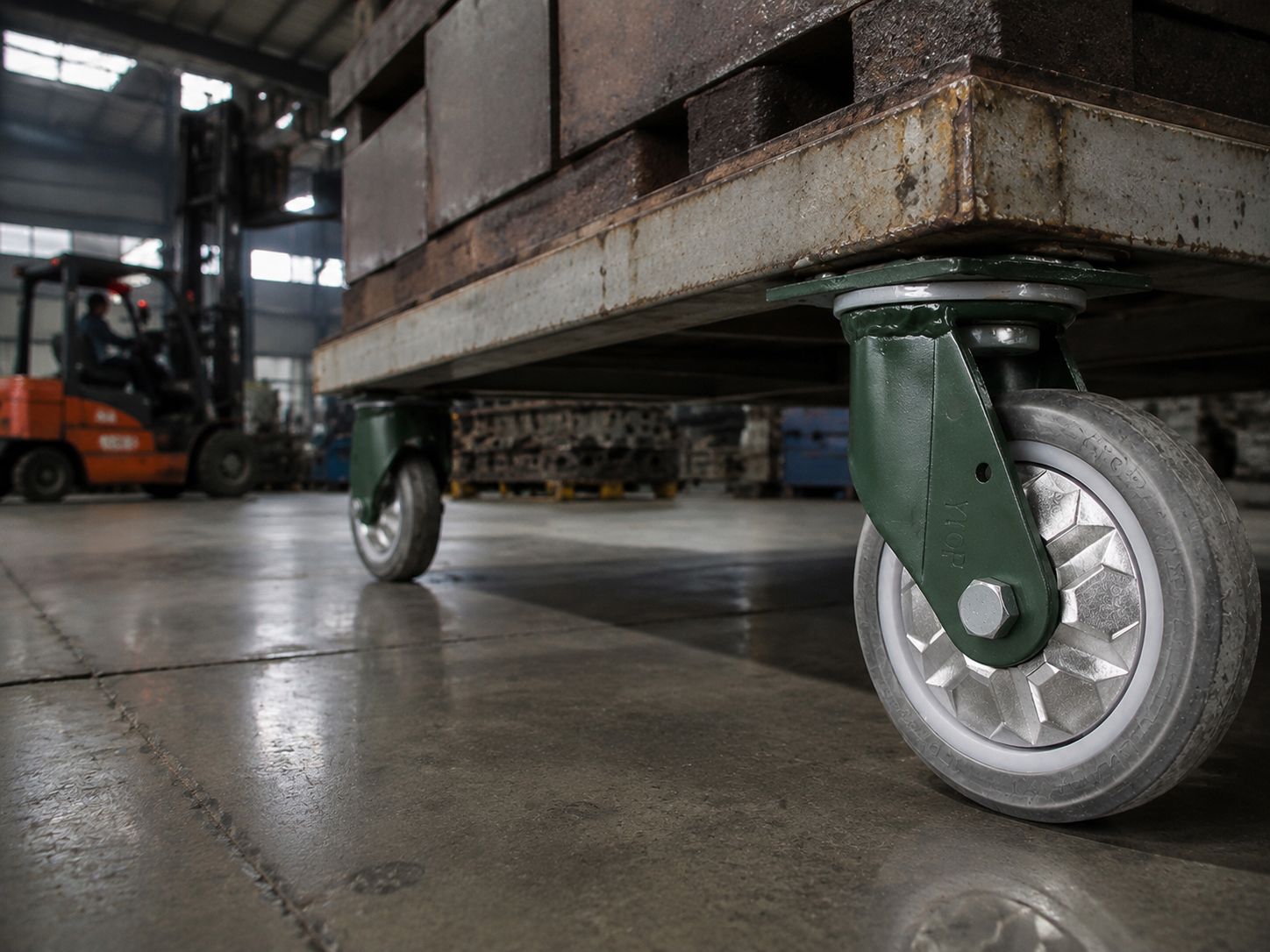
Metal wheels are built for heavy work. Their load capacity is high — multi-ton equipment is no problem. They handle high temperatures, oil, and rough floors without complaint. There is no rubber layer to age, so the wheel body lasts a long time.
The weaknesses are equally clear: loud noise, vibration transmitted directly through the wheel, floor damage over time (concrete gets grooved), and weak grip on smooth or wet surfaces. Metal wheels belong where “the floor is not valuable, the load is not light, and the environment is not clean.”
Rubber-Coated Wheels Cover the Gaps
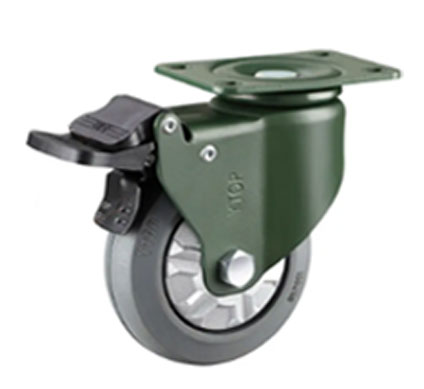
Rubber-coated wheels address exactly the metal wheel’s pain points. The soft surface absorbs most rolling noise — the workshop gets noticeably quieter. Floor wear is minimal, so epoxy and tile floors can use them. The soft surface also has better friction, preventing slips on slopes and wet floors.
The trade-off: lower maximum load than metal wheels, wear resistance depends on the coating material grade, and high-temperature environments age the rubber coating faster. Temperature must be factored into the selection.
Match the Wheel to the Scenario
Once you lay out the scenarios, the choice becomes clear:
• Foundries, welding shops, high-temperature, heavy load, rough floors: metal wheels — they take the abuse.
• Precision assembly, electronics workshops, light load but quiet required: rubber-coated wheels.
• General warehouse logistics, medium load, flat floor: rubber-coated wheels offer better comfort and are sufficient.
• Port and salt-spray environments: metal wheels need heavy corrosion protection, or choose high-load rubber-coated wheels.
Rubber-Coated Material Subtypes
After deciding on rubber-coated, the coating material itself matters:
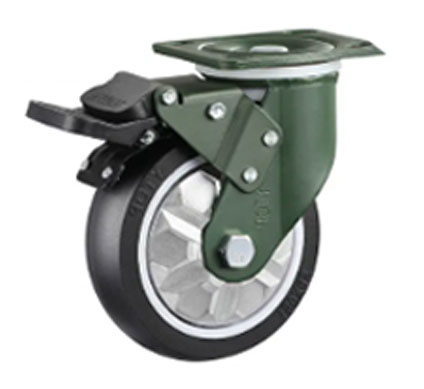
• Polyurethane: Wear-resistant, load-bearing, anti-slip — the balanced choice for most industrial workshops.
• Rubber: Good elasticity, lower cost, sufficient for light-load quiet scenarios.
• Nylon-coated (harder): Easy to push, but noise and floor-protection benefits are reduced — better for pushing-lightness-first applications.
Even among “rubber-coated” wheels, polyurethane and rubber differ significantly in both price and performance. Match the coating to your load and environment.
The Trade-off Is “Durable” vs “Comfortable”
Choosing between metal and rubber-coated wheels is fundamentally a trade-off between durability and comfort. Before selecting, look at your workshop floor and load first: heavy-load, high-temperature, rough floor → metal; quiet floor-protection priority → rubber-coated.
Zhuoye manganese steel casters offer both wheel types. The selection logic is always the same: floor first, then load, then tread material.
Related Reading
Looking for more in-depth caster guides and industrial mobility resources? Explore these related articles:
- Caster Tread Material: Rubber vs Polyurethane vs Nylon Comparison — Deep dive into the three most common tread materials.
- Why Workshop Carts Are Hard to Push: Bracket, Diameter & Lubrication — Diagnose the hidden factors behind heavy pushing.
Explore our heavy-duty casters with both metal and rubber-coated options, or contact our engineering team for a recommendation tailored to your workshop.
Post time: Nov-05-2026