
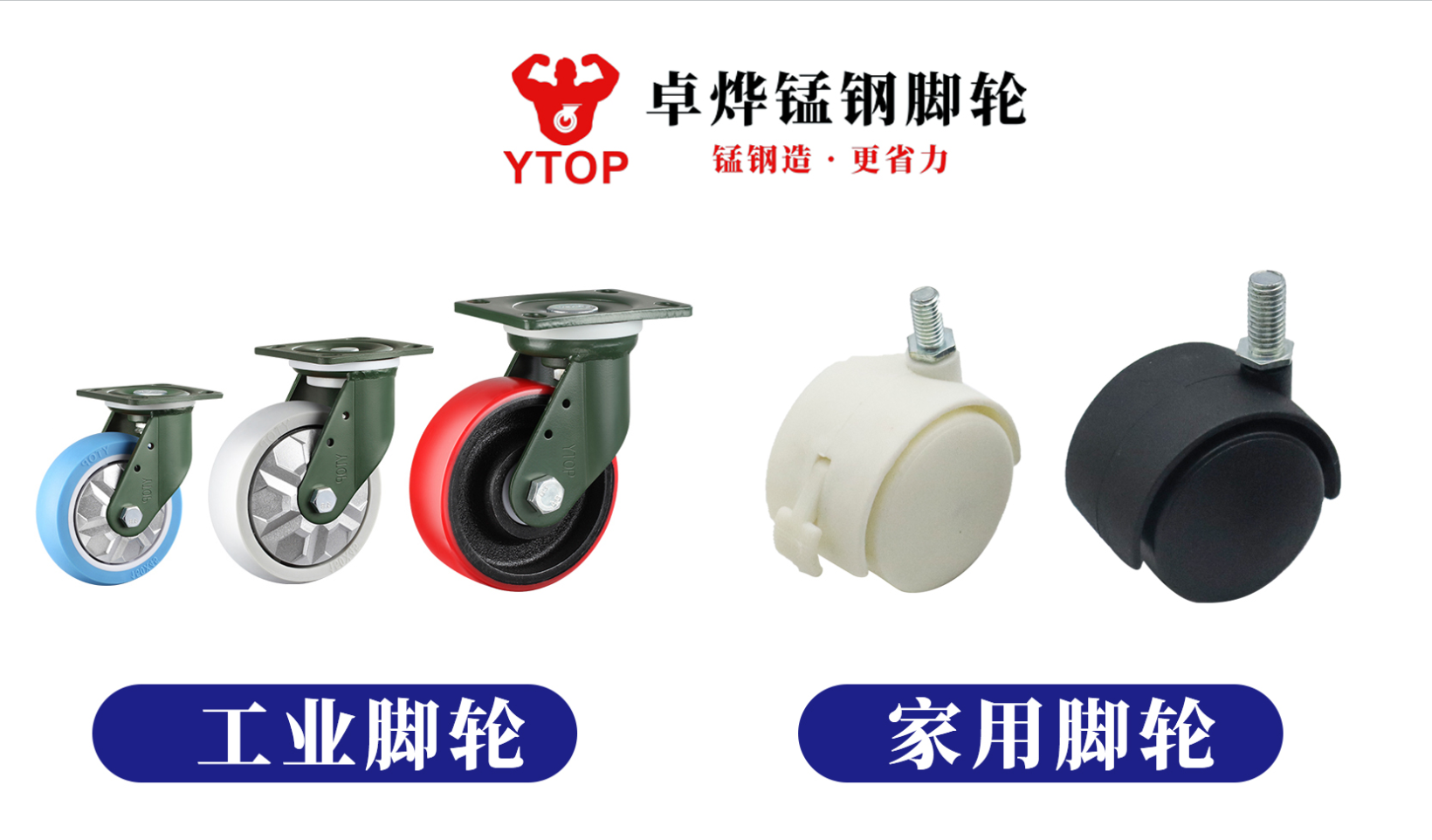
Industrial casters and domestic casters differ in their choice of materials.to adapt to their different operating environments and load requirements.
Material characteristics of industrial casters
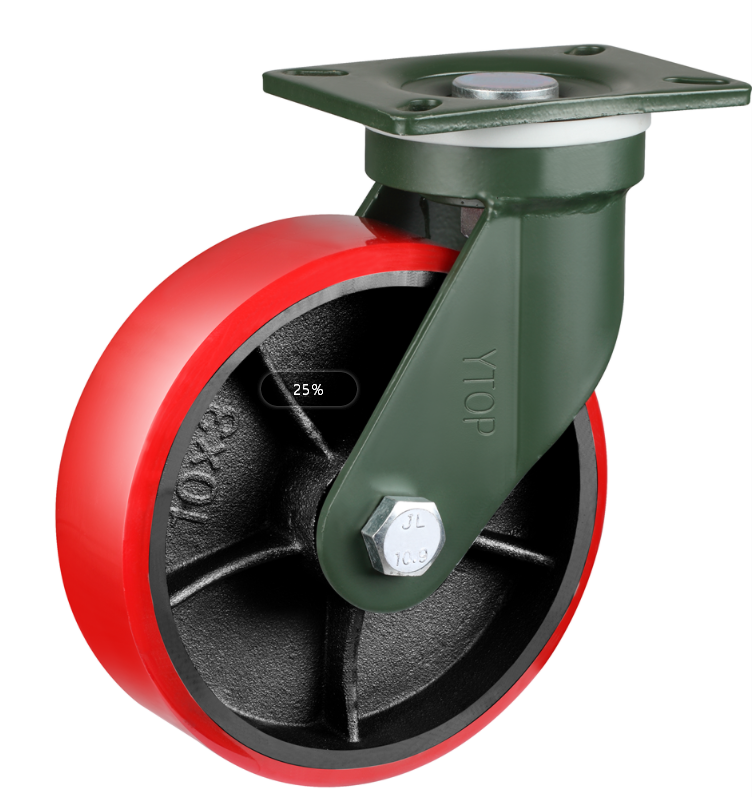
Metal:Commonly used in heavy industry and harsh environments, the such as steel and stainless steel.This is because they have high strength and good load bearing capacity.
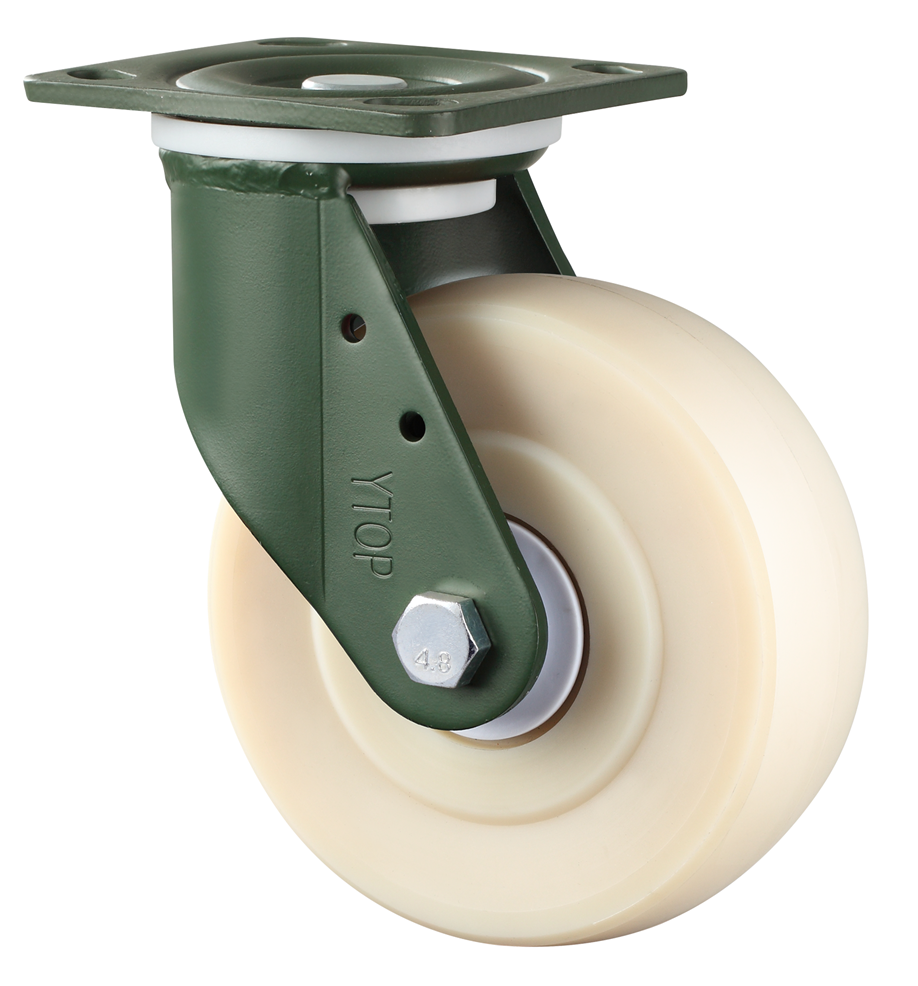
Nylon:with high strength, toughness and wear resistance.Suitable for industrial environments that require good load-bearing capacity and corrosion resistance.
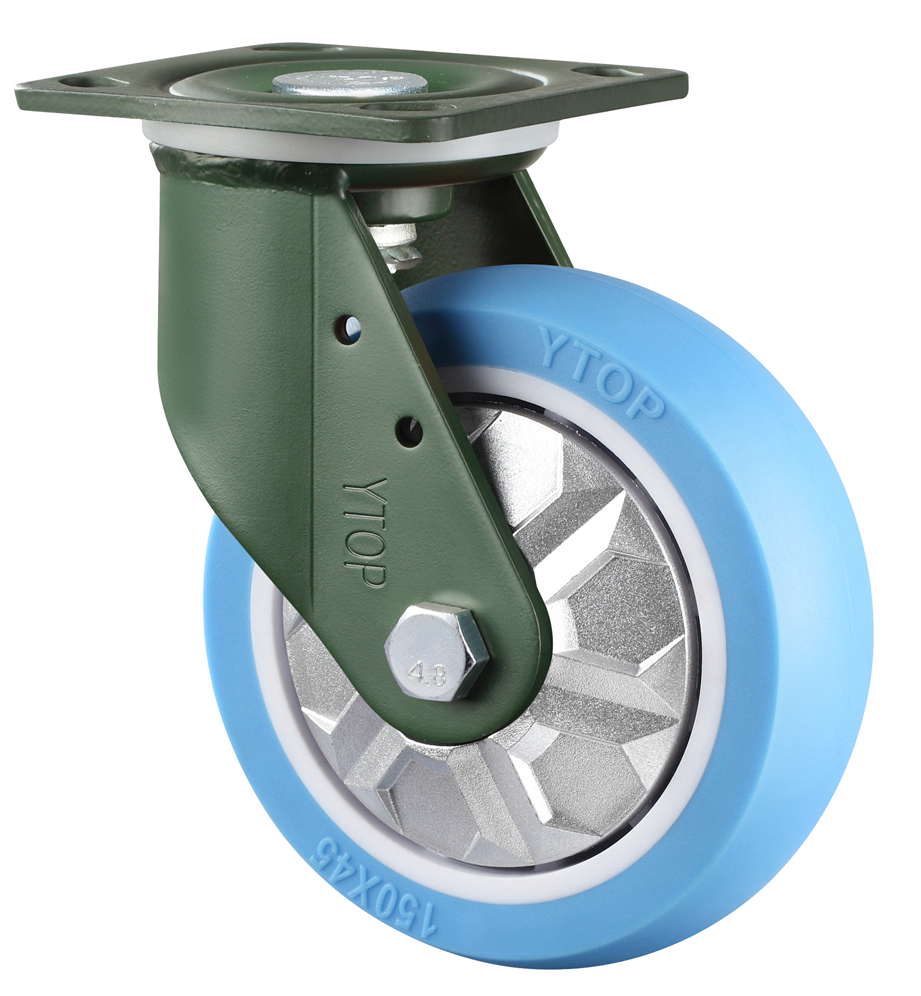
TPU:Wear-resistant, oil-resistant, flexible For industrial applications requiring stable performance.However, the hydrolysis resistance is relatively poor.
Rubber:Providing a high coefficient of friction and good vibration damping properties, the Suitable for industrial applications where vibration cushioning is required.
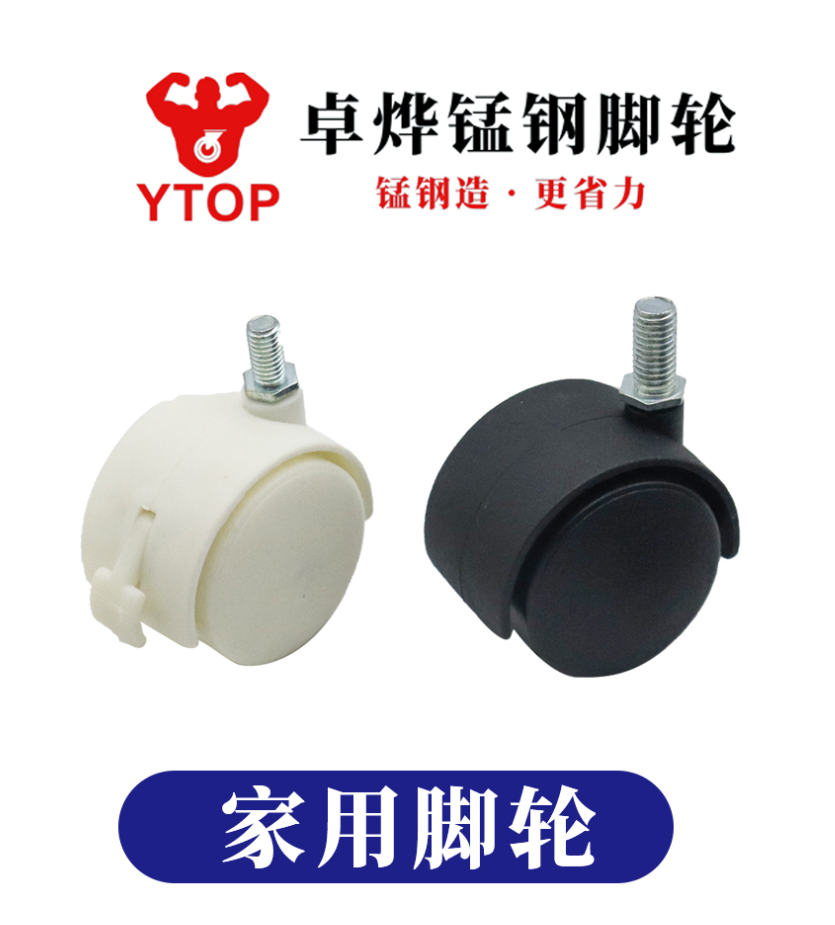
Material characteristics of household casters
Plastic:such as nylon and TPU.Lightweight, drop and corrosion resistant, the Variety of colors.Suitable for home and office environments.
Composites:Combining the advantages of multiple materials.such as high-strength, lightweight, corrosion-resistant.Ideal for domestic applications where high performance is required.
When selecting casters, the Suitable materials should be selected according to the actual application scenarios and needs of the To ensure stable operation and efficient work of the equipment.
Related Reading
Looking for more in-depth caster guides and industrial mobility resources? Explore these related articles:
- What is a Caster Wheel — Complete guide to caster wheels.
- Main Components — What are the main components of a caster?
- Types of Caster Wheels — Explore various caster wheel types.
- Types of Brackets — Different caster bracket types.
- Wheel Mounts — Different caster wheel mount types.
Explore our complete range of heavy-duty casters (150-610kg) and super heavy-duty casters (700-1600kg), or contact our engineering team for expert guidance.
Related Reading
Explore more caster material comparisons, industrial vs household applications, and selection guides:
- How to Choose the Right Caster? Professional Manufacturers Answer — Learn about caster selection including industrial vs household material differences.
- How Many Types of Caster Materials Are There? — Learn about various caster material types including industrial and household applications.
- Material and Characteristics of Rubber-Coated Casters — Learn about rubber-coated caster materials including industrial and household use.
- Casters in Furniture: The Art of Mobility and Space Management — Learn about household caster applications including furniture and mobility.
- How Much Do Industrial Casters Play a Role in the Handling Industry? — Learn about industrial caster applications including material requirements.
Explore our complete range of heavy-duty industrial casters (150-610kg) and light-duty household casters (35-80kg) for different applications, or contact our sales team for expert caster material selection guidance.
Post time: Jul-05-2025