
Every swivel caster contains two bearings, and most buyers only ever think about one of them. The wheel bearing is visible, easy to check and easy to replace. The swivel raceway is hidden inside the fork, carries the entire vertical load of the cart, and is usually the part that decides how long a caster actually lasts.
This article explains what the raceway is, why it fails before the wheel does, and what to specify so that it does not.
Two Bearings in One Caster
A caster has to do two separate jobs at once, and each of them needs its own bearing.
The wheel bearing lets the wheel rotate around the axle. It carries the load in a radial direction, across the axle, and it is the bearing people mean when they talk about a caster being smooth or rough.
The swivel raceway lets the whole fork rotate around a vertical axis. It carries the load in a thrust direction, straight down through the mounting plate, and it has to do that while the cart is turning, being pushed sideways, or parked under load for hours.
Both can be in perfect condition while the caster still feels wrong, because the symptoms of a worn raceway — a cart that will not track straight, a shimmy at speed, a clunk when the load shifts — do not appear in a wheel spin test.
What the Raceway Actually Looks Like
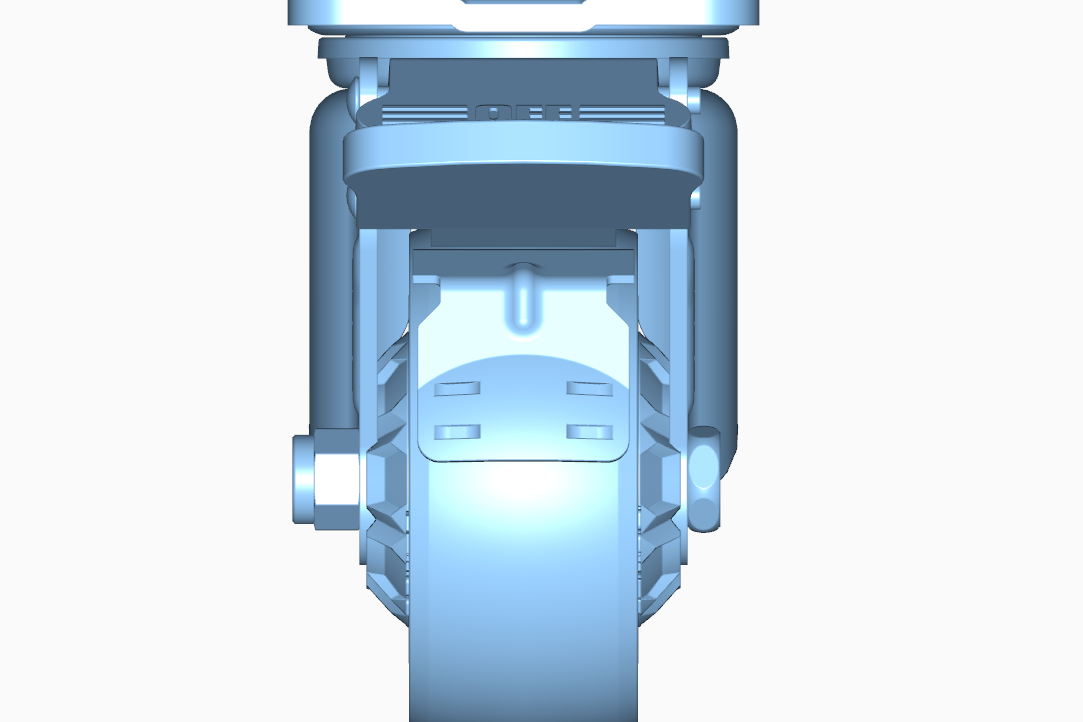
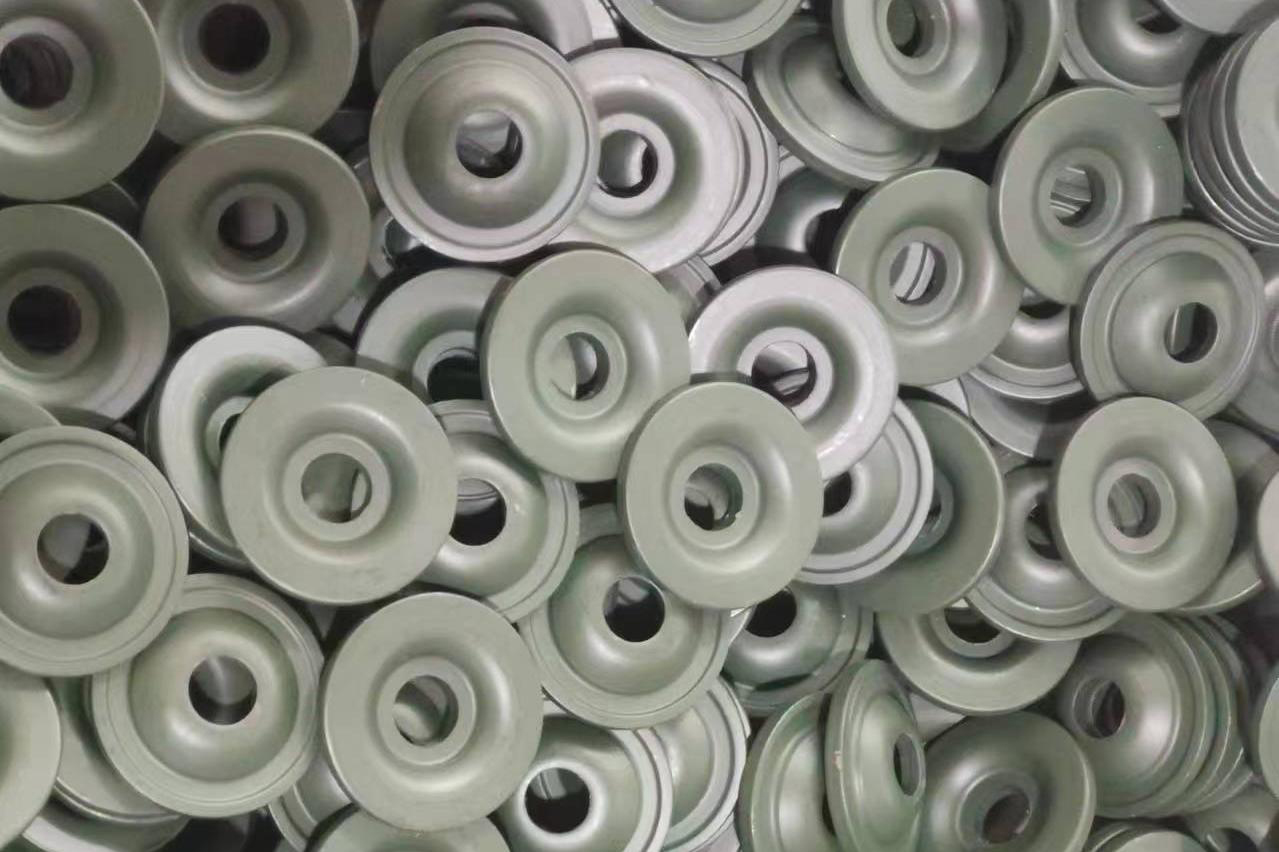
Inside the fork there are two hardened discs with circular tracks, and a ring of steel balls between them. The upper disc is fixed to the mounting plate; the lower disc rotates with the fork. The balls run in the track and take the vertical load while allowing rotation.
The quality differences between casters are largely differences in this assembly. A cheap caster may use a single row of small balls in a shallow track, or a plain washer with no rolling element at all. A better one uses a double row, hardened and ground tracks, and a seal or a shield to keep dirt out.
Three variations matter in practice:
Plain bushing or washer. No rolling elements. It works on very light loads and short life, and it is common on furniture casters. It has high friction and no thrust capacity worth the name.
Single-row ball raceway. The standard for medium-duty industrial casters. Adequate for 100 to 300 kg per caster, provided the load is mostly vertical.
Double-row or sealed raceway with thrust capacity. Used on heavy-duty and super heavy-duty casters, and on anything that will be towed, pushed sideways, or run on uneven floors. The second row shares the load and resists the tilting moment that a side load creates.
Matching Raceway Type to Load Class
Capacity ratings on a caster datasheet refer to the whole assembly, but not every rating tells you which raceway is inside. Two casters of the same nominal capacity can differ by a factor of three in swivel life if one carries a single row of small balls and the other a hardened double row.
For light duty up to roughly 100 kg per caster, a single-row raceway with a dust shield is sufficient, and the extra cost of a double row buys little. Between 100 and 300 kg, the decision depends on duty cycle: a cart that is moved twice a day is fine with a standard single row, while a cart that turns hundreds of times per shift deserves the better bearing.
Above 300 kg per caster, and on any application with side loads, specify a double-row or thrust-capable raceway as a starting point. The cost difference per caster is small compared with the cost of replacing a set, and the second row also protects the fork from the tilting moment that a single row transmits directly into the plate.
One more variable is height. A double-row raceway is taller, so a heavier-duty caster of the same wheel diameter will raise the deck. If the cart is designed around a fixed height — a conveyor frame, a scale platform, a dock interface — check the overall height before changing the raceway type.
Why the Raceway Fails Before the Wheel
Four mechanisms account for most raceway failures we see in service.
Contamination. The raceway sits at the joint where the fork meets the plate, which is exactly where dust, grit and wash water collect. Once abrasive particles are inside, every rotation grinds the track. This is the single most common cause, and it is the reason a caster used outdoors at the same load lasts a fraction of the life of one used indoors.
Loss of preload. The assembly is set up with a small preload so the balls stay in contact with the track. Vibration and repeated impact gradually loosen it. Once preload is gone, the fork starts to rock, the load concentrates on a few balls, and the track brinells — small dents that turn into rough spots.
Side loads. A caster is designed for vertical load. When a cart is towed, pushed sideways into a dock, or dragged over a kerb, the raceway sees a lateral force it was not sized for. The result is a tilted fork, uneven ball loading and rapid wear.
Heat and chemicals. Washdown chemicals strip grease; high temperatures thin it; some solvents attack the seal. Both leave the raceway running dry, which fails fast once grit arrives.
What a Failing Raceway Feels Like
You can identify a raceway problem without dismantling anything, using four checks.
Notchiness. With the cart unloaded, rotate the fork slowly through a full turn by hand. It should feel smooth and slightly damped. A series of small catches, or a spot where it suddenly lets go, means the track is damaged.
Vertical play. Hold the fork and try to lift it against the plate. Any visible movement means preload has been lost or the track has worn.
Tracking. Push the cart in a straight line. A cart that veers, or that needs constant correction, has at least one caster whose raceway is stiff — and stiff casters always steer the cart away from the direction of travel.
Noise under load. A clunk or a snap when the cart starts moving, or when weight shifts from one caster to another, is the sound of a fork rocking on a worn raceway.
The Environment Decides the Specification
The same caster that lasts five years in a dry assembly hall can fail in months in the wrong environment. Three cases dominate.
Dust and swarf. Machining, sanding and casting areas produce fine particles that enter any unsealed joint. Specify a sealed or shielded raceway, and add a cleaning step to the maintenance routine rather than relying on grease alone.
Washdown. Food, pharmaceutical and outdoor applications combine water with detergents. A raceway that is not sealed will be flushed clean of grease within weeks. Stainless housings help with corrosion but do nothing for the bearing unless the seal is right.
Temperature and chemicals. Cold rooms stiffen standard greases; hot areas thin them; aggressive chemicals attack both. In these cases the grease specification is as important as the caster itself, and it is worth asking the supplier which grease is fitted rather than assuming a general-purpose one.
Three Mistakes That Shorten Raceway Life
The first mistake is greasing without cleaning. Grease added over a contaminated joint does not flush the grit out; it drives it deeper into the track where every rotation grinds it against the balls. Clean first, then grease.
The second is using the caster as a brake. Parking a loaded cart by jamming a caster against a wall or a kerb puts a lateral load straight into the raceway, and repeated parking of this kind is often enough to explain a set of casters that fail early with no obvious abuse.
The third is mixing damage with capacity. When a cart starts pushing hard, the usual reaction is to fit casters with a higher load rating. If the real problem is a worn raceway or misaligned wheels, the heavier caster will simply fail in the same way a few weeks later. Check the swivel joint before buying capacity.
Maintenance That Actually Helps
Two interventions extend raceway life, and both are cheap.
First, clean before you lubricate. Adding grease on top of grit pushes the grit deeper into the track. Wipe or blow out the joint, then apply grease through the nipple if one is fitted, until clean grease appears at the seal.
Second, replace rather than re-grease once play has developed. A raceway with visible vertical play cannot be restored by lubrication; the track is already damaged, and continuing to run it will damage the fork and the plate as well.
A practical interval for most plants is a visual and feel check every quarter, and a re-grease on the same schedule for casters in dusty or wet areas. That is far cheaper than replacing four casters because one seized at an inconvenient moment.
What to Specify
Four questions cover most of the decision.
What is the load on the worst caster, not the average? The raceway carries the full vertical load, so the rated capacity must be met at the worst corner.
Will the caster see side loads — towing, kerbs, dock plates, being pushed against a wall? If yes, specify a double-row or thrust-capable raceway and accept the extra height and cost.
What is in the air and on the floor? Dust, water, chemicals and temperature each point to a different seal and grease combination.
How will it be maintained? A caster with a grease nipple and a scheduled re-grease will outlast a sealed unit that is never checked in a dirty environment, and vice versa in a clean one.
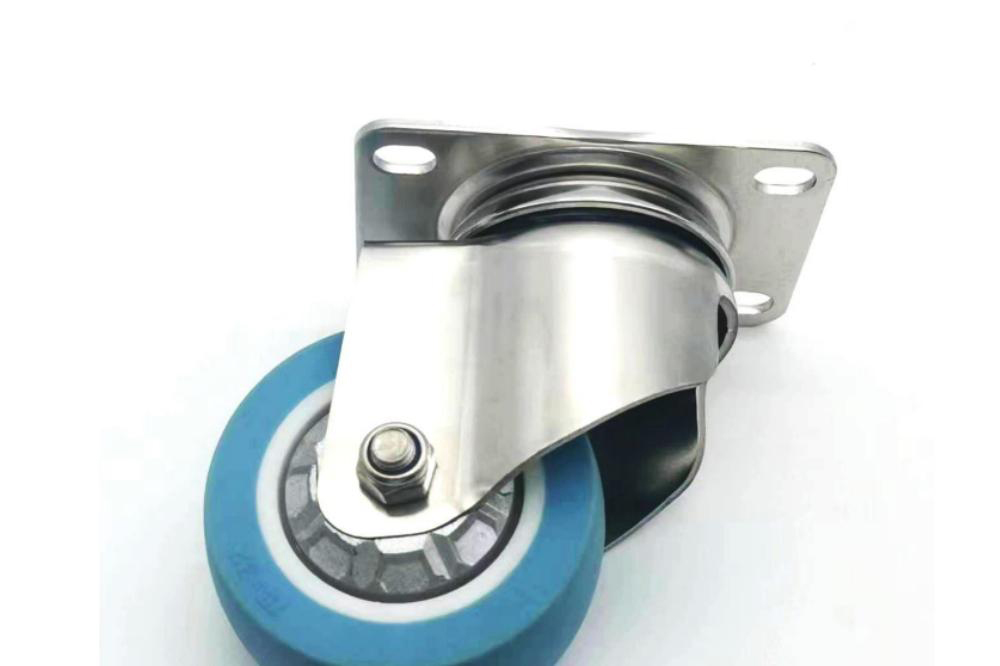
If you can tell us the load per caster, the floor and the environment, we will confirm whether the raceway in your current specification is adequate or whether the failures you are seeing come from the joint rather than the wheel.
Related Reading
Two guides that cover the parts around the raceway:
- Caster Bracket Material: The Technical Secrets — how the fork and plate are made, and why material choice affects raceway life.
- Medium Caster Maintenance Tips — the routine checks that keep swivels clean and correctly greased.
Explore our heavy-duty casters (150-610kg) and super heavy-duty casters (700-1600kg) with double-row raceways for side-loaded applications, or contact our engineering team with your load and environment details.
Post time: Nov-16-2026