
Floor lock selection, the core is answering three questions: how heavy the equipment is, what size the base frame is, where installed for use. Once these three are determined, pads, pedals, and surface treatment are all easy to discuss. In order, it is recommended to first calculate load, then match installation dimensions, finally look at usage environment — reversed order, later easily rework.
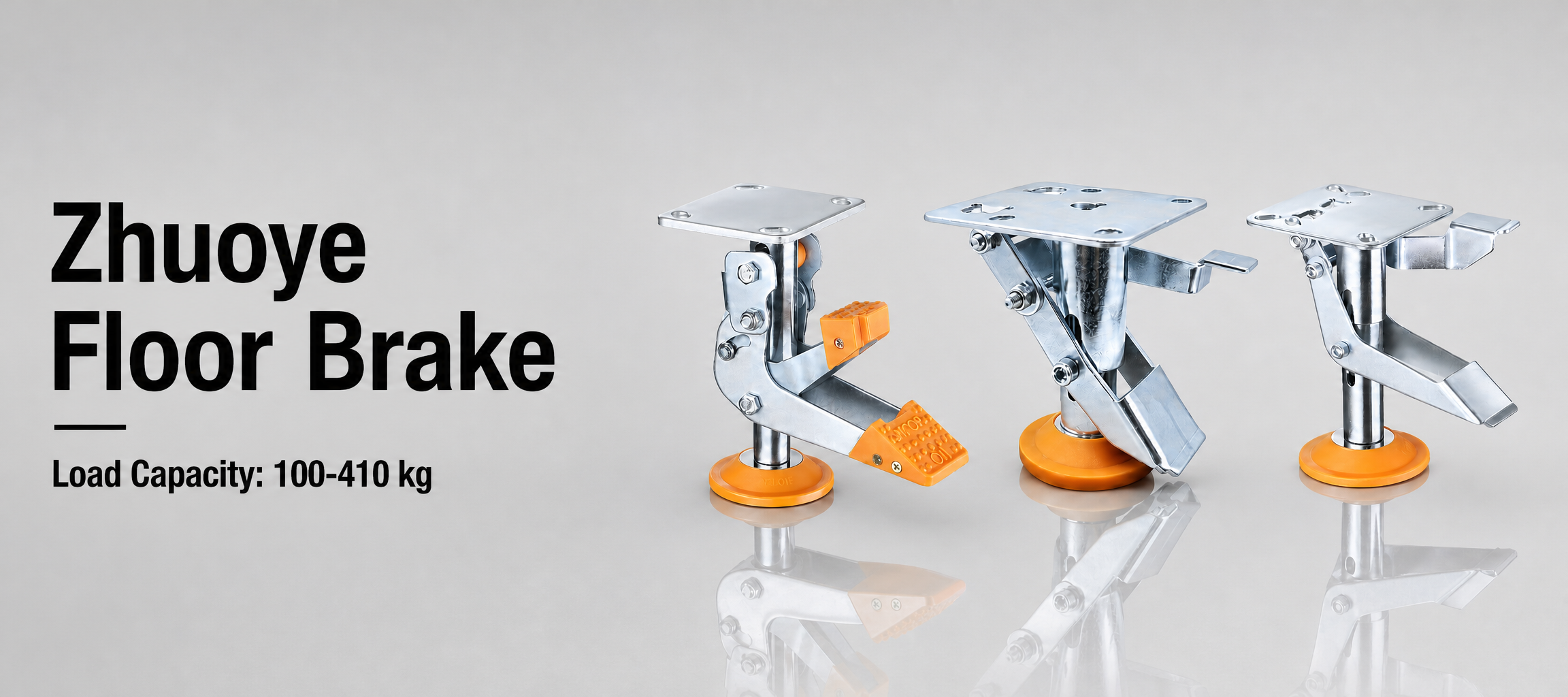 Floor locks are graded by per-unit load, and common specifications on the market range from 300kg to 1200kg. The calculation method is equipment total weight divided by number of floor locks, then multiplied by a safety coefficient. Safety coefficient usually taken between 1.5 and 2, specifically depending on usage: flat floors, more static parking, take lower limit; high pushing frequency in workshops, uneven floors, with sudden stops and vibration, take upper limit. Example: four-wheel equipment total weight 600kg, install 4 units, per-unit theoretical share 150kg, counting margin basically need to select 300kg grade or above. Selection rather leave some surplus, don’t stick to rated upper limit — floor locks long-term full load, locking mechanism clearance will become larger, and locking effect declines faster than expected.
How to Match Installation Specifications
Mainstream divided into bottom flange installation and side installation. Flange installation four-hole or two-hole, screws locked from top down, suitable for equipment with flat base frames; side installation locked in from side, suitable for occasions with limited base frame space and inconvenient drilling from top. The most important are three numbers: hole spacing, hole diameter, installation height — one-to-one correspondence with equipment base frame reserved hole positions, and measuring one wrong requires rework. Before placing an order, use vernier calipers to measure hole spacing and hole diameter accurately.
How to Determine Support Height
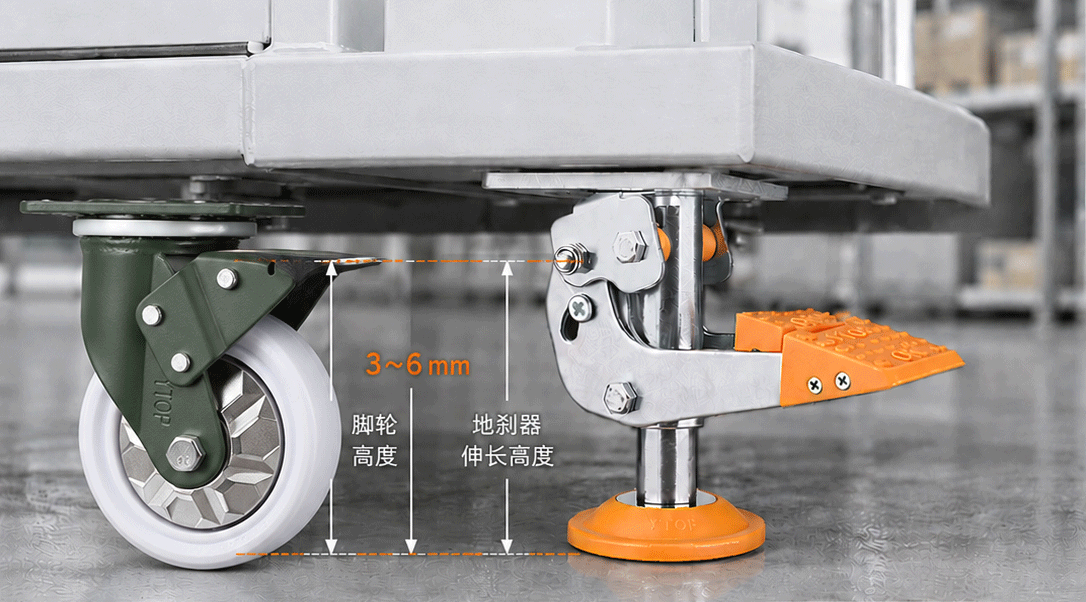
After floor lock pressed, must be able to “lift off” wheels, letting equipment actually press on pads. Height calculated by caster installation height plus reserved margin. Insufficient height, pads, can’t lock dead; excessive height, equipment tilts, center of gravity unstable. This dimension generally easier to align when matching same factory same series, because caster height and floor lock stroke are designed according to the same set of specifications.
How to Select Pads
Pads are the parts that “eat the floor,” and grip relies entirely on them. For relatively dense surfaces such as concrete and epoxy flooring, select rubber or PU pads, good grip and also vibration damping; for steel welded surfaces and rough floors, metal pads are more wear-resistant; for those worried about scratching smooth floors, use nylon pads. To put it plainly, reverse推 according to floor conditions: slippery floors select rubber base, rough floors select metal base.
How to View Pedal Operation Force
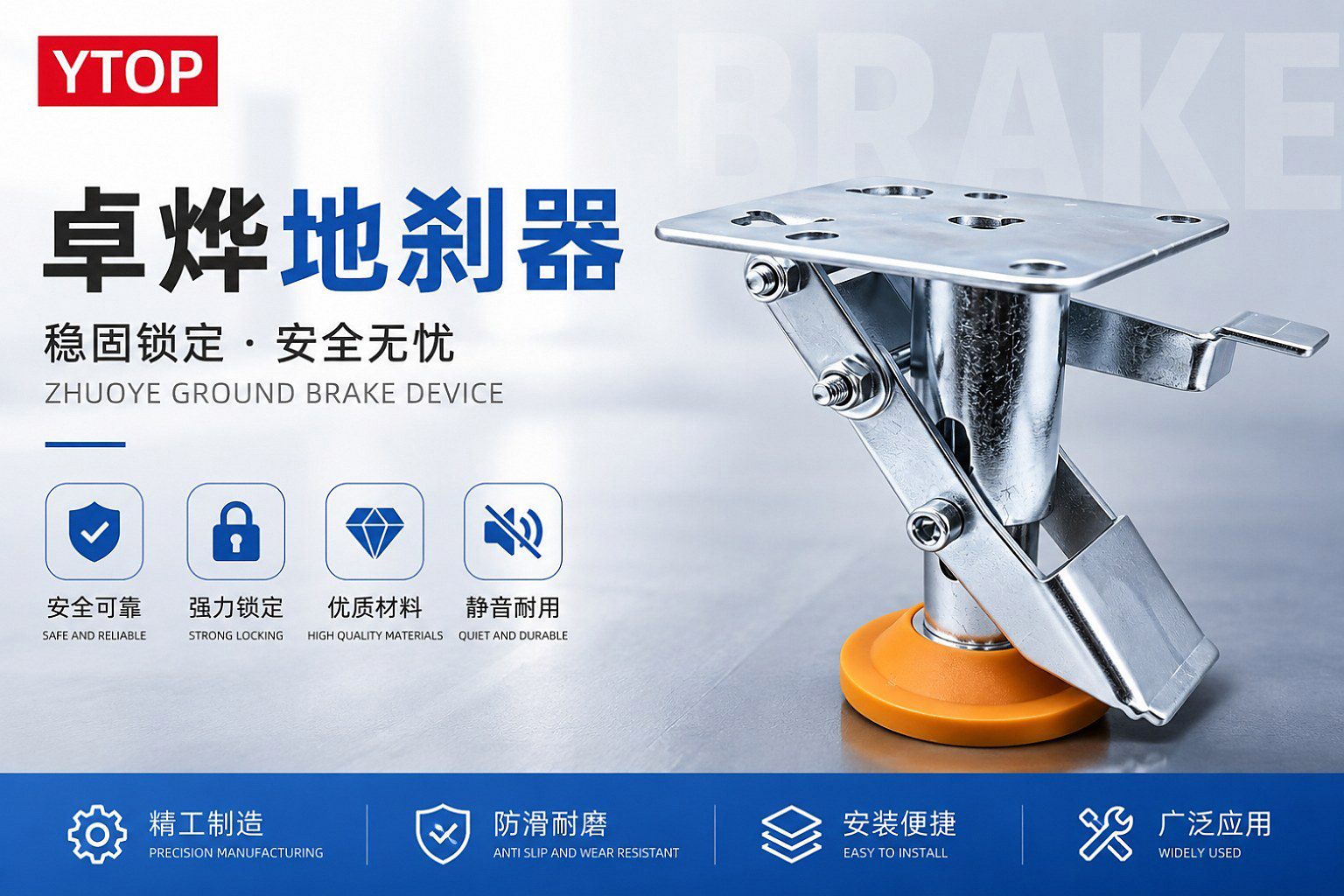
For equipment starting and stopping dozens of times a day, pedal heaviness greatly affects work. Standard pedals have large force but simple and reliable structure, sufficient for low-frequency movement; for high-frequency movement, limited operator strength, narrow space unable to reach pedal, consider enlarging pedal or hand-rotating type. Each manufacturer’s mechanism design differs, experience difference不小, can try samples if possible.
How to Determine Surface Treatment
Look at environment. Ordinary dry workshops galvanized or eco-friendly powder coating sufficient; humid, coastal areas select stainless steel or zinc-nickel alloy, otherwise rusts fast; food, pharmaceutical industries need washable, pollution-free, select 304 stainless steel. Costs saved on surface treatment, later rust rework doubled back.
Before placing an order, go through the list: equipment total weight and how many installed, corresponding per-unit load; base frame hole positions, corresponding installation specifications; caster height, corresponding support height; floor conditions, corresponding pad material; operation frequency, corresponding pedal form; usage environment, corresponding surface treatment.
Several places easy to go wrong: only report equipment weight not report quantity, load calculation wrong; only look at wheel diameter not look at hole spacing, installed doesn’t match; ignore caster height, support height doesn’t align; smooth floors metal pads, pressed down and slips.
Different manufacturers have differences in load and material definition caliber, ask parameter standards clearly before purchase. Provide equipment weight, full-load weight, floor conditions, and usage frequency together to the manufacturer, and have the manufacturer select according to actual working conditions — Zhuoye manganese steel casters is the same in this type of industrial caster selection, needs to confirm specifications结合 with specific usage conditions, rather than only looking at nominal values.
Post time: Nov-09-2026