
Caster wheel width is a critical but often overlooked specification that significantly impacts load capacity, stability, floor protection, rolling resistance, and maneuverability. While diameter gets most of the attention in caster selection, width plays an equally important role in how a caster performs under load and across different floor conditions. This technical guide explores how caster width affects performance across key dimensions and provides practical guidance for optimal width selection.
The Role of Wheel Width in Caster Performance
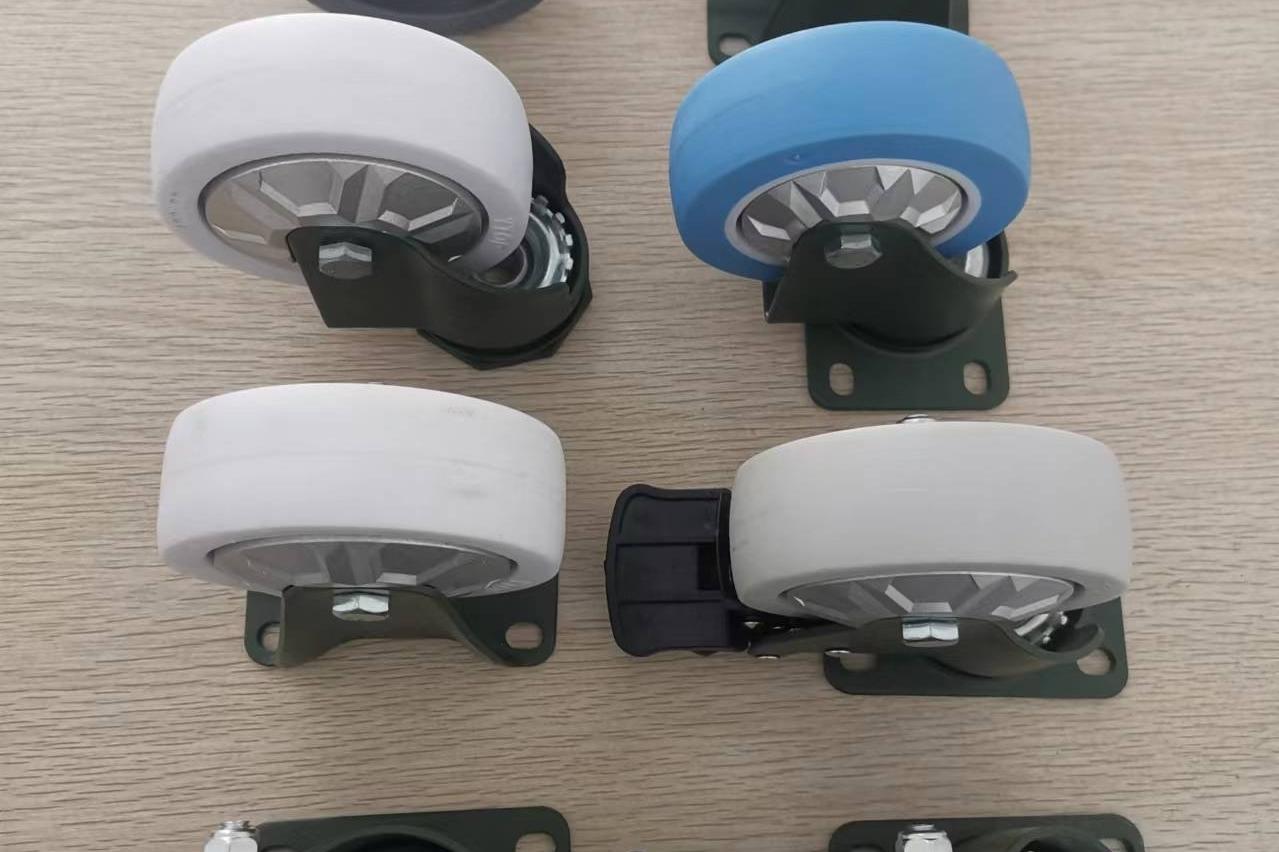
Wheel width determines how much of the wheel surface contacts the floor at any given moment. This contact patch directly influences load distribution, traction, stability, and rolling characteristics. Wider wheels spread load over a larger area, reducing floor pressure and improving stability. Narrower wheels roll more easily but concentrate load on a smaller surface.
Contact Patch and Load Distribution
When a caster supports a load, the wheel deflects slightly, creating a flat contact patch with the floor. The width of this patch determines how evenly the load is distributed. A wider wheel distributes the same load over a larger area, reducing contact pressure per square centimeter. This is critical for protecting soft floors (vinyl, epoxy, hardwood) from indentation, and for preventing flat spotting on elastomer wheels.
The relationship between width and contact pressure is approximately inverse—doubling wheel width halves the contact pressure for the same load and diameter. This makes wider wheels essential for heavy loads on sensitive flooring.

How Caster Width Affects Load Capacity
Wider wheels support higher loads than narrower wheels of the same diameter and material. This is because the increased contact area distributes load more effectively, and wider wheel cross-sections can incorporate larger bearings and stronger hubs.
Width-to-Load Relationship
In practical terms, a 2-inch wide polyurethane wheel can support roughly 30-50% more load than a 1-inch wide wheel of the same diameter and material. For extreme heavy-duty applications, wheel widths of 3-4 inches (75-100 mm) are common, enabling individual caster capacities of 1000 kg or more. This is why super heavy duty casters always use wide, robust wheel profiles.
Hub and Bearing Sizing
Wider wheels accommodate longer hubs and larger bearings, which have inherently higher dynamic load ratings. The bearing is often the limiting factor in caster load capacity, not the wheel material itself. By increasing width, engineers can fit bearings with larger rolling elements and more raceway area, dramatically increasing load capacity without increasing wheel diameter.
Stability and Grip on Different Surfaces
Wider casters provide superior lateral stability, especially on uneven surfaces or when equipment is loaded off-center. The wider track resists tipping and provides more consistent tracking during turns.
Lateral Stability
A wider wheel base increases the moment arm resisting side loads. When a cart turns sharply or encounters an obstacle, the wider wheel provides more resistance to tipping. This is particularly important for tall, narrow equipment like shelving units and display racks, where lateral stability is a primary safety concern.
Surface Traction and Floor Protection
On smooth floors, wider wheels provide more consistent traction and reduce the risk of side-slip during turns. On soft or uneven surfaces, wider wheels spread the load and reduce sinkage. However, wider wheels can also be more difficult to turn on very smooth floors because the larger contact patch creates more friction. This trade-off between stability and maneuverability is a key consideration in caster width selection.
Maneuverability and Rolling Resistance
There is an inherent trade-off between wheel width and rolling ease. Wider wheels have more contact area with the floor, which increases rolling resistance slightly. However, this effect is modest compared to the benefits of wider wheels in load capacity and stability.
Turning Effort Considerations
Swivel casters with wider wheels require slightly more force to initiate turning because the contact patch must deform and slide during swivel rotation. This effect is most noticeable on smooth, hard floors with soft wheel materials. For applications where effortless turning is critical—such as hospital beds or office chairs—moderate wheel widths (1.5-2 inches) strike the best balance.
Weight and Cost Trade-offs
Wider wheels use more material, making them heavier and more expensive. The additional weight increases shipping costs and can reduce the effective payload capacity of the equipment. For light-duty applications where load capacity is not a constraint, narrower wheels offer cost and weight savings.

Width Selection by Application Type
Different applications call for different wheel widths. Here are typical width ranges for common use cases:
- Office furniture and light duty: 1-1.5 inches (25-40 mm) — minimizes rolling resistance and cost for light loads.
- Medical carts and retail displays: 1.5-2 inches (40-50 mm) — balances floor protection, quiet operation, and moderate load capacity.
- Industrial carts and warehouse equipment: 2-3 inches (50-75 mm) — standard for medium to heavy loads on concrete floors.
- Heavy duty and super heavy duty: 3-4 inches (75-100 mm) — maximum load capacity for extreme industrial applications.
- Outdoor and rough terrain: 2.5-4 inches (60-100 mm) — wider profile handles uneven surfaces and reduces sinkage.
Real-World Performance Data: Narrow vs. Wide Wheels
Practical testing demonstrates clear performance differences between narrow and wide wheel configurations. On smooth concrete with a 300 kg load, 2-inch wide polyurethane wheels required 15-18 N of pushing force, while 1-inch wide wheels needed 18-22 N—a 20-25% reduction with wider wheels. Over an 8-hour shift, this translates to significantly less worker fatigue.
On rough or cracked concrete, the advantage of wider wheels is even more pronounced. The wider wheel bridges small cracks and expansion joints more effectively, reducing the “bump” sensation and preventing the jolting that can damage delicate cargo. For applications involving precision instruments, electronics, or fragile materials, the shock-absorbing benefit of wider wheels is often essential.
Wear Patterns and Service Life
Wider wheels distribute wear more evenly across the tread surface, resulting in longer service life. Narrow wheels develop localized wear patterns—particularly on swivel casters that constantly self-align—because the smaller contact patch wears in a narrow band. Wider wheels wear more uniformly, maintaining consistent performance throughout their service life. In high-frequency industrial applications, this can extend caster replacement intervals by 30-50%.
Frequently Asked Questions
Does wheel width affect how easily a caster rolls?
Wider wheels have slightly higher rolling resistance due to increased contact area, but the difference is small on hard, smooth floors. The trade-off is worth it for heavy loads where wider wheels distribute weight better. On soft surfaces like carpet or outdoor terrain, wider wheels actually roll easier because they reduce sinkage.
What width caster do I need for a 500 kg load?
For a 500 kg total load on four casters (divided by 3 for safety = ~167 kg per caster), you would typically need a wheel width of at least 2 inches (50 mm) with a 5-6 inch diameter. Always verify with manufacturer load ratings, which combine diameter, width, material, and bearing specifications.
Are wider caster wheels better for floor protection?
Yes. Wider wheels spread the load over a larger area, reducing contact pressure and the risk of floor indentation, scuffing, and damage. For epoxy, hardwood, or polished floors, selecting the widest practical wheel (within load and height constraints) provides the best floor protection.
Can I replace narrow casters with wider ones on existing equipment?
Wider wheels may not fit in the existing fork. You’ll need to verify that the new caster’s wheel width matches the fork opening, and that the total caster width (wheel plus fork) still fits within the equipment footprint. Also check that the increased installation height doesn’t cause issues with clearance.
How does wheel width affect caster noise?
Wider wheels generally run quieter because the larger contact surface distributes forces more evenly and reduces vibration. Narrow wheels can create a “thumping” sensation over expansion joints due to the smaller contact patch. For noise-sensitive environments, wider wheels with soft elastomer treads are recommended.
Related Reading
Explore more caster technical guides:
- Caster Diameter Impact Guide — How wheel diameter affects rolling and load performance.
- Caster Structure Parameters — Diameter, width and load capacity relationship.
- Caster Installation Height — Technical guide on mounting heights.
- Extra Heavy Duty Applications — Heavy duty caster use cases.
- PU Casters for Logistics — Material selection benefits.
View our heavy-duty casters and super heavy-duty casters with wide wheel options, or contact us for custom width recommendations.
Post time: Jun-28-2025