
A railway maintenance depot is a workshop with three extra problems: everything is made of steel, everything weighs more than it looks, and the whole site sits on rails and pits that stop a small wheel dead.
This article covers what a bogie trolley, a wheel-set cart or a tooling trolley actually needs, and why the caster that works in a general workshop fails in a depot.
Five Conditions in a Rail Depot
Depot work has its own set of constraints.
The floor is interrupted. Inspection pits, embedded rails, drainage channels and turntable edges all present steps, gaps and grooves that a small wheel cannot cross.
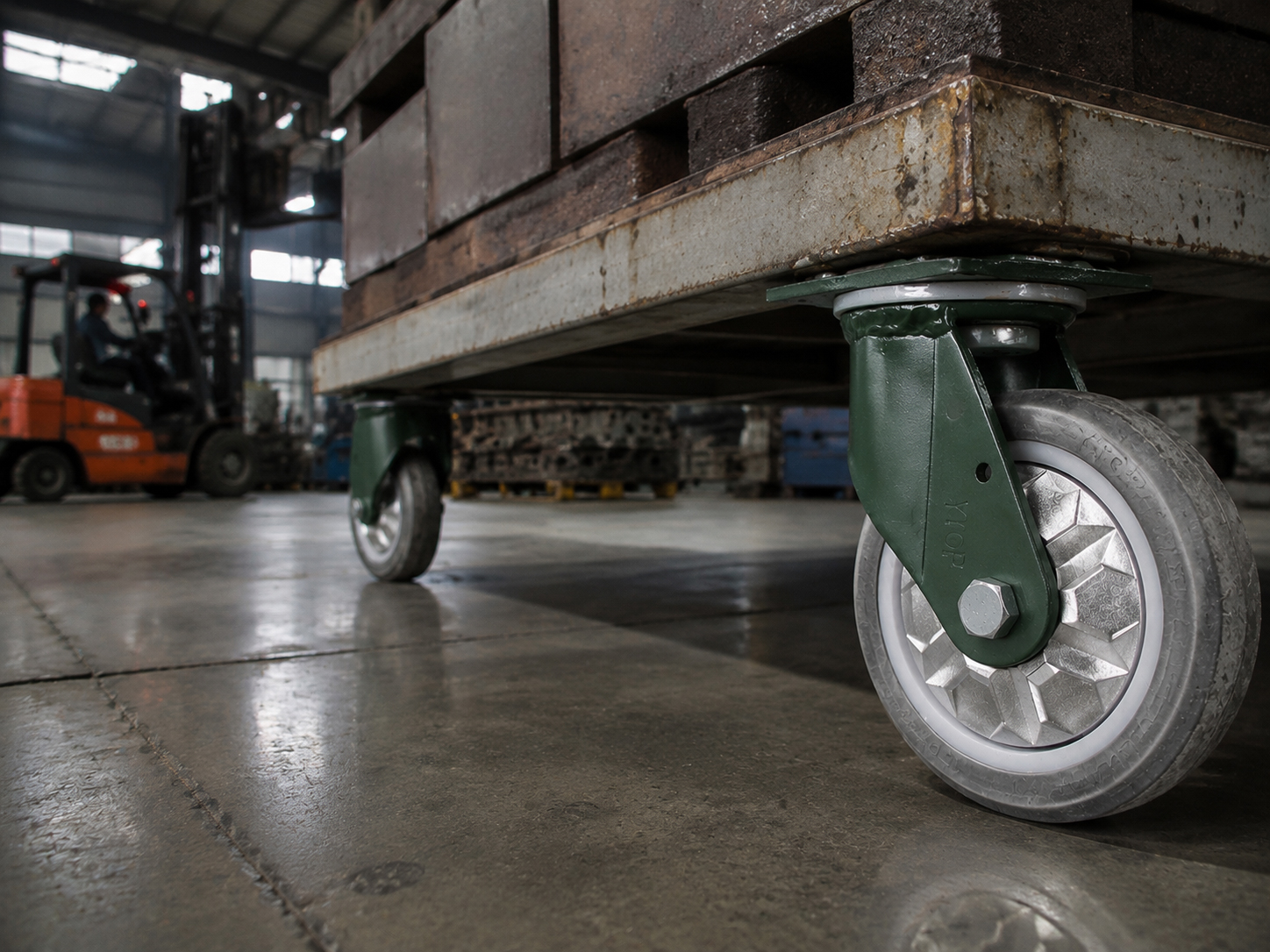
The loads are dense steel. A wheel set, a bogie component or a brake frame concentrates hundreds of kilos into a small footprint, and the cart is usually low and wide rather than tall.
The environment is oily. Lubricants, hydraulic fluid and coolant are on the floor, and oil attacks rubber tread faster than almost anything else.
Work is done around people under a train, so anything that rolls unexpectedly is a safety issue rather than a convenience issue.
And depots are often unheated and open to the weather at one end, so casters see condensation in the morning and frost in winter.
Pits, Rails and Grooves
Rail infrastructure is the defining obstacle set, and it is what makes depot casters fail earlier than workshop casters.
An embedded rail presents a groove that a narrow wheel drops into and then cannot climb out of without help. A pit edge presents a drop. A drainage channel presents a slot. A turntable presents a machined lip that is only a few millimetres high but stops a hard small wheel.
Two parameters solve all of them: diameter and, to a lesser extent, tread width. A 200 mm wheel bridges a rail groove that swallows a 100 mm one, and rides over a lip that stops it dead. In depots, going up a wheel size is usually more effective than going up a load class.
Dense Steel Loads and Point Pressure
A wheel set or a bogie frame is heavy for its footprint, and the load rarely sits evenly.
A cart carrying a component of 800 kg on level track may put 500 kg on two casters when it crosses a pit edge or a rail, because the cart tips slightly and the load transfers. That transfer is what breaks a caster specified exactly at a quarter of the total.
The practical rule is to size on the worst single caster, add a margin for the tilt at pits and rails, and prefer a larger top plate so the load spreads across the cart frame rather than concentrating at four bolt points.
Oil, Coolant and Tread Degradation
Oil is the quiet destroyer of rail depot casters.
Rubber and TPR treads swell and soften when exposed to mineral oil, and a swollen tread deforms under load, rolls badly, and eventually separates from the wheel core. Polyurethane resists oil better but is still affected by prolonged exposure; nylon and cast iron are essentially unaffected.
Oil also reaches the raceway, where it dilutes grease and carries grit. A sealed raceway helps, but the joint still needs cleaning rather than topping up: adding grease over an oil-contaminated joint produces a thin slurry that protects nothing.
Wheel Choice for Depot Work
Four options, and the choice follows the floor more than the load.
Cast nylon is the usual default: hard, oil-resistant, quiet enough for a workshop, and good on rails and concrete. It is the standard for tooling trolleys and component carts.
Cast iron or forged steel is the choice for the heaviest bogie and wheel-set trolleys, and for the track area where debris is present. It rolls over rails and pits without hesitation, at the cost of weight and a hard ride.
Hard polyurethane is the compromise where the workshop floor must be protected or where noise matters, and where oil exposure is incidental rather than constant.
Rubber is the wrong choice anywhere oil is on the floor, however good its grip and however quiet it is. It is only defensible in a clean, dry sub-assembly area.
Brakes, Pits and Safety Around Trains
In a depot, a cart that rolls is a hazard because it may roll toward a pit or into a train path.
Brakes should act on the wheel and should be fitted to all four casters on anything parked near a pit edge. A swivel-only lock allows the cart to roll, which is exactly the failure mode that matters here.
Where a cart works directly over a pit, the caster is not the restraint; the cart frame and a physical stop are. No caster specification substitutes for edge protection.
Dirty Floors, Swarf and Cleaning
Depot floors carry swarf, brake dust and grit, and all three enter a swivel joint.
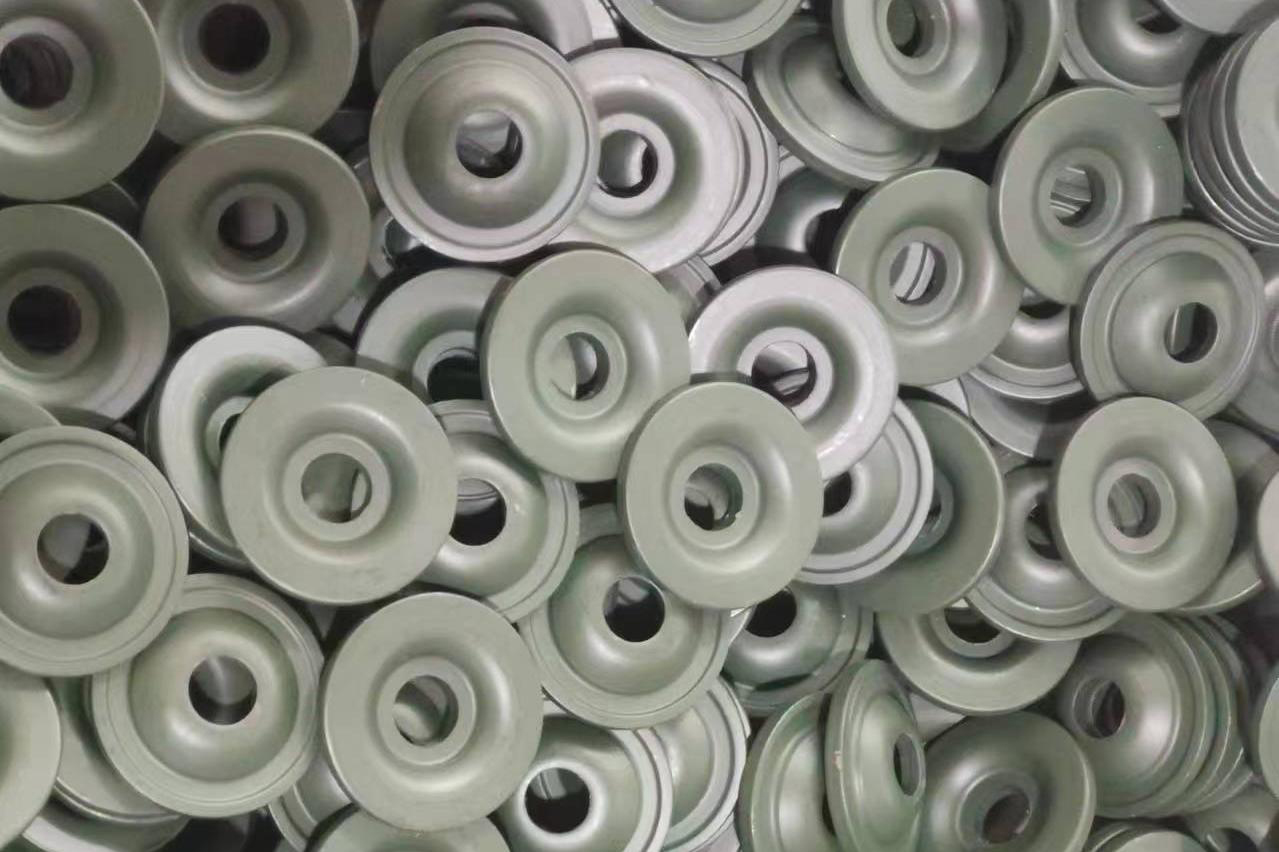
Brake dust is fine and slightly abrasive; swarf is coarse and can jam a raceway outright. A sealed raceway with a metal shield is the baseline, and cleaning is as important as sealing, because a joint packed with swarf will not turn freely no matter what it is sealed with.
The routine that works is simple: blow or brush the joint clean at the end of each shift, then grease. Greasing first simply packs the debris deeper.
Cold, Condensation and Outdoor Ends
Depots often open onto a yard, so a cart can move from a warm workshop to a cold outdoor road within a minute.
Condensation forms inside any open raceway on that transition, and repeated daily cycles leave the bearing permanently damp, which is worse than being permanently dry because the grease never re-forms a film.
In winter, nylon becomes more brittle and a hard wheel that takes an impact at low temperature can crack rather than deflect. Where a depot works through winter, a compound that stays tough in the cold is worth specifying, and the caster should not be left loaded outdoors overnight.
Maintenance Rhythm
Four habits cover most of the risk.
Clean the joint before greasing, every time; in a depot the debris is coarse and packs hard.
Check the fork for straightness whenever a cart starts tracking to one side, because that is usually impact damage rather than wheel wear.
Inspect for vertical play monthly; a worn raceway in a dirty workshop does not recover.
Replace rather than repair once the tread is oil-swollen or the bearing seat is pitted, since neither condition can be corrected by fitting a new wheel.
Specification Checklist
Six questions settle a depot caster order.
What is the worst single-caster load when the cart tilts at a pit edge or rail?
Does the route cross embedded rails, pits, channels or a turntable?
How much oil and coolant is on the floor, and how often is it cleaned?
Does the caster stand near a pit edge, which means brakes on all four wheels?
Does the cart go outdoors, with condensation and frost?
Who cleans the joints, and how often?
Answer those and the usual outcome is a large cast nylon or iron wheel of 200 mm or more, on a thick formed bracket with a sealed raceway, a separate softer specification only for the clean sub-assembly bench, and brakes on every cart that works near a pit. The recurring mistake in depots is buying a general workshop caster with the right load number and discovering that the wheels cannot cross a rail groove and the tread cannot survive the oil.
Related Reading
Two guides that support the choices above:
- How to Determine the Load Capacity of Casters — why the worst single caster governs the selection.
- Oil-Resistant Casters for Machining Workshops — which tread compounds survive oil on the floor.
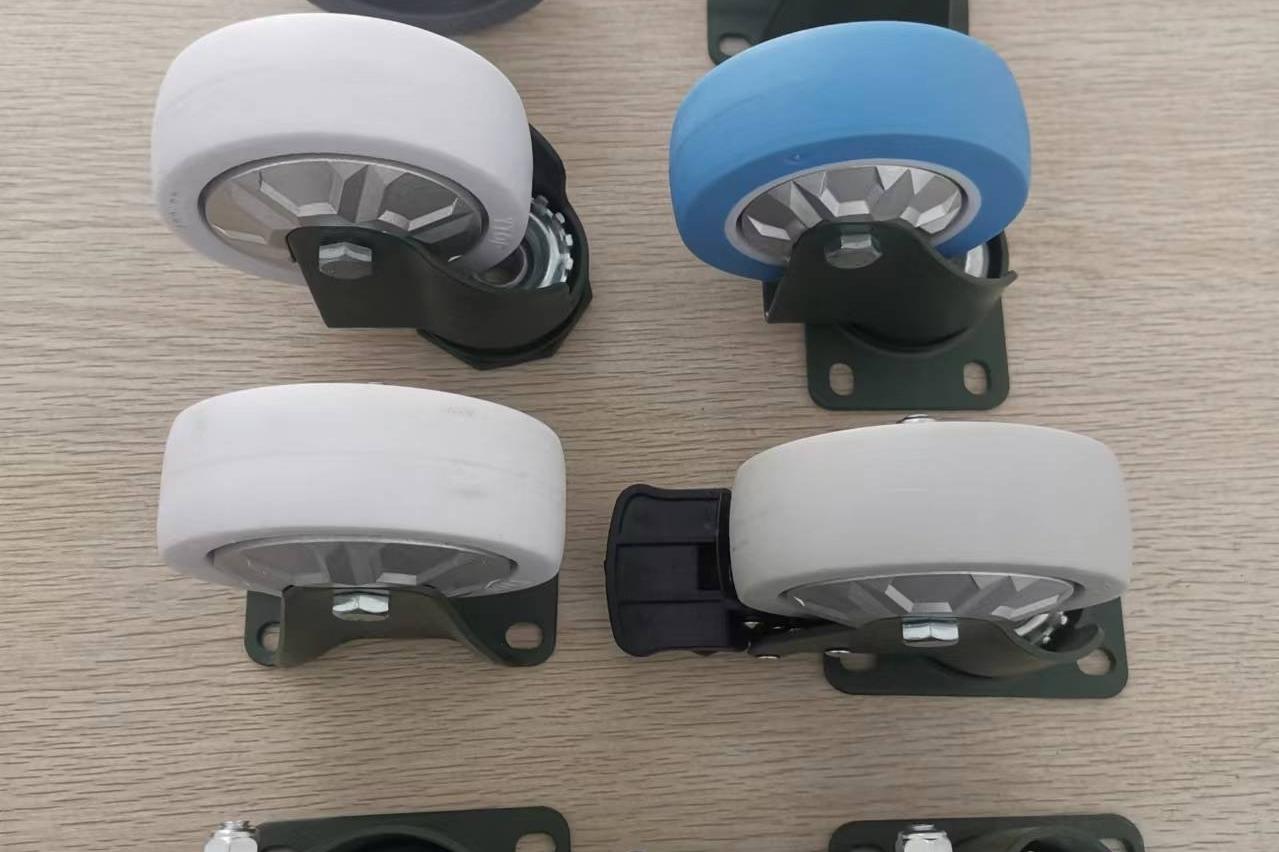
Explore our heavy-duty casters (150-610kg) and super heavy-duty casters (700-1600kg), or contact our engineering team with the loads, the rails and the floor conditions.
Post time: Nov-25-2026