
Event production is a caster business disguised as a creative one. Road cases, lighting trusses, camera dollies, risers and staging decks are all moved by wheels, at speed, on floors the crew has never seen before, in the dark, with a schedule.
This article covers what goes wrong with casters in event and exhibition work and how to specify for load-in, show days and load-out.
Why Event Logistics Is Hard on Casters
Five conditions make event work different from a factory.
The floor changes every day: arena concrete, exhibition carpet, a hotel ballroom, a grass field under a marquee.
Time is compressed. Load-in happens in a few hours, so cases are pushed hard and fast rather than carefully.
The equipment is heavy but refined. A lighting truss case weighs several hundred kilos yet must not be dropped, because the contents are fragile and expensive.
Safety matters around audiences. Anything that can roll on a ramp or a stage edge is a hazard the moment doors open.
And everything has to fit through doors, lifts and trucks, so casters are chosen small to protect the case profile — which is the root cause of most failures.
The Small Wheel Problem
Road cases usually specify a small caster because the case has to fit under a truck deck or slide into a lift. That decision is made at the case factory and then punished at every venue.
A 75 mm wheel is fine on a smooth arena floor and hopeless on exhibition carpet, a cable ramp, a door threshold or gravel. The crew compensates by dragging, which is where casters and case corners both get destroyed.
The practical compromise is 100 to 125 mm: still low enough for most truck decks, large enough to cross a threshold and roll on carpet. Where the case profile allows it, going up one size is the single biggest improvement available.
Cable Ramps, Thresholds and Temporary Floors
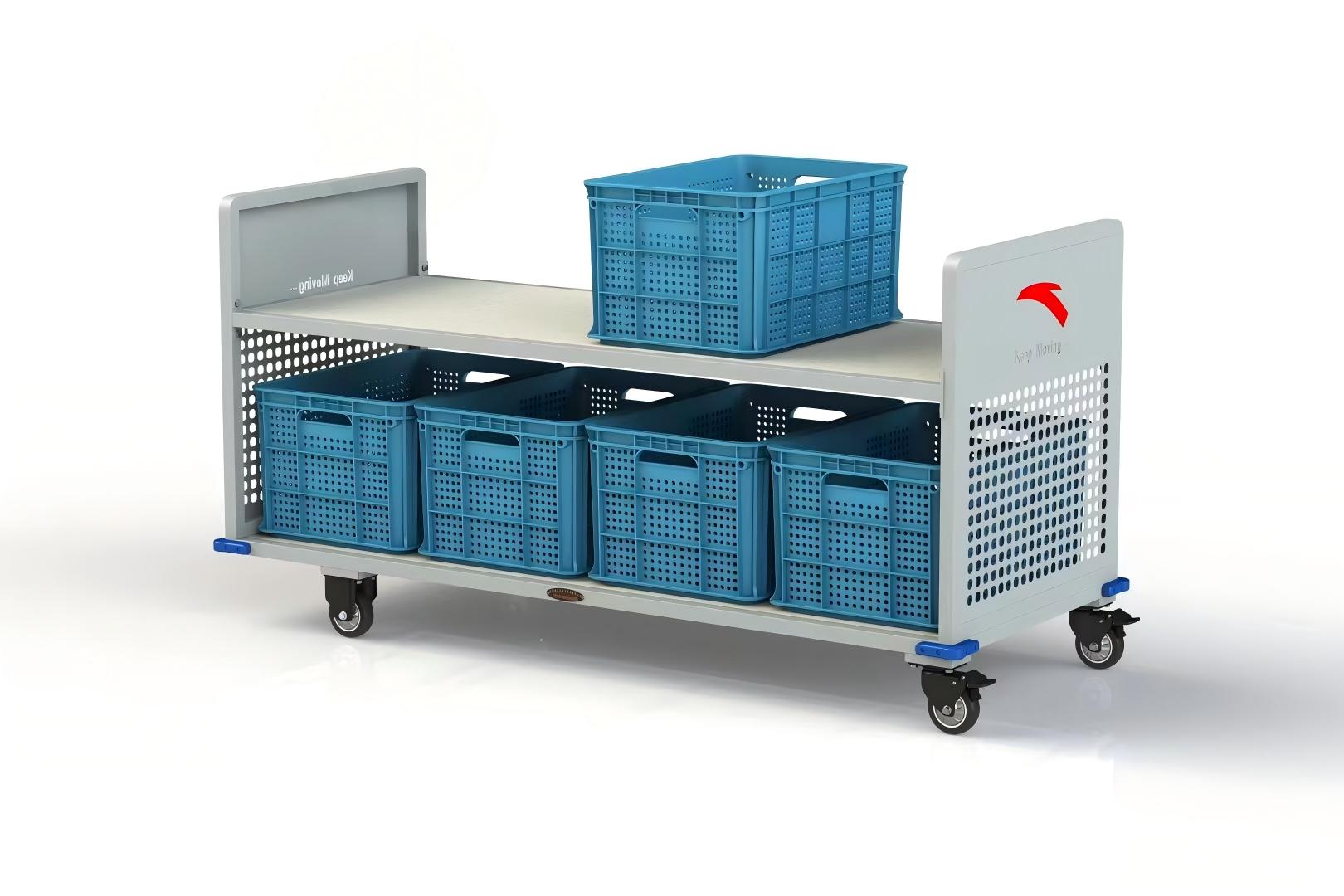
Venues are full of features that stop small wheels, and they are not visible in the dark.
Cable ramps are the classic: they protect cables across a floor and present a step to every wheel. A 125 mm wheel rolls over most of them; a 75 mm wheel stops and the case tips.
Temporary staging decks have edges and joints. Exhibition carpet has underlay joins. Marquee floors are often laid on grass and give slightly under load.
The answer is diameter plus a slightly softer tread, which conforms to a join instead of catching on it. A very hard tread is efficient on smooth concrete but the worst choice for carpet, ramps and temporary decks.
Carpet, Noise and Ballroom Floors
Hotel and ballroom work adds two requirements: quiet and non-marking.
A hard wheel on a ballroom floor is loud enough to be heard over background music during a load-in at midnight, which matters when the venue has neighbours or a curfew.
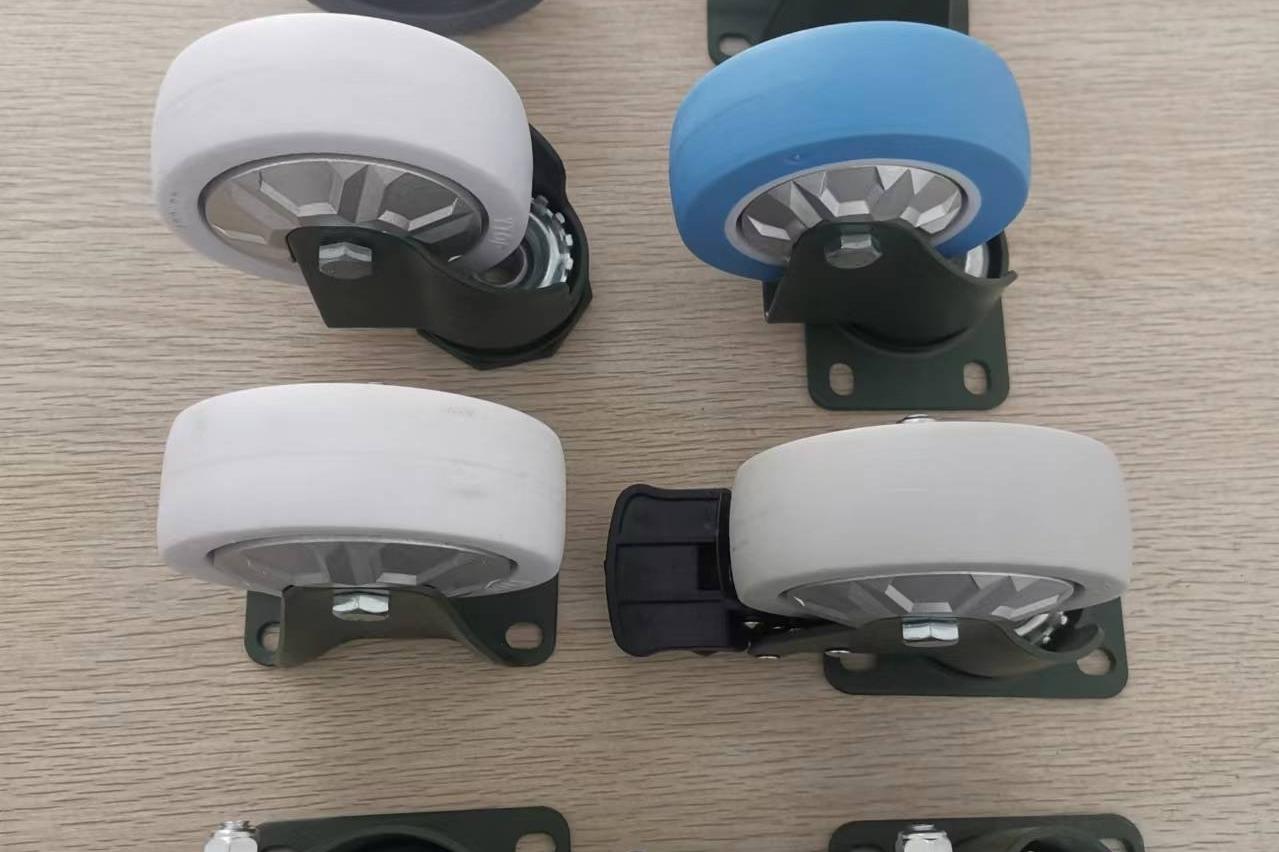
And black rubber marks pale carpet and dance floors. A grey or non-pigmented non-marking tread is the standard answer for anything that goes onto a finished floor.
The combination that works for ballroom work is a soft non-marking tread at 100 mm or more, on a sealed raceway so that carpet fibre does not build up in the swivel.
Brakes, Ramps and Audience Safety
Once doors open, any wheeled object near an audience is a risk, and the caster is part of managing it.
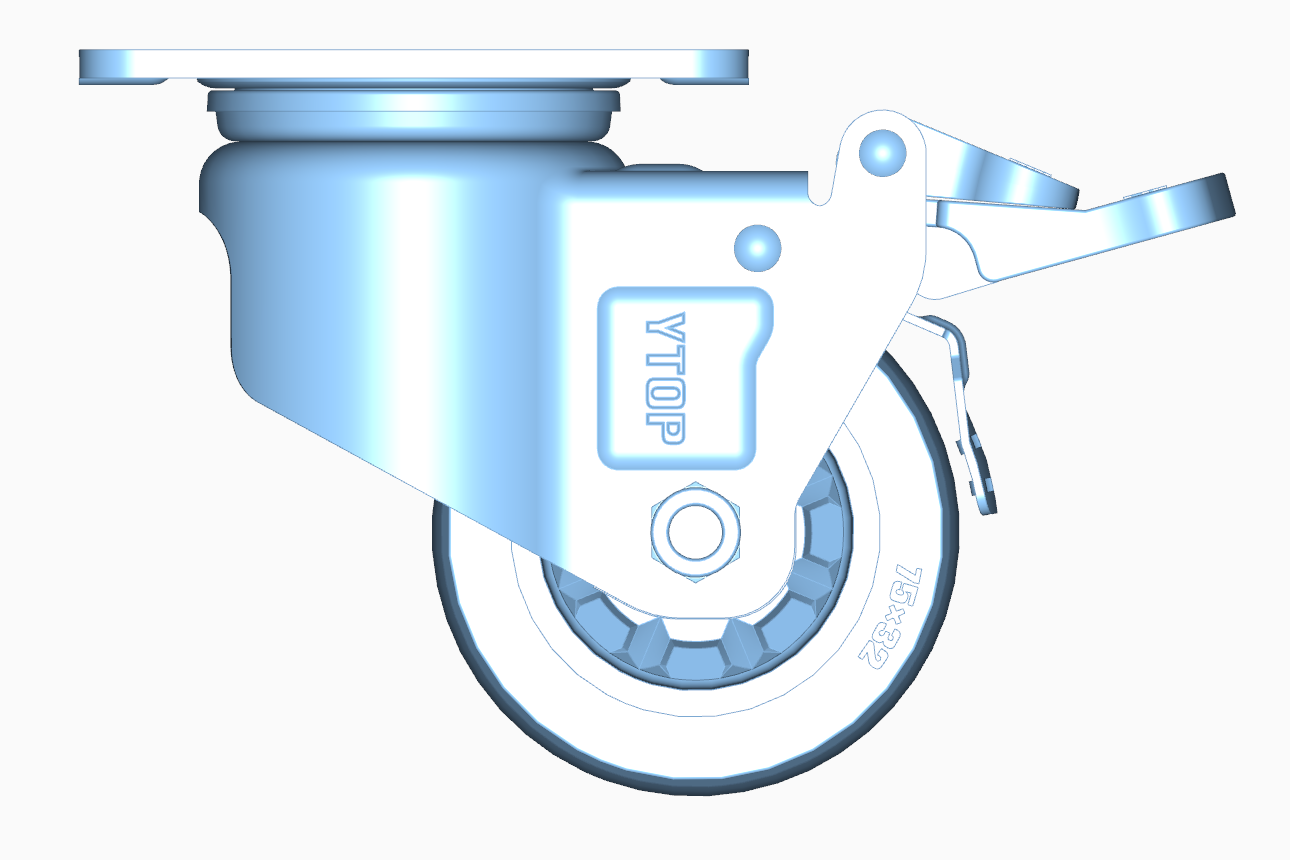
Brakes should act on the wheel, not only on the swivel, and they should be on all four casters for anything left standing in a public area. A swivel lock alone lets the case roll, which is exactly the behaviour that matters on a stage rake or a temporary ramp.
Where equipment stands on a raked stage or a ramp, a brake alone is not sufficient; the object should also be chocked or lashed. The caster is a convenience, not a restraint.
Truss Dollies, Camera Dollies and Heavy Cases
Three equipment types have their own requirements.
Truss and lighting dollies carry weight high and narrow, so stability depends on wheelbase. Casters with a wider plate spacing, and brakes on all four wheels, are the practical answer.
Camera dollies need smooth, low-vibration rolling and a swivel that does not judder at slow speed. A soft tread and a well-sealed, lightly preloaded raceway matter more than capacity here.
Heavy road cases need a thick formed bracket rather than a welded one, because the case is routinely pushed against truck walls and lift frames, which is a lateral impact rather than a vertical load.
Exhibition Halls and Stand Building
Stand build has its own rhythm: materials arrive, the hall floor is often unfinished or covered in protective sheeting, and everything moves between a loading dock and a stand position that may be hundreds of metres away.
Two caster types are typically needed. Heavy flat trolleys for panels and structure, on large wheels that cross dock plates and hall expansion joints. And small carts for carpet tiles, graphics and tools, where manoeuvrability in a narrow aisle matters more than capacity.
Halls with expansion joints are the main cause of trolley damage, because a joint is a step of a few millimetres that a small hard wheel hits at speed. Diameter solves it; nothing else does.
Loading Docks and Truck Decks
The dock is where cases are dropped, and the caster takes the shock.
A case pushed off a tail lift lands on two casters with the full weight plus the drop. Over a tour that is what bends brackets and cracks plates, while the wheel remains serviceable.
Dock plates and tail lifts also present lips and gaps. A larger wheel climbs a lip; a small one stops against it and the crew lifts the case, which is how case corners and casters get broken together.
Maintenance Between Shows
Event equipment is maintained in vans and warehouses, not workshops, so the routine has to be simple.
After every load-out, clear carpet fibre and tape residue out of the swivel; fibre build-up is the most common reason a road case caster stops swivelling.
Check the brake by engaging it and pushing the case; a brake that allows movement is a hazard on the next ramp.
Replace any caster that has lost its tread profile, because a flat-spotted case wheel is louder, harder to push and more likely to catch on a ramp edge.
And keep a spare set per case type on the truck. In event work, the cost of a failed caster is not the caster, it is the load-in that stops at two in the morning.
Specification Checklist
Six questions settle an event caster order.
What is the lowest floor the case will cross — arena concrete, exhibition carpet, marquee on grass?
What is the maximum wheel height the case profile or truck deck allows?
Does the equipment stand in public areas, which means brakes on all four casters?
Does it go onto finished floors, which means non-marking tread?
How is it loaded — carried, rolled, or dropped off a tail lift?
Who maintains it, and can they reach the swivel and the brake?
Answer those and the typical specification is a 100 to 125 mm non-marking soft tread on a formed bracket with a sealed raceway, brakes on all four wheels for anything public-facing, and a spare set per case type. The recurring error in this industry is optimizing the caster for the truck rather than for the venue, which saves twenty millimetres of stack height and costs a load-in every few shows.
Related Reading
Two guides that support the choices above:
- How to Choose Silent Casters — tread, raceway and frame as the three sources of noise.
- Single Brake vs Dual Brake Casters — which brake actually holds a case on a ramp.
Explore our heavy-duty casters (150-610kg) and super heavy-duty casters (700-1600kg), or contact our engineering team with the floors, the case weights and the ramp conditions.
Post time: Nov-24-2026