
A brewery and a winery look nothing alike, but they break casters for the same three reasons: liquid on the floor, glass in the load, and stainless steel everywhere except the parts you can actually buy cheaply.
This article covers what happens to casters in a brewhouse, a cellar and a bottling hall, and the specification that holds up through a wash-down shift.
Six Conditions in a Brewery or Winery
Beverage production combines conditions that rarely meet in one place.
The floor is almost always wet. Wash-downs are frequent and thorough, because hygiene standards demand it, and the water carries caustic or acidic cleaning agents.
Liquid is sugary or alcoholic. Beer and wine residue is sticky when it dries, and it holds grit against the caster; spilled wort ferments and becomes acidic on the floor.
The load is glass. Bottles, carboys and full kegs are fragile, and any caster that transmits shock is a handling problem as much as a mechanical one.
The weight is concentrated. A pallet of bottled product or a keg stack puts several hundred kilos onto four small wheels.
Humidity is high in the cellar and cold room, and condensation is a daily fact.
And the cleaning chemicals are aggressive by design — caustic soda for CIP, peracetic acid for sanitising, and chlorine in some plants.
Wash-Down Chemistry
The chemistry is what separates a beverage plant from an ordinary wet area.
Caustic cleaning solutions attack zinc coatings and strip the adhesion of powder coats at the edges, which is where corrosion starts. Acidic sanitisers attack the same places from a different direction. And both attack the grease: once a caustic solution enters a raceway, the lubricant turns into a soap-like emulsion that no longer protects anything.
Three countermeasures matter. A stainless housing on any caster that is hosed regularly. A sealed raceway that keeps the wash water out in the first place. And a grease rated for caustic and acid exposure rather than a general-purpose lithium grease.
Glass, Bottles and Vibration
Bottling lines handle glass, and glass does not tolerate impact.
A hard wheel rolling over a floor joint transmits that shock straight up through the cart to the bottles. In practice this shows up as breakage at the seams of a pallet or a case, and as noise complaints from the line crew.
The answer is a combination: a slightly softer tread and a shock-absorbing caster at the positions where product is loaded, with a firm wheel everywhere else so the cart still steers. A soft wheel everywhere makes a heavy pallet hard to push; a hard wheel everywhere breaks glass.
Cellar Floors, Slopes and Cold Rooms
Cellars and cold rooms add three specific problems.
Floors slope toward drains, so any cart parked under load will move unless braked. Brewery and winery cellars are almost always graded, and a keg stack on a slope is a genuine hazard.
Cold rooms run at 2 to 8 degrees Celsius, sometimes lower, and standard grease stiffens; a wheel that is fine at ambient becomes hard to start in a cold store. Low-temperature grease and a tread that does not harden are both worth specifying.
Condensation forms on everything in the transition from a cold cellar to a warm packing hall, and that water runs down into the swivel if the joint is open.
Kegs, Bottle Pallet Trucks and Barrel Carts
Three load types dominate, and each has its own caster requirement.
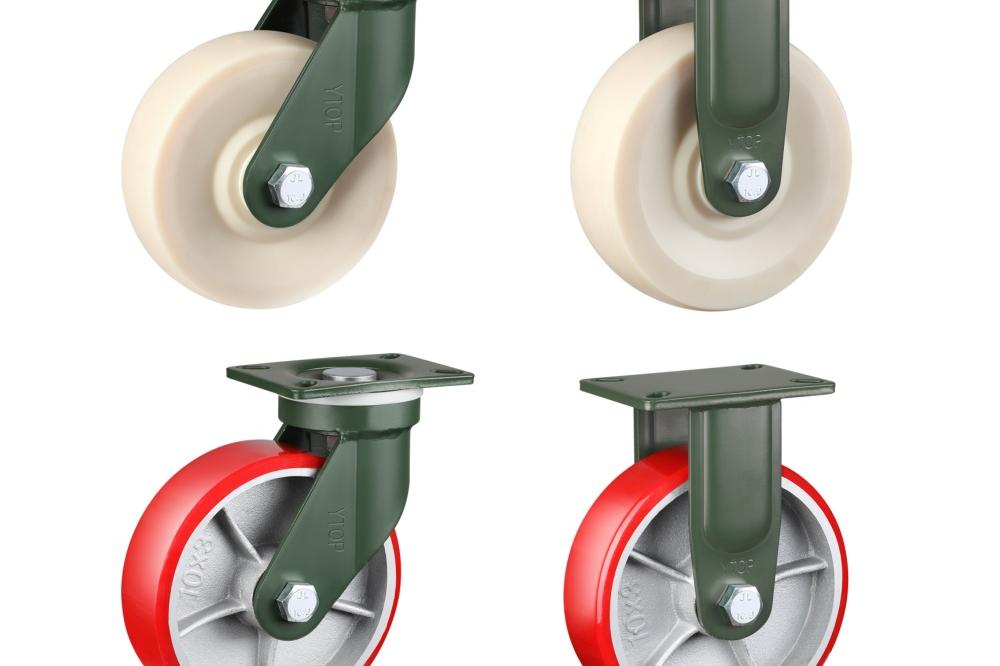
Keg stacks and keg trolleys are dense and top-heavy. Steel kegs are hard and unforgiving, so the caster takes impact when a keg is rolled on or off. A cast nylon or iron wheel on a thick formed bracket is the durable answer; a soft tread is wasted here.
Bottle pallet trucks carry fragile loads and need a smoother roll. A PU tread at a larger diameter, with shock-absorbing casters at the load end, reduces breakage measurably.
Barrel and cask carts in a winery often cross uneven cobbles or gravel between buildings, which is where diameter matters more than anything else on the specification.
Wheel Choice
Four options cover beverage work.
Polyurethane is the general default: good wet grip, quiet, non-marking on the tiled floors typical of a bottling hall, and reasonably resistant to dilute cleaning chemicals.
Nylon and polypropylene are chemically inert and handle caustic wash far better than PU or rubber. They are harder and noisier, which makes them the choice for the keg yard and wash-down areas rather than the bottling line.
Rubber and TPR give the best grip on wet tile and the quietest roll, but they are the least resistant to caustic and to the oils and residues in a brewhouse.
Stainless-housed casters with a PU wheel are the usual compromise for wash-down zones: the housing survives, the tread still grips and does not mark.
Bearings and Seals Under Wash-Down
The raceway is where a beverage plant caster fails, and the mechanism is always the same: wash water gets in, grease turns to emulsion, and the track corrodes or wears under a lubricant that is no longer lubricating.
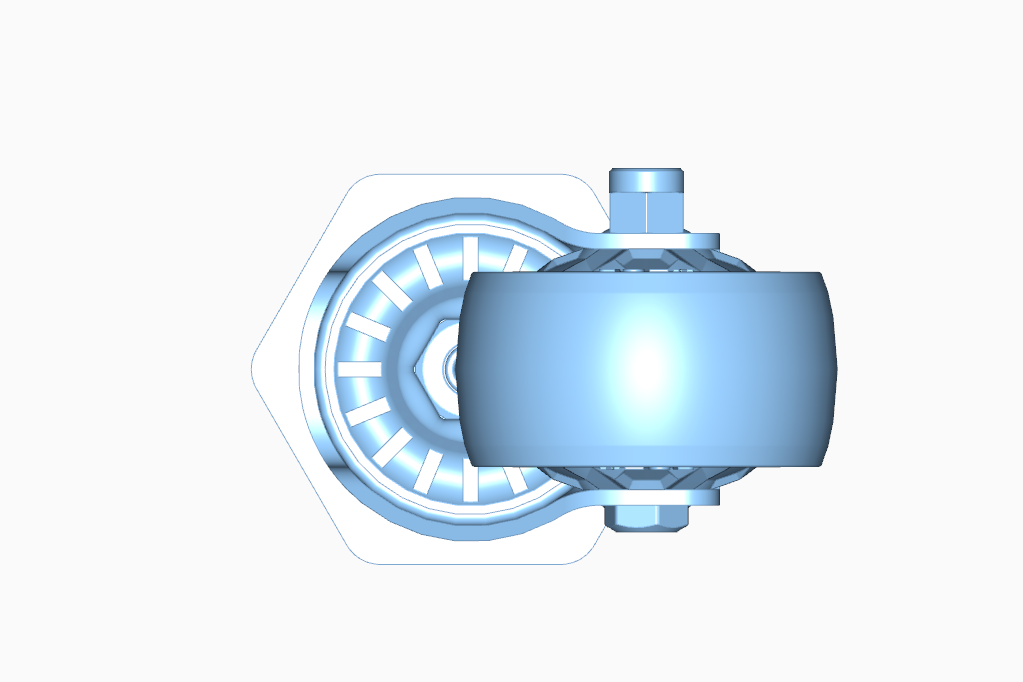
A sealed raceway with a metal shield is the baseline. Where a caster is hosed directly, a double seal is justified, and the cost is small compared with replacing a set every quarter.
Greasing practice matters: clean and dry the joint before adding grease, and use a water-resistant, caustic-resistant grease. Pushing new grease into a joint full of wash water simply mixes the two.
Brakes on Graded Floors
Every brewery and winery floor is graded, so brakes are not optional.
A brake should act on the wheel, not only on the swivel, and it should be fitted to all four casters on any cart parked under load. A swivel-only lock stops the cart turning but lets it roll, which is exactly the wrong behaviour on a slope toward a drain.
In cold rooms, check that the brake mechanism does not freeze or stiffen; a brake that will not release drags the wheel and flat-spots the tread within a few shifts.
Maintenance Rhythm
Four habits cover most of the risk.
Rinse the caster with fresh water after caustic or acid exposure, then dry the joint rather than leaving it wet.
Clean and re-grease the swivel weekly in wash-down areas, always cleaning first.
Check for vertical play monthly; in a wet environment a worn raceway does not recover.
Replace rather than repair once the bracket shows rust at the bearing seat, since a pitted seat will not hold a new bearing square.
Specification Checklist
Six questions settle a brewery or winery caster order.
Is the caster hosed directly, or only exposed to wet floors?
Which cleaning chemistry is used, and at what temperature?
Does the cart enter a cold room, and how low does it go?
Is the floor graded toward drains, which means brakes on all four wheels?
Is the load glass, and does breakage cost more than a smoother wheel would?
Does the cart leave the building onto cobbles or gravel?
Answer those and the usual outcome is two specifications: a stainless-housed PU caster with a double seal for the bottling hall and wash-down zones, and a nylon or iron wheel on a heavy formed bracket for the keg yard and cellar. The recurring mistake in beverage plants is buying one cheap caster for everything, then watching the bottling hall break glass and the keg yard destroy brackets in the same quarter.
Related Reading
Two guides that support the choices above:
- Stainless Casters for Washdown and Corrosive Environments — housing, seal and grease selection for caustic wash.
- TPR vs Natural Rubber on Wet Floors — grip and durability compared on wet tile.
Explore our heavy-duty casters (150-610kg) and super heavy-duty casters (700-1600kg), or contact our engineering team with the chemistry, the load and the cold-room conditions.
Post time: Nov-25-2026