
When choosing 6 inch rubber casters, there are several important factors to consider to ensure you select the right caster for your specific application. This buying guide covers the key aspects to evaluate when purchasing 6 inch rubber casters.
Introduction to 6 Inch Rubber Casters
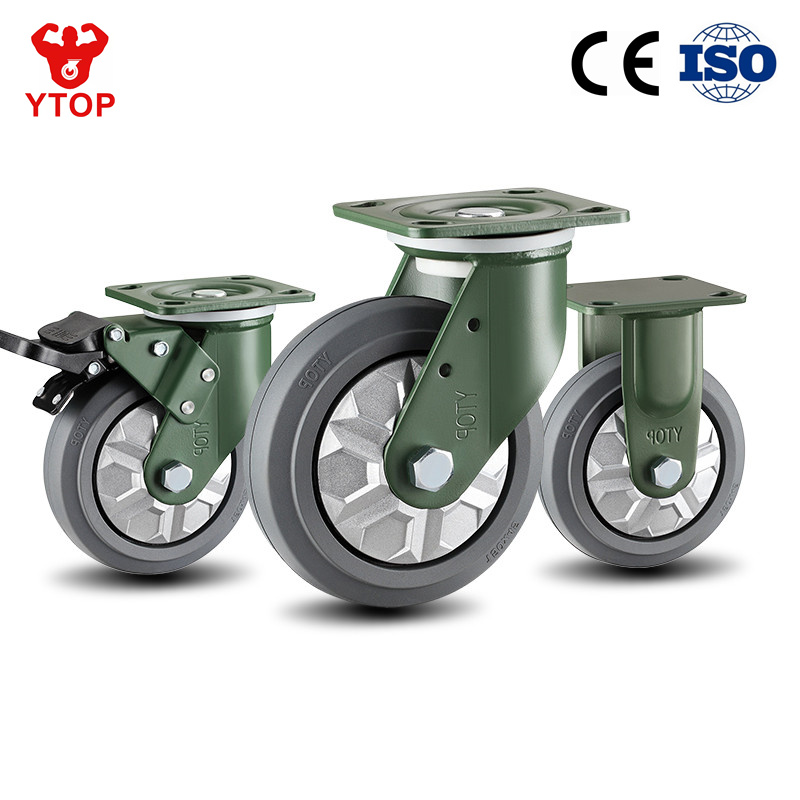
Six inch rubber casters are a popular choice for medium to heavy duty applications where floor protection, quiet operation, and shock absorption are important priorities. Rubber tread provides excellent cushioning properties, making these casters ideal for use on uneven surfaces, in noise-sensitive environments, and for transporting fragile or sensitive equipment. The 6 inch wheel diameter offers a good balance of load capacity, maneuverability, and obstacle-crossing capability.
Key Factors to Consider When Buying
Selecting the right 6 inch rubber caster requires careful evaluation of several key factors. The most important considerations include material quality, load-bearing capacity, size and mounting dimensions, bracket construction, bearing type, brake options, and the specific application environment. By carefully assessing each of these factors, you can ensure that the casters you choose will provide reliable performance and long service life in your intended application.
Material Selection Guide
The material of rubber casters directly affects their abrasion resistance, weather resistance, and load bearing capacity. It is recommended to choose high quality natural rubber or synthetic rubber, such as BR rubber (butadiene rubber). Natural rubber offers excellent elasticity, abrasion resistance, and tear strength, while synthetic rubbers like BR provide enhanced weather resistance and durability. The quality of the rubber compound significantly impacts the caster’s performance, service life, and resistance to degradation from environmental factors such as ozone, UV exposure, and temperature variations.
When evaluating rubber caster materials, consider the hardness (durometer) of the tread. Softer rubber provides better shock absorption and floor protection but may have higher rolling resistance, while harder rubber offers lower rolling resistance and higher load capacity but less cushioning. The optimal hardness depends on your specific application requirements and floor conditions.
Load Capacity Requirements
Choose rubber casters that match the load-bearing capacity you need. Select casters with different load-bearing capacity according to your usage scenarios, such as warehouses, factories, hospitals, retail environments, and institutional facilities. To determine the required load capacity per caster, calculate the total weight of the equipment plus maximum load, divide by the number of casters (typically 4), and add a safety factor of at least 25-30% to account for dynamic loads, impacts, and uneven weight distribution.
It is important to note that rubber casters generally have lower load capacity compared to polyurethane or nylon casters of the same size, due to the softer nature of rubber material. If your application involves very heavy loads, you may need to consider larger wheel sizes, multiple wheels, or alternative tread materials.
Size and Mounting Considerations
Choose the right size rubber casters according to your equipment and installation space. Generally, 6 inch casters are suitable for medium to heavy duty equipment where a balance of load capacity and maneuverability is required. When evaluating size, consider both the wheel diameter and the overall height of the caster (including bracket and mounting plate), as this will affect the equipment’s ground clearance and stability.
Mounting type is another critical consideration. Common mounting options include top plate mounting, stem mounting (threaded stem, grip ring stem, expanding stem), and bolt hole mounting. Ensure that the caster’s mounting dimensions match your equipment’s existing mounting pattern, or be prepared to modify the equipment to accommodate the caster’s mounting configuration.
Bracket and Construction Quality
The bracket construction of 6 inch rubber casters significantly impacts their durability and load-bearing performance. Look for casters with robust steel brackets, reinforced mounting plates, and quality welds or rivets. The swivel raceway should be constructed with hardened steel balls or roller bearings for smooth, long-lasting rotation. Zinc plating, powder coating, or other corrosion-resistant surface treatments are important for protecting the bracket from rust and corrosion, especially in humid or outdoor environments.
Application Scenarios and Recommendations
Six inch rubber casters are particularly well-suited for applications including hospital and medical equipment, food service carts, hotel and hospitality equipment, retail displays and fixtures, office furniture, institutional equipment, and light to medium industrial material handling. Their quiet operation and floor protection make them ideal for indoor environments where noise reduction and floor preservation are priorities. For outdoor applications or environments with oil, chemicals, or extreme temperatures, be sure to select rubber compounds specifically formulated for those conditions.
Final Buying Recommendations
When purchasing 6 inch rubber casters, prioritize quality over initial cost. Invest in casters from reputable manufacturers that use high-quality rubber compounds, robust bracket construction, and reliable bearing systems. Consider your specific load requirements, floor conditions, environmental factors, and mounting requirements carefully before making a selection. By choosing the right casters for your application, you can ensure reliable performance, reduce maintenance costs, and extend the service life of your equipment’s mobility system.
Post time: Oct-23-2023