
That string of parameters on a caster purchase order — wheel diameter, load capacity, wheel width, mounting height, hole spacing, material, hardness, bearing, brake, swivel — looks like hieroglyphics. These parameters do not exist independently; there are logical relationships between them. Understanding the associations between parameters means selection won’t be blind.
Load Capacity and Wheel Diameter: Determine These Two First
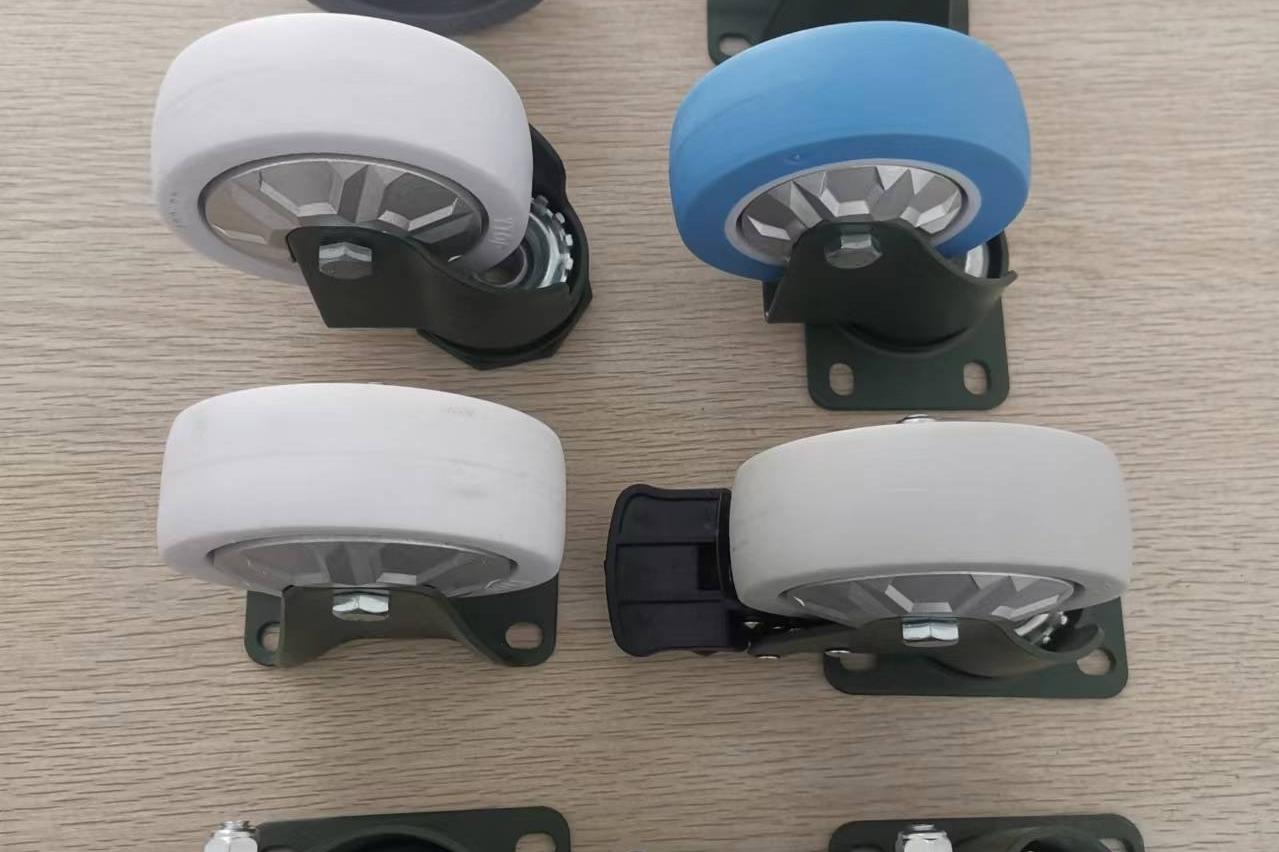
Load capacity is the safety bottom line. When looking at load capacity, distinguish between dynamic load and static load — dynamic is load-bearing capacity during movement, static is load-bearing capacity when parked, and the dynamic value is more meaningful for actual use. For a vehicle with four wheels, total load is not simply per-wheel load multiplied by four — eccentric load conditions must be considered — when the equipment center of gravity is not in the center, some wheels bear far more weight than the average. Daily use is recommended not to exceed 80% of rated dynamic load, leaving yourself a buffer.
Wheel diameter and load capacity should be viewed together. The larger the wheel diameter, the easier it is to cross ridges, rolling resistance is relatively small, and pushing is labor-saving. But wheel diameter directly determines mounting height, limited by equipment bottom space. During actual selection, first accurately measure the available space from equipment bottom to floor, then select the largest possible wheel diameter within this range.
Wheel Width and Mounting Height: Match Equipment Structure

Wheel width affects stability and floor protection. Wide tread has large contact area, equipment is more stable, and it is also friendlier to floors such as epoxy. But too-wide tread increases steering resistance, making pushing laborious, and width needs to match load.
Mounting height is jointly determined by bracket height and wheel diameter. However much equipment reserved space is, mounting height must fall within the range. The mounting heights of all four wheels must be consistent, otherwise equipment tilts and force is uneven, and wheels on the lower side will wear significantly faster.
Hole Spacing and Material: Installation and Performance

Mounting hole spacing is the key to whether it can be installed. When measuring hole spacing, measure center-to-center distance, in both length and width directions, and also record hole diameter. Both hole spacing and hole diameter must match the bolt positions on the mounting base surface — a slight difference means drilling and modification, wasting time and labor. Accurately measuring the old wheel’s hole spacing before selection saves more trouble than rework afterward.
Tread material determines the wheel’s character. Polyurethane has balanced wear resistance and load capacity, with wide applicability in general industrial scenarios. Rubber has good elasticity and is quiet, suitable for light-load scenarios, but wear resistance is inferior to polyurethane. Nylon is hard and labor-saving, suitable for heavy-load smooth floors, but noisy and poor at floor protection. When selecting material, first look at floor conditions — rough floors choose soft tread, smooth floors can choose hard tread.
Hardness, Bearing, Brake, Swivel: Refine Configuration
Hardness is a performance indicator of material, with Shore A values of 60 to 100 common — softer protects floor and is quiet, harder is wear-resistant and labor-saving, viewed together with material.
Bearing type determines whether rotation is smooth. Ball bearings are smooth and durable, general for heavy loads. Sealed bearings are dustproof and prevent grease leakage, preferred for dusty environments.
Brakes are safety configuration. Side brakes lock a single wheel, sufficient for light loads. Dual brakes simultaneously lock wheel and swivel, more reliable for heavy-load and slope scenarios.
Swivel structure affects steering feel. Dual-ball race swivel is smoother, light even under heavy load. Dustproof swivel has longer lifespan, preferred for dusty workshops.
Selection Logic: Priority Order
The ten parameters have a priority order: first determine load capacity and safety margin, then determine wheel diameter and mounting height — these two groups determine the basic framework. Then determine material and hardness, which depends on floor conditions. Finally determine bearing, brake, and swivel, refining configuration according to usage environment.
Report these parameters item by item to the caster manufacturer, and having the manufacturer combine configuration according to working conditions is more accurate than guessing each parameter yourself. Zhuoye manganese steel casters also need the purchaser to provide complete working condition information during selection to give a matched configuration solution — selecting wheels solely by wheel diameter or price is prone to deviation.
Related Reading
- AGV Caster Selection Complete Guide
- Heavy Duty Industrial Casters
- Industrial Caster Load Capacity Explained
Post time: Sep-21-2026