
A caster is a rolling component mounted on the bottom of equipment, furniture, carts or machines to support the load and enable smooth movement. A single wheel, a double-wheel swivel assembly, a rigid caster or a braked caster are all part of the same product family, and they show up almost everywhere — in hospitals, factories, warehouses, supermarkets, office buildings and home appliances. Behind every caster you see on a cart, a rack or a piece of machinery is a caster factory that designed, molded, assembled and tested it.
If you are sourcing casters for your own products, replacing worn-out wheels on an existing line, or building a long-term supply program, understanding who the caster factories are in China and how they run production is one of the highest-leverage decisions you can make. This guide walks through the Chinese caster manufacturing landscape, what to expect from a professional caster factory, and how to choose a production caster company that fits your load, budget and quality requirements.
What Is a Caster Factory and What Does It Produce?
A caster factory, also called a caster manufacturer or caster producer, is a company that designs, develops, molds, assembles and sells casters at scale. Unlike a trading company that simply resells finished wheels, a real production caster company owns at least part of the value chain — stamping the steel bracket, injection-molding the wheel tread, pressing bearings, assembling swivel races, and running load and fatigue tests before the casters leave the floor.
Core Production Capabilities
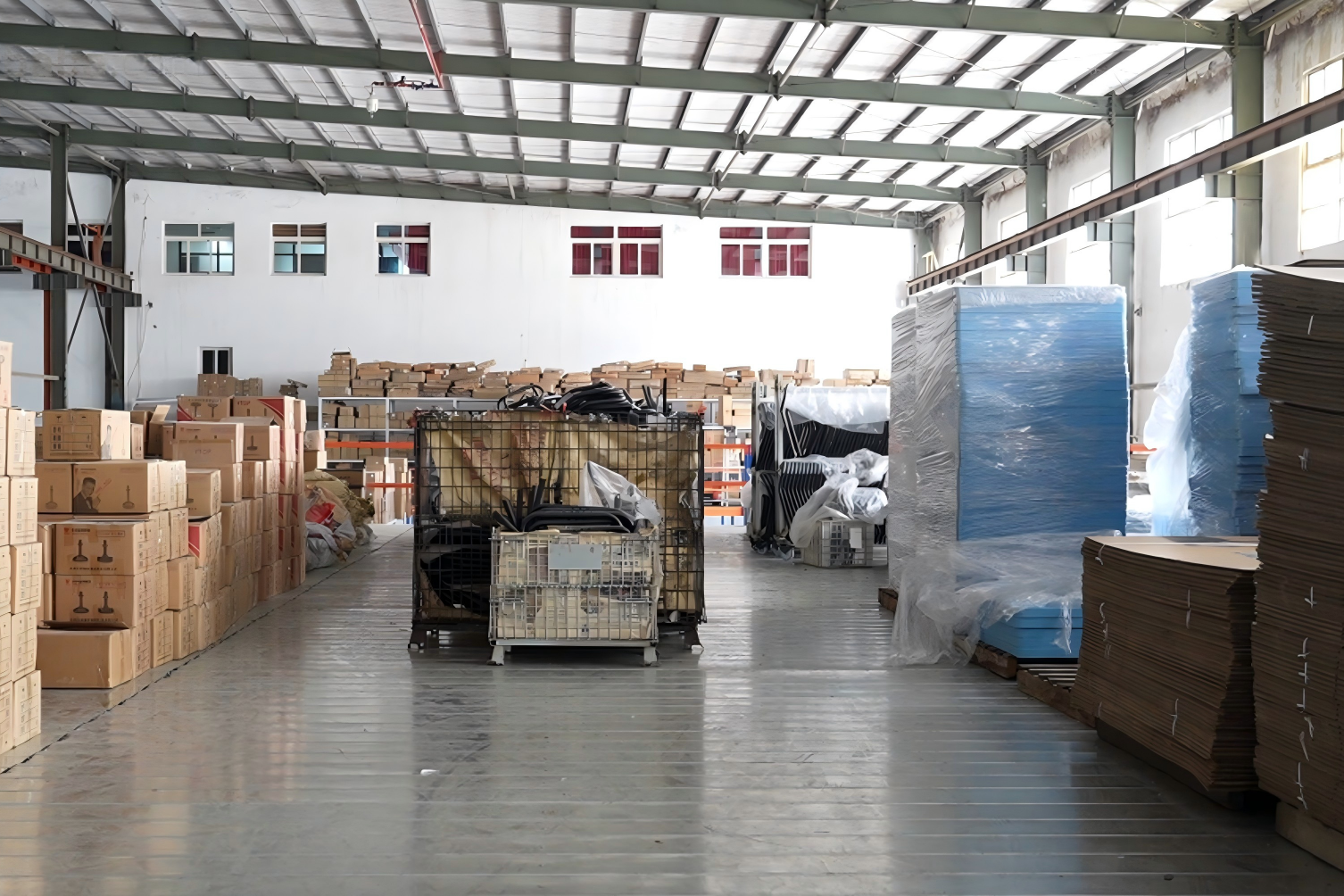
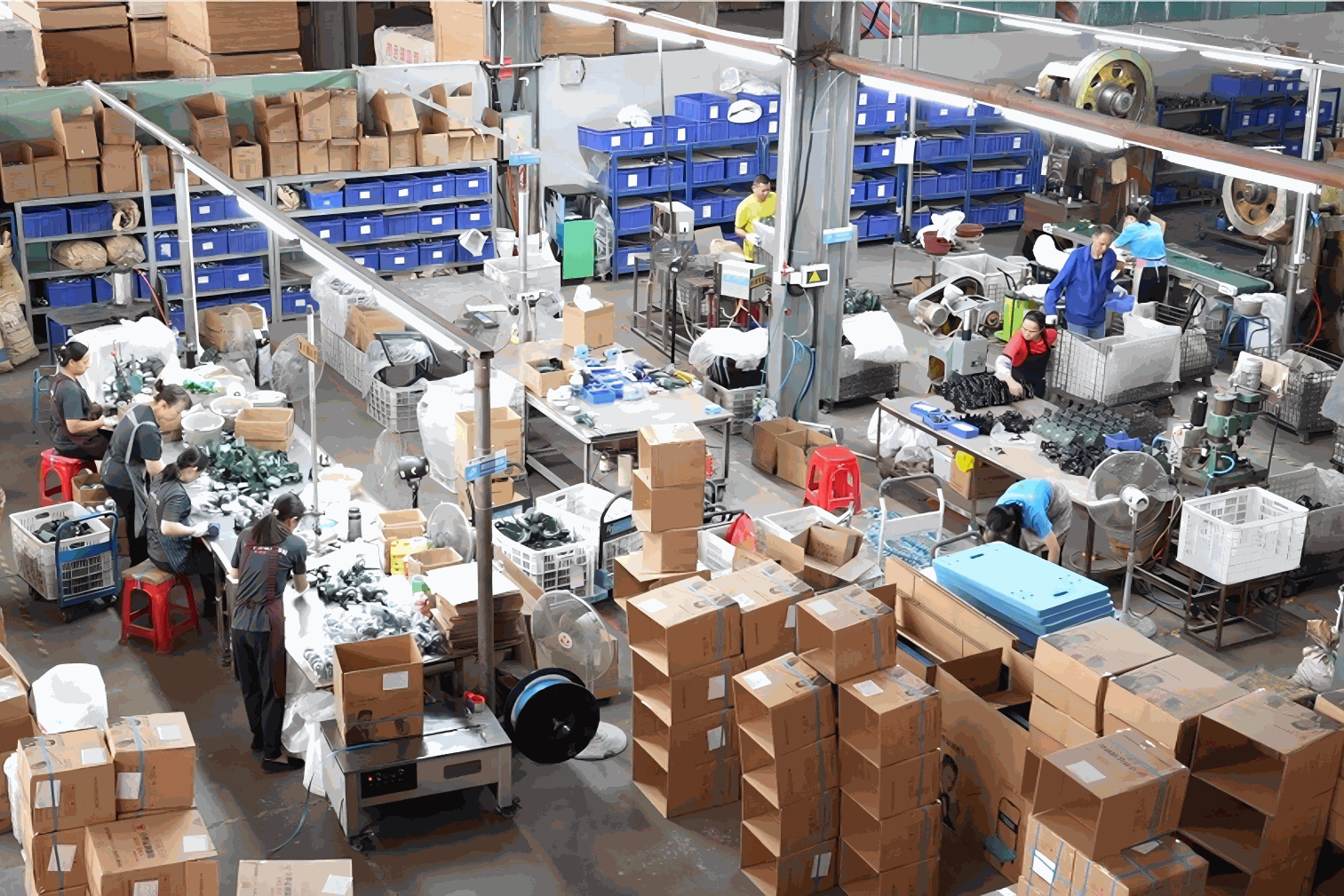
A professional caster factory usually covers several in-house processes. Sheet metal stamping forms the top plate, fork and leg of the bracket. Forged manganese steel or stamped steel plate is used for heavy-duty applications, while thin stamped plate is enough for light-duty furniture wheels. Injection molding machines produce nylon (PA6, MC cast nylon), polyurethane (PU, TPU), rubber and PP wheel treads. Bearing assembly lines press ball bearings, roller bearings or plain bearings into the wheel hubs. Riveting and welding stations join the bracket, swivel race and wheel together. Finally, packing lines batch the finished casters into export cartons.
Customization and OEM Services
The best caster factories do not only sell a fixed catalog. They offer OEM and ODM programs: custom top-plate dimensions, custom wheel diameters, custom tread materials (PU on nylon core, rubber on iron core, conductive or anti-static variants), custom brake types (single brake, double brake, total lock), custom color matching, and even custom branding on the bracket or packing. A buyer in North America or Europe can send a drawing or a sample and receive a production-grade sample back within two to three weeks.
The Landscape of Caster Manufacturing in China
China has become the world’s largest producer and exporter of casters, and the industry is organized around several strong regional clusters. Understanding these clusters helps you shortlist the right factory much faster.
Industrial Clusters by Region
The main caster manufacturing belts run through Guangdong in the south, Zhejiang on the east coast, Jiangsu around the Yangtze River Delta, Fujian along the southeastern coast, and a handful of heavy-industry clusters in Shandong, Hebei and Tianjin in the north. Guangdong is strong in light-duty and furniture casters, Zhejiang in medium-duty and stainless food-service casters, Fujian (especially Quanzhou) in manganese-steel heavy-duty and industrial casters, and the northern provinces in extra-heavy-duty wheels for logistics, construction and mining equipment.
Southern vs Northern Caster Specialization
A useful rule of thumb is that southern Chinese caster factories tend to focus on light- and medium-duty wheels with aesthetic finishes — chrome brackets, colored PP treads, quiet TPU rolls for office furniture and supermarket carts. Northern and inland factories tend to specialize in heavy-duty and super heavy-duty casters: forged steel brackets, thick nylon or polyurethane treads, load ratings from 300 kg up to 1600 kg per wheel, built for steel carts, machine bases, AGV frames and warehouse racks. Knowing which cluster matches your load requirement saves weeks of fruitless RFQs.
What to Look for in a Reliable Chinese Caster Manufacturer
Not every company that lists itself as a “caster factory” actually runs its own production. Some are traders, some are small assembly shops buying wheels and brackets from separate sub-suppliers, and a few are serious vertically integrated producers. The checklist below helps you separate the real production caster companies from the rest.
Material Quality and Load Capacity
Ask for the actual material spec of every touching part. Is the bracket stamped from cold-rolled steel, manganese steel plate or cheap recycled plate? Is the wheel tread cast nylon (MC), extruded PA6, PU elastomer or solid rubber? Are swivel races hardened and ball-bearing grooved? What is the rated load per wheel at a defined speed? A serious manufacturer will give you a data sheet with numbers, not just marketing words like “heavy duty.”
Testing, Certification and Quality Control
Look for in-house test equipment: salt spray testers for corrosion resistance, load fatigue testers for rolling and swivel life, impact testers for drop tests, and hardness testers for tread material. ISO 9001 quality management, REACH and RoHS compliance for the EU market, and FDA-compliant materials for food-contact applications are common expectations. A factory that shows you photos or videos of its testing lab, rather than just its showroom, is usually the safer long-term partner.
Leading Chinese Caster Brands and Manufacturers Worth Knowing
Many overseas buyers still default to European or Taiwanese brands out of habit, but several mainland Chinese caster manufacturers have been exporting for more than a decade and match imported products on load, finish and test reports at a substantially better landed cost.
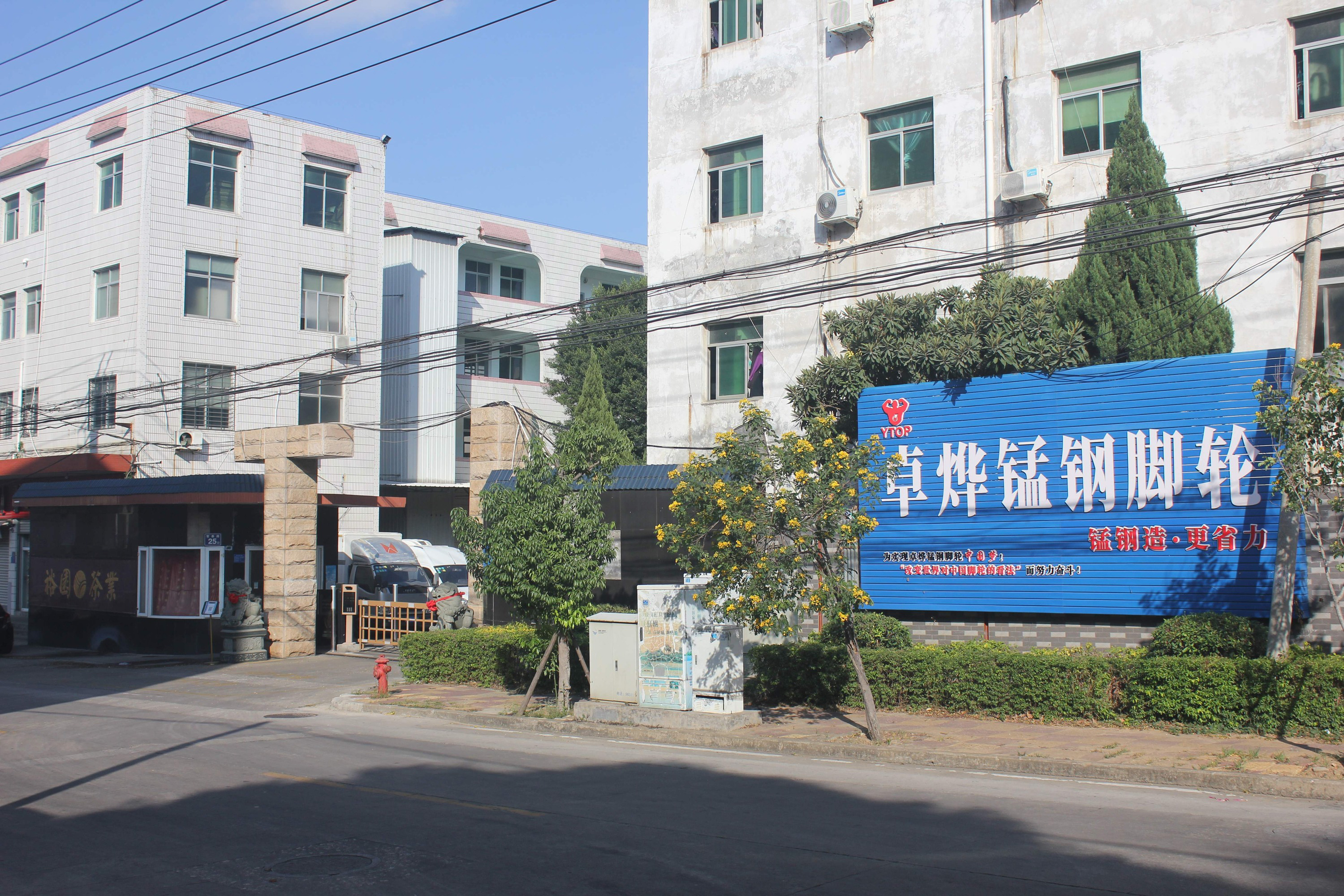
Quanzhou Zhuoye Manganese Steel Casters (YTOP)
Zhuoye, based in Quanzhou, Fujian, is a representative Chinese heavy-duty caster specialist. Its manganese-steel bracket line is designed around cold-formed high-strength manganese steel plate, which gives better impact resistance and longer fatigue life than ordinary stamped plate. The product family covers light-duty (35–80 kg), medium-duty (100–190 kg), heavy-duty (150–610 kg) and super heavy-duty (700–1600 kg) wheels in nylon, PU, TPU and rubber treads, with single-brake, double-brake, directional and total-lock options. The factory runs salt-spray, load-fatigue and swivel-life tests on every batch and ships to Europe, Southeast Asia, the Middle East and South America.
Other Notable Domestic Manufacturers
Other widely recognized Chinese names include Guangdong-based Keshun, strong in light and medium-duty furniture and appliance casters, and Zhejiang-based Yideli, known for stainless steel and food-service wheels. Each cluster has dozens of mid-size factories producing private-label casters for European, American and Australian brands, so the supply base is deep enough to absorb both trial orders and volume programs.
How Chinese Caster Factories Support Global Buyers
Working with a Chinese caster factory is not only about unit price. Mature producers have built export workflows that make cross-border sourcing straightforward.
OEM and Private Label Programs
Most production caster companies offer private-label packing, custom carton printing, logo laser engraving on the bracket, and custom tread colors to match your own brand identity. Minimum order quantities typically start at 200–500 pieces per SKU for standard models, and rise to 1000+ pieces for fully customized designs.
Export Standards and Logistics
Experienced factories quote in FOB terms from Shenzhen, Xiamen or Ningbo, provide HS codes, packing lists, commercial invoices and origin certificates, and can handle LCL, FCL or air freight for urgent samples. They are familiar with CE, REACH, RoHS and food-contact documentation, and can pre-arrange inspection reports from SGS, BV or Intertek when required.
Why Sourcing Casters from Chinese Factories Makes Sense
Choosing the right caster factory is a professional decision, not a commodity purchase. The right supplier saves money, reduces field failures, shortens lead times and grows with you as your product line expands. The wrong supplier leads to cracked brackets, delaminated treads, rusted swivels and endless replacement claims. Chinese caster manufacturers have closed the technology gap with imported brands on heavy-duty and industrial wheels, while keeping the cost advantage that local production cannot match in most Western markets. For industrial buyers, equipment OEMs and distributors, building a direct relationship with a real Chinese production caster company is no longer a risk — it is the default strategy.
Frequently Asked Questions
How do I find a reliable caster factory in China?
Start by filtering suppliers that show their own factory floor, testing lab and certificate files, rather than only showroom photos. Ask for a sample order first, run your own load and roll tests on the samples, and confirm the factory can provide a consistent production batch at the same specification.
What MOQ do Chinese caster factories usually require?
Standard catalog casters usually have no MOQ or a very low one (one carton). Custom designs, custom colors or custom tooling typically require 500 to 1000 pieces per SKU, because injection molds and stamping dies need a reasonable run to amortize.
Can I get custom caster designs made in China?
Yes. Most mature caster factories offer ODM support: custom top-plate size, custom wheel diameter, custom tread material, custom brake type and custom branding. You only need to send a drawing, a sample or a clear description of your load, floor and environment requirements.
Are Chinese caster factories ISO certified?
Serious production caster companies are ISO 9001 certified, and many also hold ISO 14001, REACH/RoHS compliance and food-contact material certifications. Always ask for the certificate copy and verify the certificate number with the issuing body before placing a volume order.
How long is the typical lead time?
Stock models ship within 3 to 7 days. Standard OEM orders take 15 to 30 days after deposit. Fully new tooling or custom mold development adds another 20 to 30 days. Sea freight to Western Europe or the U.S. West Coast typically adds 25 to 40 days.
Related Reading
Learn more about Chinese caster manufacturing, YTOP manganese steel caster production and related selection guides:
- What Are the Caster Performance Tests for Zhuo Ye Manganese Steel Casters? — see how production casters are tested before shipment.
- Zhuoye Manganese Steel Casters Build a High Quality Cultural System — understand quality culture inside a real caster factory.
- Zhuo Ye Manganese Steel Casters Won a New Invention Patent — R&D and production capability behind the brand.
- Under the Wave of the Internet: Transformation of the Traditional Caster Industry — how Chinese caster factories are upgrading.
- What Core Parameters Need Attention in Industrial Caster Selection? — technical checklist when you shortlist factories.
Browse our heavy-duty casters (150–610 kg) and super heavy-duty casters (700–1600 kg) made in our Quanzhou factory, or contact our sales team for a custom quote today.
Post time: Jan-12-2024