
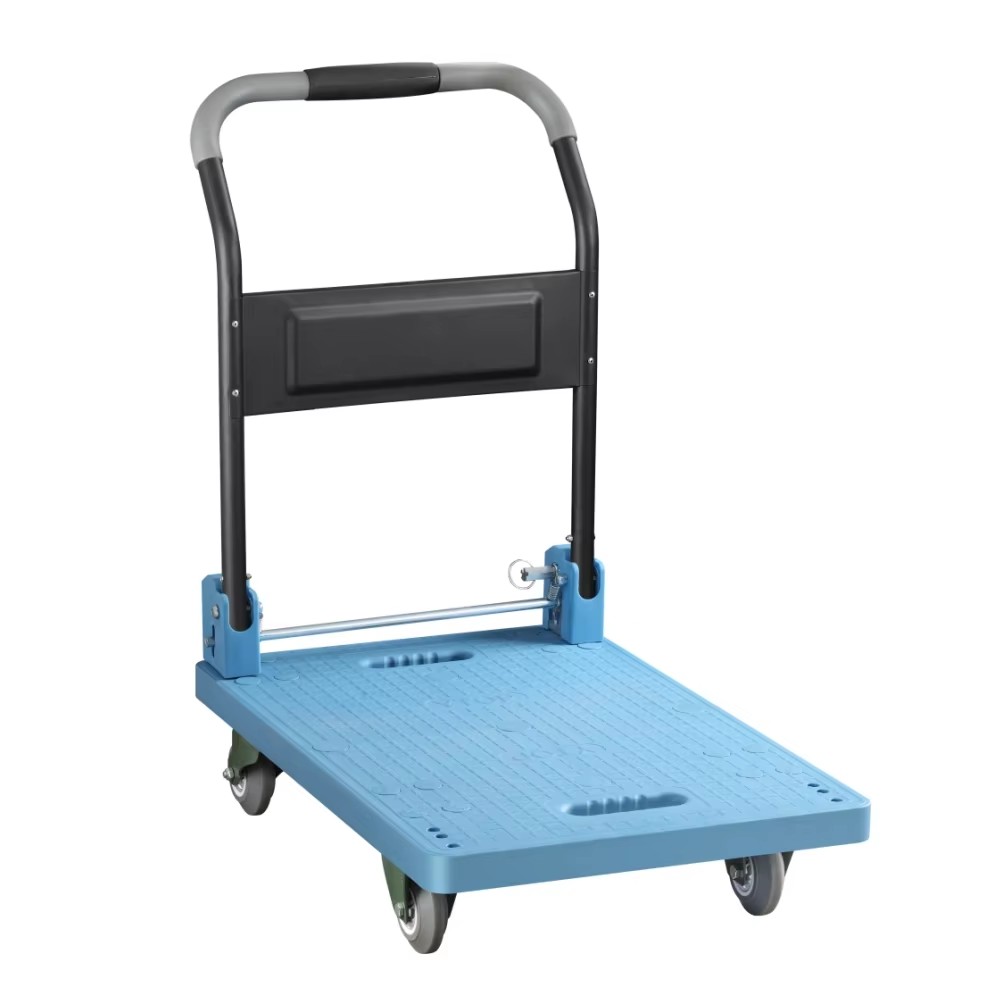
Trolleys supported by industrial casters have long been essential for material handling, evolving alongside human productivity and manufacturing technology. From ancient wooden carts to modern smart logistics systems, trolleys and their caster wheels have undergone remarkable transformations that continue to shape how we move goods in warehouses, factories, and commercial spaces.
Early Origins: From Wooden Wheelbarrows to Two-Wheel Trolleys
The history of trolleys dates back thousands of years. Early transportation relied on simple wooden wheelbarrows, believed to have originated in ancient Greece around 406 BCE and later independently developed in China during the Han Dynasty. With basic wooden wheels and solid timber frames, these early carts eased manual carrying, yet they were severely limited in load capacity and stability.
Wooden wheelbarrows typically featured:
- Single wheel design: Maneuverable but unstable under heavy loads
- Solid wooden wheels: High friction, rough ride, frequent breakage
- Limited capacity: Typically 50-100kg maximum
- High maintenance: Wood rotted, wheels warped, frequent repairs needed
Later, wooden two-wheel trolleys appeared, improving balance and handling efficiency significantly. These dual-wheel designs distributed weight more evenly and were widely used across agriculture, trade, and logistics. The addition of a second wheel transformed material handling, allowing workers to transport heavier loads with greater stability over longer distances.
The Industrial Revolution: Metal Trolleys and Heavy-Duty Caster Wheels
The industrial era brought revolutionary change to trolley design. Beginning in the late 18th century, metal trolleys with heavy-duty trolley wheels gradually replaced wooden versions. The invention of the caster wheel in the mid-19th century further transformed material handling, enabling carts to swivel and move in any direction with minimal effort.
Steel-built carts delivered unprecedented load-bearing performance and durability, becoming mainstream tools for factories and warehouses. Key innovations during this period included:
- Cast iron and steel construction: Load capacities increased from 100kg to over 1000kg
- Ball bearing technology: Patented in the 1880s, dramatically reduced friction and improved rolling efficiency
- Swivel caster mechanisms: Allowed 360-degree rotation, enabling precise maneuvering in tight spaces
- Rubber wheel introduction: Charles Goodyear’s vulcanization process (1839) led to rubber-tired wheels that reduced noise and floor damage
- Brake systems: Total lock and directional lock casters improved safety on inclines and uneven surfaces
By the early 20th century, specialized trolley designs emerged for specific industries: platform trucks for warehouses, drum trolleys for chemical handling, pallet jacks for logistics, and utility carts for hospitals and offices. The industrial trolley had become an indispensable tool across virtually every sector of the economy.
Modern Innovations: Composite Materials and High-Performance Industrial Casters
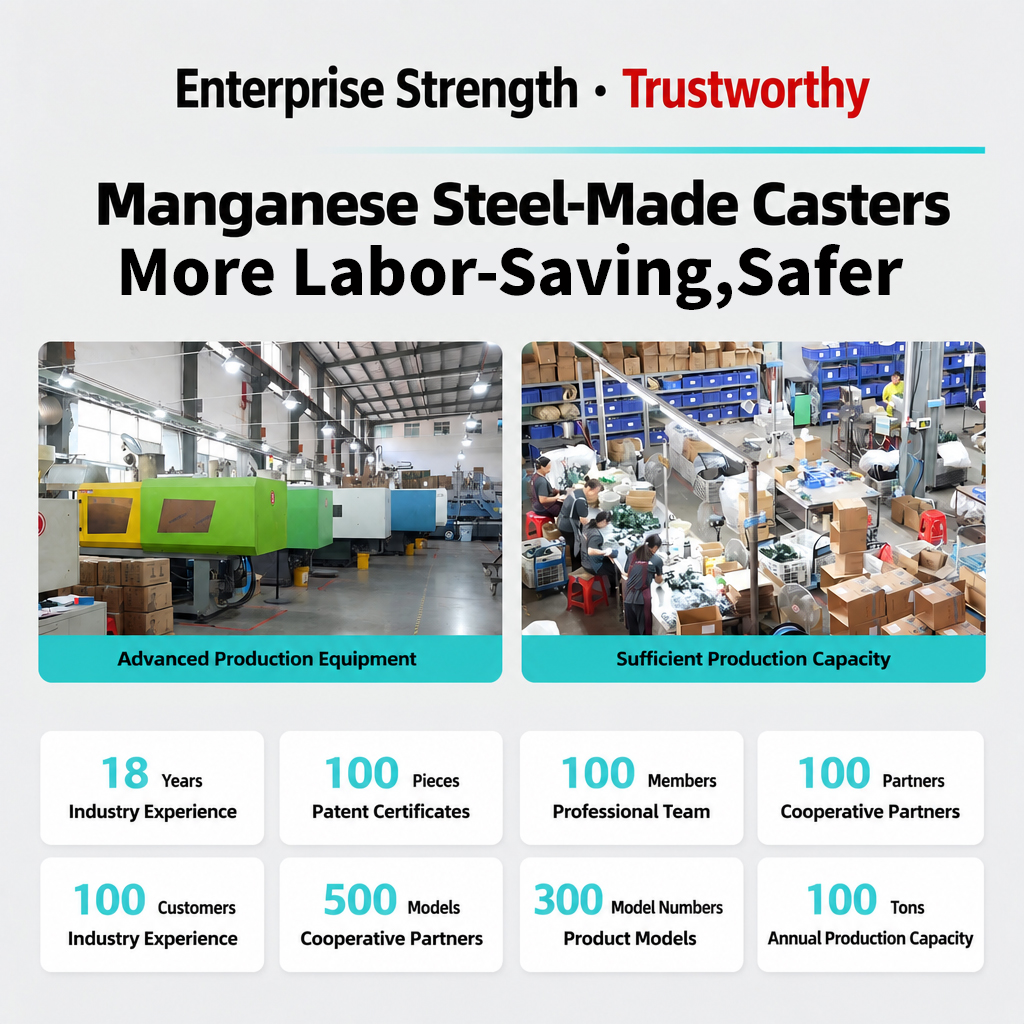
Driven by modern materials science and engineering, today’s trolleys adopt composite plastic and steel structures, fitted with high-performance industrial casters. The late 20th and early 21st centuries have seen remarkable advances in caster technology and trolley design.
Lightweight corrosion-resistant plastic trolleys serve supermarkets, hospitals, and retail sites, while steel trolleys with robust caster wheels handle heavy loads in workshops and storage facilities. Modern trolleys feature flexible movement, easy operation, and longer service life, with many models rated for 10+ years of continuous use under proper maintenance.
Key modern caster technologies include:
| Technology | Benefit | Typical Application |
|---|---|---|
| Polyurethane (PU) wheels | High wear resistance, floor protection, low noise | Warehouses, manufacturing, retail |
| Nylon (PA) wheels | Extreme durability, chemical resistance, high load capacity | Heavy industry, chemical plants, outdoor use |
| TPR/TPE wheels | Shock absorption, non-marking, quiet operation | Hospitals, offices, sensitive environments |
| Precision ball bearings | Low rolling resistance, high speed, long life | All industrial applications |
| Total lock brakes | Secures wheel and swivel simultaneously | Inclines, loading docks, safety-critical areas |
| Shock-absorbing casters | Spring-loaded suspension protects fragile loads | Electronics, glass, precision equipment transport |
For heavy-duty industrial applications, our heavy-duty casters (150-610kg) and super heavy-duty casters (700-1600kg) provide exceptional load capacity and durability for the most demanding trolley applications.
Types of Modern Trolleys and Their Applications
Today’s trolleys come in specialized designs tailored to specific industries and tasks. Understanding the different types helps businesses select the right equipment for their material handling needs:
- Platform trolleys: Flat deck carts with load capacities from 150kg to 2000kg, ideal for general warehouse transport and order picking
- Pallet trolleys/jacks: Designed specifically for lifting and moving standard pallets, essential in logistics and distribution centers
- Utility/service carts: Multi-shelf designs used in hospitals, hotels, and offices for transporting supplies, linens, or documents
- Drum trolleys: Specialized cradles for safely transporting 55-gallon drums of chemicals, oils, or food ingredients
- Order picking carts: Ergonomic designs with multiple levels and compartments for efficient e-commerce fulfillment
- Workshop trolleys: Mobile workstations with tool storage, used in manufacturing and maintenance environments
- Cleanroom trolleys: Stainless steel construction with non-marking wheels for pharmaceutical and electronics cleanrooms
Key Factors to Consider When Choosing Industrial Trolley Casters
Selecting the right caster wheels for your trolley is critical for performance, safety, and longevity. Consider these essential factors:
- Load capacity: Calculate total trolley weight plus maximum cargo, then divide by number of casters. Apply a 1.5x safety factor. For example, a 500kg trolley with 4 casters requires each caster to handle at least 188kg (500 × 1.5 ÷ 4).
- Wheel diameter: Larger wheels (150-250mm) roll more easily over obstacles and uneven floors but require more clearance. Smaller wheels (100-125mm) work best on smooth floors with lighter loads.
- Wheel material: Choose polyurethane for general industrial use, nylon for heavy loads and chemical resistance, TPR for quiet operation and floor protection, or rubber for outdoor and shock-absorbing applications.
- Floor conditions: Smooth concrete requires hard wheels (nylon/PU) for easy rolling; uneven or damaged floors need larger, softer wheels (rubber/TPR) for shock absorption.
- Operating environment: Consider temperature extremes, moisture, chemical exposure, and cleanroom requirements when selecting caster materials and finishes.
- Maneuverability needs: Use 2 swivel + 2 rigid casters for straight-line tracking, or 4 swivel casters for maximum maneuverability in tight spaces.
- Safety requirements: Install total lock brakes on inclines, directional locks for long aisles, and consider shock-absorbing casters for fragile loads.
The Future of Trolleys: Smart Casters, Eco-Friendly Materials and Safety
The evolution of trolleys mirrors progress in mobility engineering. Going forward, modern casters and trolleys will keep advancing toward higher intelligence, eco-friendly materials, and better safety to meet growing industrial logistics demands.
Emerging trends shaping the future of trolleys include:
- Smart caster technology: IoT-enabled casters with load sensors, temperature monitoring, and predictive maintenance alerts that communicate with warehouse management systems
- Autonomous mobile robots (AMRs): Self-driving trolleys that navigate warehouses independently using LiDAR and AI, reducing labor costs and improving efficiency
- Sustainable materials: Recycled plastics, bio-based polyurethanes, and energy-efficient designs that reduce environmental impact
- Ergonomic innovations: Height-adjustable handles, power-assist drives, and anti-vibration designs that reduce worker fatigue and injury
- Modular designs: Quick-change caster systems and configurable trolley platforms that adapt to changing business needs
- Enhanced safety features: Automatic braking systems, obstacle detection, and load monitoring that prevent accidents and protect workers
FAQs About Industrial Trolleys and Caster Wheels
Q: How long do industrial trolley casters typically last?
A: With proper maintenance, quality industrial casters typically last 3-7 years depending on usage intensity, load conditions, and operating environment. Regular cleaning, lubrication, and inspection can significantly extend service life.
Q: What is the difference between swivel casters and rigid casters?
A: Rigid casters only move forward and backward in a straight line, providing stability and tracking. Swivel casters rotate 360 degrees, allowing the trolley to change direction and maneuver in tight spaces. Most trolleys use a combination of both for optimal performance.
Q: Can I replace the wheels on my existing trolley?
A: Yes, most industrial trolleys use standard caster mounting plates (typically 4×4.5 inch or 3×4 inch) that allow easy replacement. Ensure the new casters match the bolt hole pattern, load capacity, and wheel diameter of the original equipment.
Q: How do I maintain my trolley casters?
A: Regular maintenance includes: weekly visual inspection for wear or damage, monthly cleaning of wheels and bearings to remove debris, quarterly lubrication of moving parts with appropriate grease, and annual replacement of worn wheels or bearings. Follow the manufacturer’s maintenance schedule for optimal performance.
Q: What caster material is best for concrete floors?
A: For smooth concrete floors, polyurethane (PU) wheels are generally the best choice, offering excellent wear resistance, floor protection, and low rolling resistance. For very heavy loads on concrete, nylon wheels provide superior load capacity but may be noisier. Avoid hard rubber wheels on concrete as they tend to leave marks and wear quickly.
Conclusion
From ancient wooden wheelbarrows to modern smart logistics systems, the evolution of trolleys and their caster wheels reflects humanity’s continuous quest for more efficient material handling. Today’s industrial trolleys, equipped with high-performance caster wheels, are essential tools across virtually every industry, enabling the safe and efficient movement of goods that powers the global economy.
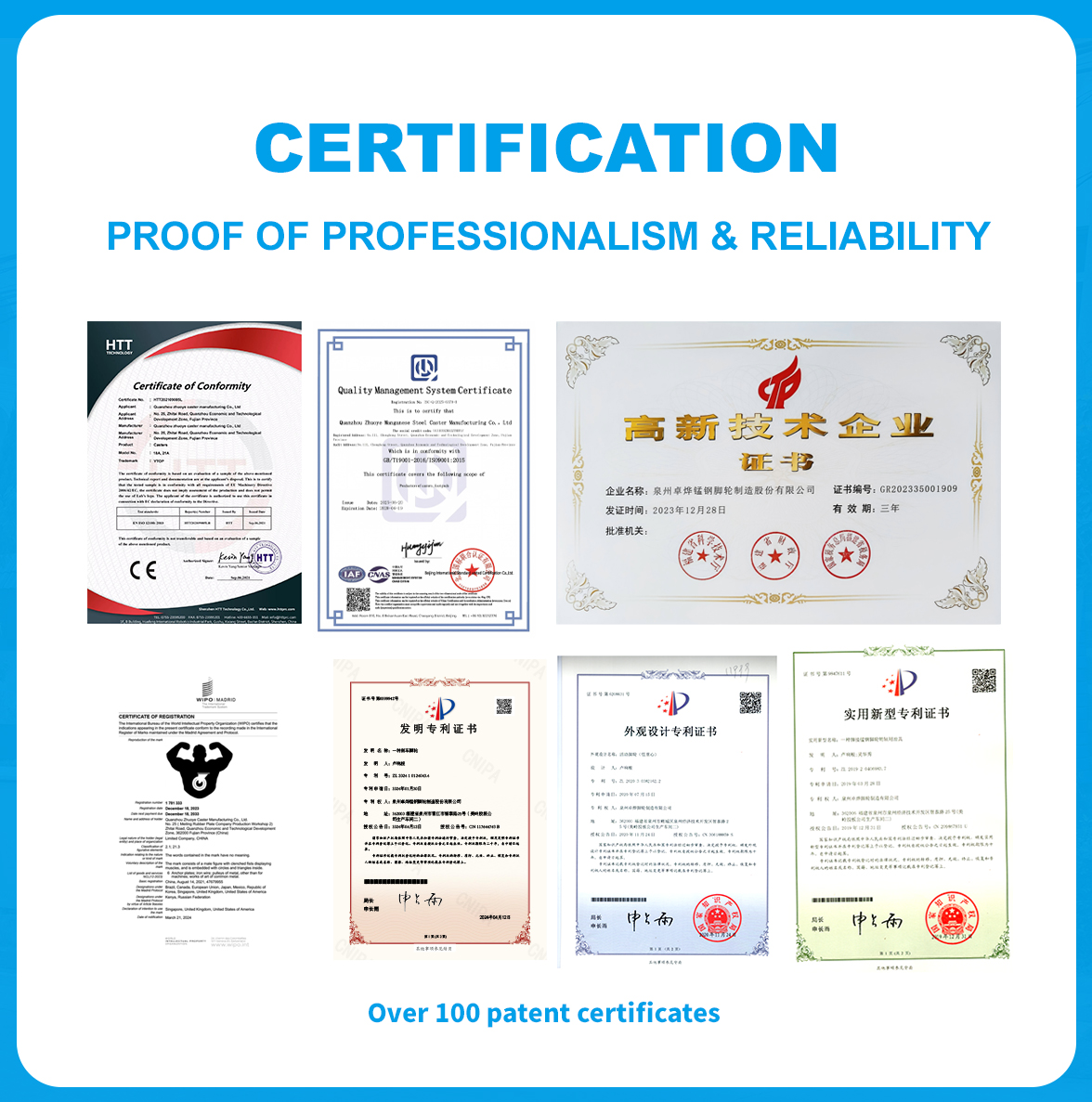
At YTOP Casters, we offer a comprehensive range of heavy-duty casters, medium-duty casters, and light-duty casters designed for every type of industrial trolley application. With 15 years of manufacturing experience and ISO/CE certification, our caster wheels deliver the durability, performance, and value that businesses demand. Contact our engineering team for expert guidance on selecting the perfect casters for your trolley fleet.
Related Reading
Looking for more in-depth caster guides and industrial mobility resources? Explore these related articles:
- Heavy-Duty Casters Selection Guide — Learn how to select the right heavy-duty casters for your equipment, including load calculation, material selection, and braking systems.
- Extra Heavy Duty Casters: Full Analysis — An in-depth look at extra heavy duty casters, including features, load capacity specifications, structural design, and industry applications.
- PP vs TPR Casters: A Complete Comparison Guide — Understand the key differences between polypropylene and thermoplastic rubber caster wheels for industrial applications.
- Rubber vs Nylon Casters: Which is Right for You? — A detailed comparison of rubber and nylon caster wheels, covering performance characteristics and selection criteria.
- Caster Maintenance Tips — Maximize the lifespan of your industrial casters with this comprehensive maintenance guide covering inspection, lubrication, and replacement.
Explore our complete range of heavy-duty casters (150-610kg) and super heavy-duty casters (700-1600kg), or contact our engineering team for expert guidance on selecting the perfect caster solution for your industrial application.
Post time: Aug-18-2026