
Casters, as a key component of various equipment, furniture, and transportation tools in daily life and industrial production, are undeniably important. Whether it’s hospital beds in the medical field, chairs in office environments, machinery and equipment in industrial production, shelves in warehouse facilities, or even shopping carts in commercial environments, all rely on casters for support and movement. So, how do casters achieve these core functions? The answer lies in their key material—synthetic rubber.
Synthetic rubber, a rubber material manufactured through artificial synthesis, differs from natural rubber in chemical composition and physical properties, but it also possesses excellent elasticity, wear resistance, and pressure resistance. These properties enable synthetic rubber to exhibit superior performance in caster applications.
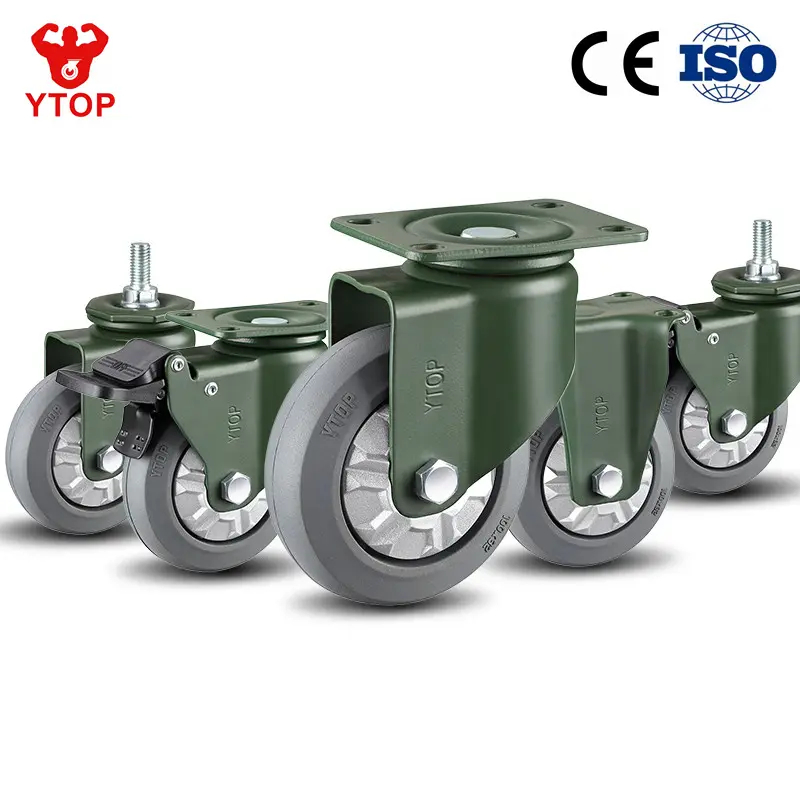
First, synthetic rubber stands out for its superior wear resistance. Casters, constantly in contact with and rubbing against the ground, will quickly wear down and deform if the material is not wear-resistant, affecting their performance. However, the excellent wear resistance of synthetic rubber ensures that casters maintain their shape and performance stability over long periods of use, significantly extending their lifespan.
Secondly, the pressure resistance of synthetic rubber is also a key factor in its widespread use in casters. Whether dealing with heavy-duty equipment or lightweight furniture, casters need to withstand a certain amount of pressure. Thanks to its excellent elasticity and pressure resistance, synthetic rubber can maintain the normal operation of casters under heavy loads, thereby improving the stability and safety of the equipment.
Furthermore, synthetic rubber exhibits excellent anti-aging properties. In outdoor environments, casters need to withstand various natural elements, such as wind, sun, rain, and snow. If the material’s anti-aging properties are poor, the casters are prone to aging and cracking, affecting their performance. However, synthetic rubber, due to its excellent resistance to ultraviolet rays, oxidation, and ozone, can be used for a long time in harsh environments without easily aging.
In addition to the performance advantages mentioned above, synthetic rubber also boasts high environmental friendliness and recyclability. With increasing environmental awareness, more and more industries are focusing on the environmental performance of materials. As a recyclable material, synthetic rubber not only meets environmental requirements but also helps reduce production costs.
It’s worth noting that the application of synthetic rubber in casters is not static. Depending on the specific application and requirements, synthetic rubber can be customized. For example, in applications requiring greater pressure resistance or higher wear resistance, the performance of the synthetic rubber can be improved by adjusting its formulation and processing. Similarly, in applications requiring reduced noise or increased stability, the caster’s structure and design can be altered.
In conclusion, synthetic rubber, as a key material for casters, provides stable and reliable support for the movement of various equipment, furniture, and transportation vehicles due to its excellent wear resistance, pressure resistance, and aging resistance. With continuous technological advancements and increasingly stringent performance requirements, we have reason to believe that the application of synthetic rubber in the caster field will become increasingly widespread and in-depth.
Post time: Mar-09-2026