
Furniture casters on a campus carry very little weight, yet they are asked to do things industrial casters never do: be silent in a reading room, leave no mark on a gym floor, lock solidly so a chair does not slide during a lesson, and survive being kicked, dragged and leaned on by hundreds of people a day.
This guide covers school, library and campus furniture: classroom chairs and desks, AV and laptop carts, mobile shelving, display units and lab benches that have to be moved for cleaning.
What Makes Furniture Casters Different
Four requirements dominate the specification, and none of them is load capacity.
Noise. A hard wheel on a hard floor generates a rolling roar, and in a library or examination room that noise is the whole problem. Quiet matters more than wear life here.
Floor protection. Vinyl, linoleum, timber and gym surfaces all mark easily. A black rubber tread dragged across a light floor leaves a permanent scuff that no cleaner removes.
Stability when parked. A chair or desk that slides while a student writes is worse than one that cannot be moved at all. The brake or lock has to hold under a lateral load, not just under gravity.
Abuse tolerance. Furniture casters get kicked, run over thresholds, dropped off kerbs and used as footrests. Simple, sealed mechanisms survive better than delicate ones.
Stem or Plate Mounting
The mounting type is decided by the furniture leg, and it constrains everything else.
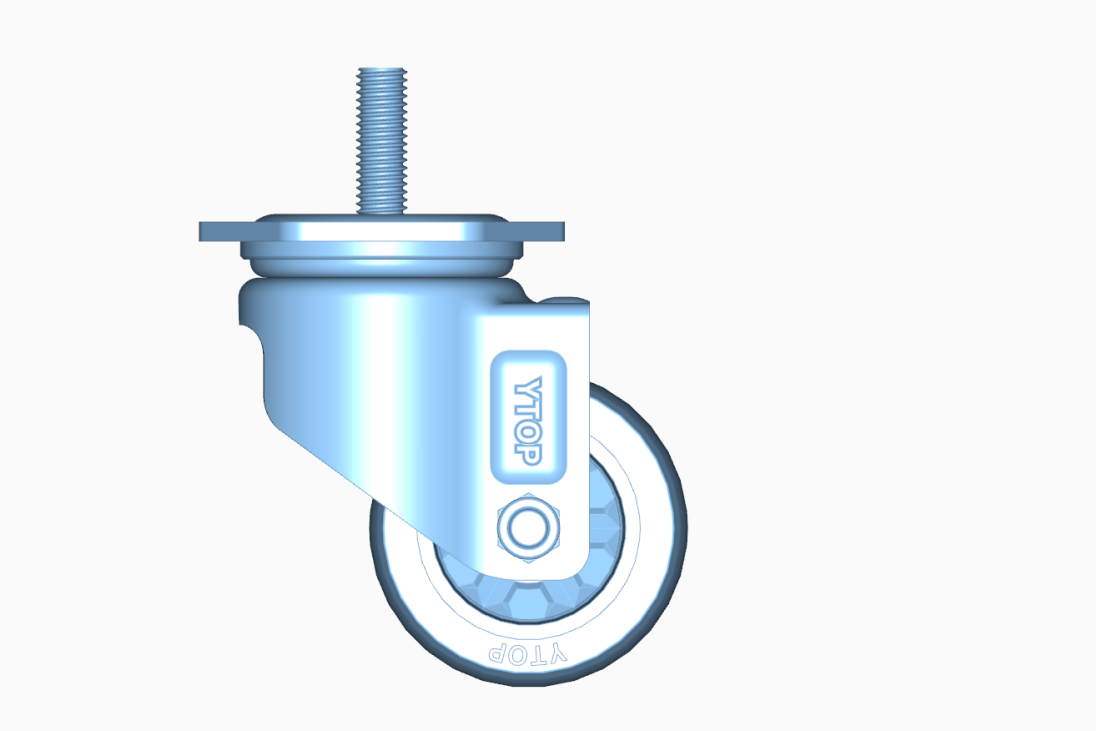
Threaded stem casters screw into a socket or a leg with an internal thread. They are the standard for chairs, tables and light shelving because they need no plate and no bolts, and they can be swapped in seconds. The specification point that matters is the thread size and length: an M12 stem in an M10 socket will not seat, and a stem that is too long will protrude and damage the leg.
Plate mounting distributes load across four bolts and suits heavier items such as mobile shelving, lab benches, AV cabinets and book returns. Plate size and bolt spacing must match the existing holes; retrofitting a plate to a leg that was never drilled for one usually ends with a bent bracket.
A third option, the expandable or socket adaptor, allows a stem caster to be fitted into a leg with an internal tube rather than a thread. It is common on imported furniture and worth checking before ordering replacements.
Load Per Caster on Furniture
Furniture loads are small, which tempts buyers to ignore the calculation. Two habits prevent failures.
Use the loaded weight, not the empty weight. A mobile shelving bay with 300 kg of books, a lab bench with equipment, or an AV cart with a projector and a battery pack all weigh far more than the catalogue figure for the furniture itself.
Assume uneven distribution. A desk with a drawer bank on one side puts most of its weight on two casters. A book return with a full bin at the front loads the front pair. Dividing total weight by four and adding a small margin is not enough; the worst caster should be checked against the rated capacity on its own.
For a typical classroom chair, 50 mm to 75 mm casters rated at 40 to 60 kg each are ample. For mobile shelving, 100 mm casters rated at 100 kg or more are the practical starting point. The difference is not only capacity but rolling behaviour on a loaded bay.
Quiet Rolling on Carpets and Hard Floors
The floor decides the tread material, and campuses usually have several.
Carpet and carpet tile need a soft tread that does not dig in, and a wheel large enough that it does not sink. Polyurethane and soft rubber both work; very hard nylon wheels sink into deep pile and feel like they are ploughing.
Vinyl, linoleum and timber need a non-marking tread with moderate hardness. Polyurethane is the usual choice: quiet, non-marking, and resistant to the flat spots that develop when a chair stays in one position for a term.
Gym and sports floors are the hardest case. They mark readily and are expensive to refinish, so non-marking rubber or a soft PU tread with a wide contact patch is the safe specification, and hard wheels should be kept off them entirely.
The wheel diameter matters for noise as much as the material. A larger wheel rolls over joints and mat edges with less impact, and impact is what produces most of the noise in a corridor.
Locking That Actually Holds
Furniture brakes are usually specified by habit rather than by function, and that is where most complaints originate.
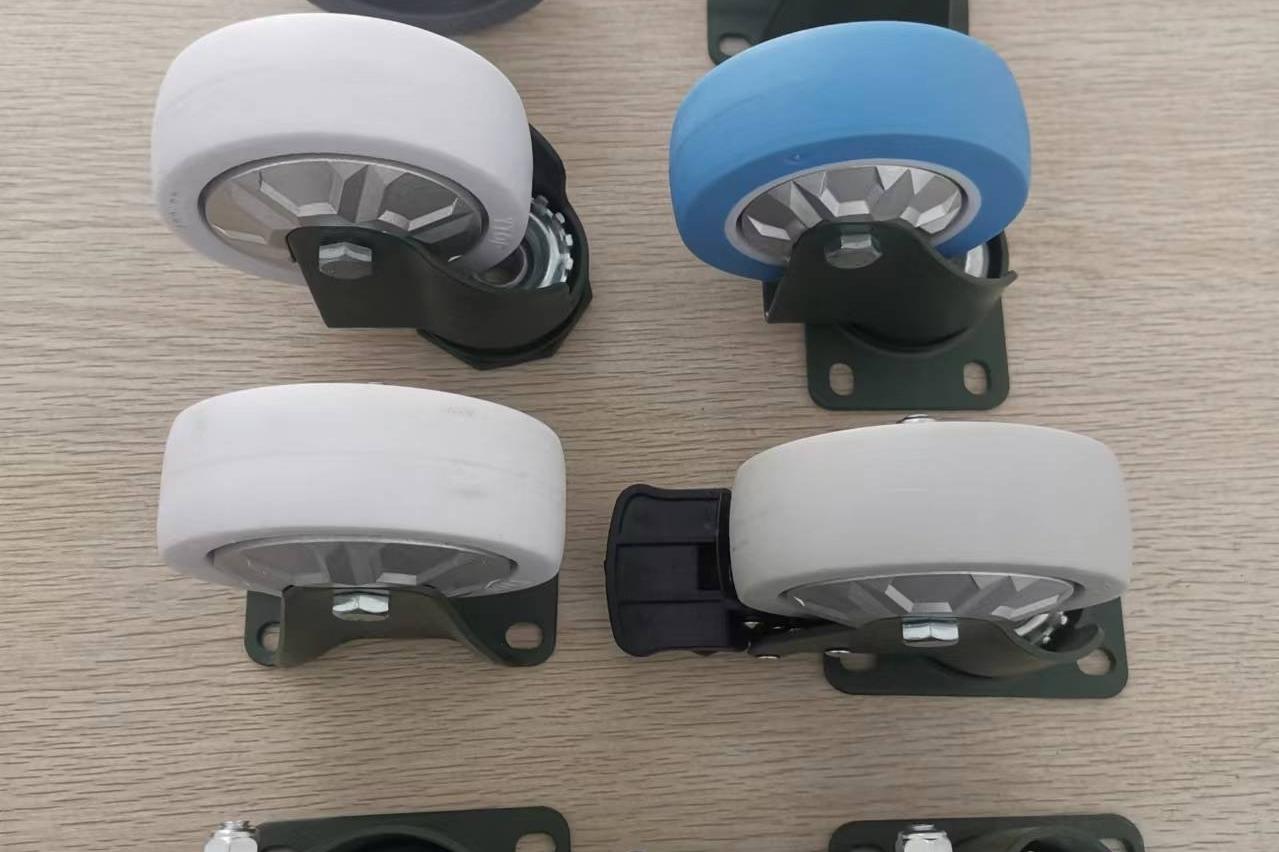
Wheel-only brakes stop the wheel turning. They are adequate for a chair that only needs to resist rolling, but they allow the swivel to rotate, so a desk or trolley can still pivot when leaned on.
Total-lock brakes stop both wheel and swivel. For desks, lab benches and AV carts that are used as work surfaces, this is the correct choice: the furniture stays where it was placed and does not rotate under a hand or an elbow.
Swivel locks without brakes are useful for shelving and display units that must track straight when pushed but do not need to be immobilised. They are cheaper than total-lock and solve the specific problem of a bay that wanders into an aisle.
Two brakes on the diagonal are enough for most furniture, provided the pair is on casters that carry the load. Fitting both brakes on the light end of a desk achieves nothing.
Retrofitting Casters to Existing Furniture
Most campus furniture is bought without casters and fitted later, so retrofit is the normal case rather than the exception.
Three checks decide whether a retrofit will work. The leg must have enough material to take a stem or a plate without splitting or collapsing; the leg must be strong enough laterally, because a caster converts a vertical load into a bending load at the joint; and the furniture must not become unstable when raised, since a caster adds 50 to 120 mm to the height.
For timber and metal legs, a plate with four bolts is generally stronger than a single stem. For moulded plastic legs, a stem with a socket adaptor is often the only practical option, and the socket must be rated for the load.
If a leg shows any sign of collapse, stop and use a different mounting approach rather than adding reinforcement to the leg: a castor that outlives the furniture is not a success.
Safety in Corridors, Classrooms and Lifts
Furniture on casters introduces risks that fixed furniture does not have, and a few of them are worth specifying for.
Corridors and ramps: a trolley on a slope will accelerate, and a wheel-only brake on a ramp is not a restraint. Where furniture is moved across ramps or thresholds, total-lock brakes and a two-person procedure are the reliable answer.
Lifts and thresholds: the gap between a lift floor and the landing is a trap for small wheels. A 75 mm wheel can drop into a 15 mm gap and stop the trolley dead, which is exactly when the load tips. Larger wheels bridge the gap.
Stacking and storage: furniture stored on casters in a stack can roll, and a rolling stack is a hazard. Swivel locks and a marked storage position solve this cheaply.
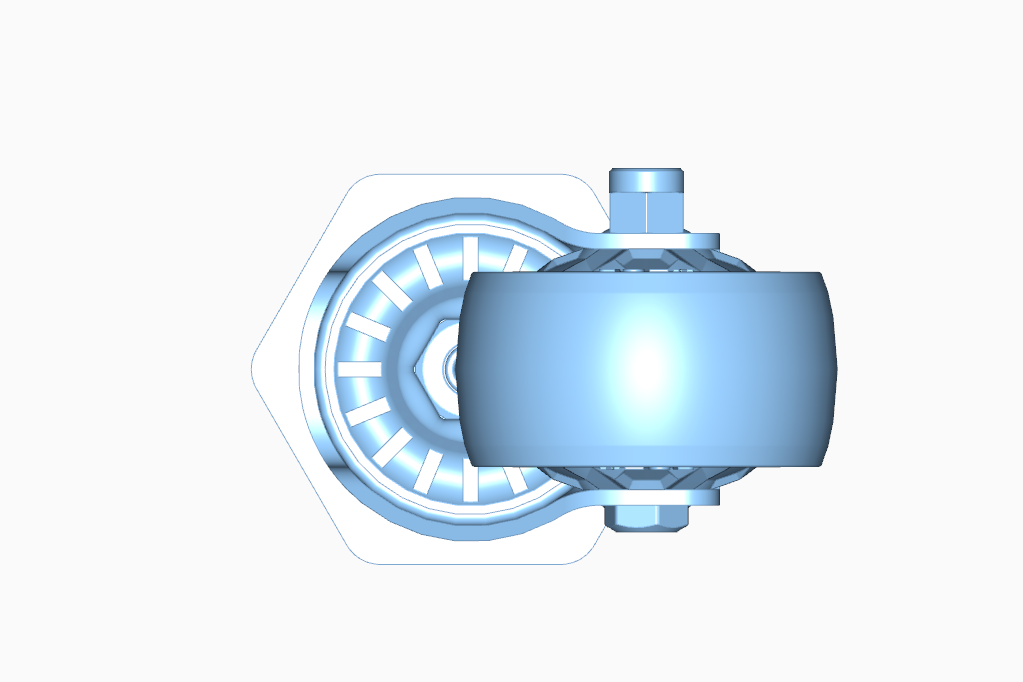
Children: casters on small chairs are used as toys, and fingers get trapped between wheel and fork. Metal fork guards or a wheel design without an open gap are worth asking for on any furniture used by younger students.
Maintenance Across a School Year
Campus furniture casters fail on a schedule that follows the academic year rather than the calendar.
The autumn term is the heaviest period: furniture is moved into new rooms, extra chairs are pulled from stores, and everything is used at maximum intensity for twelve weeks. Most of the damage shows up in January, when a chair that has been dragged across a corridor all term finally loses a wheel.
Two inspections are usually enough. In late August, before term, check every caster on the furniture that will be moved: spin each wheel, look for flat spots from the summer, confirm that brakes hold, and replace anything already worn rather than waiting for it to fail in front of students. In January, repeat the check on high-use items such as chairs, AV carts and book returns.
Keep a small stock of the two or three most common caster models on site. A chair out of service for three weeks waiting for a 30-gram part costs more in disruption than the part does, and it tends to end with the chair being taken out of circulation altogether.
Specification Checklist for Campus Furniture
Before ordering, confirm the loaded weight and the worst-caster share, the mounting type and its exact dimensions, the floor surfaces the furniture will cross, whether the item needs to roll, track straight, or lock solidly, the noise sensitivity of the room, and the users, because furniture for young students has different safety requirements from office furniture.
Then standardise. Campuses accumulate furniture over decades, and a mix of stem sizes and plate patterns turns every replacement into a measuring job. Recording the caster model against each furniture type, and holding a small stock of the two or three most common models, keeps a term-time repair from becoming a procurement delay.
If you send us the furniture types, leg construction and floor surfaces, we will propose a standard specification for each type, including mounting and lock type.
Related Reading
Two guides that go deeper on the furniture and noise questions:
- Casters in Furniture: Mobility and Space Management — how caster choice changes the way furniture is used and stored.
- How to Choose Silent Casters — the tread and wheel choices behind quiet rolling on hard floors.
Explore our heavy-duty casters (150-610kg) for mobile shelving and lab benches, or contact our engineering team for help matching casters to existing furniture legs.
Post time: Nov-14-2026