
Hotel and restaurant work is light duty by industrial standards. Loads are measured in tens of kilos, distances are short, and nothing is lifted by crane. Yet housekeeping carts and banquet tables are some of the hardest-working casters in any building, because they are used constantly, they cross carpet as often as hard floor, and they are expected to be silent.
This article covers what actually fails on hospitality casters — carpet drag, thresholds, wet kitchen floors and noise — and how to specify for each.
Five Conditions That Define Hospitality Casters
Hospitality work has its own set of constraints, and they conflict with each other.
The floor is mixed. A single route may cross carpet, tile, marble, timber and a lift threshold within thirty metres, so the caster has to work on all of them.
Carpet is the dominant surface in guest areas, and it is the one that produces the highest rolling resistance.
Noise matters. A caster that rumbles on tile is a complaint from a guest room at seven in the morning.
Appearance matters. A mark on marble or on a light carpet is a maintenance cost that nobody budgets for.
And the equipment is handled by staff who will not maintain it, so whatever the caster needs has to survive without attention.
Carpet, Thresholds and Rolling Effort
Carpet is where most hospitality carts are specified badly.
On a hard floor, almost any caster rolls. On a cut-pile carpet, the wheel sinks slightly and the pile wraps the contact patch, which multiplies rolling resistance. A 75 mm hard wheel that is effortless on tile becomes a two-handed push on carpet.
Three changes fix it. A larger diameter, because the wheel bridges the pile instead of ploughing through it. A slightly softer tread, because it conforms to the pile rather than cutting into it. And fewer swivels: a cart with two fixed and two swivel casters tracks straight on carpet, where four swivels tend to steer themselves.
Thresholds and lift lips are the second obstacle. A 20 mm lip stops a 75 mm wheel dead and is barely noticed by a 125 mm one, which is the argument for a single wheel size across the whole fleet rather than a smaller one for the light carts.
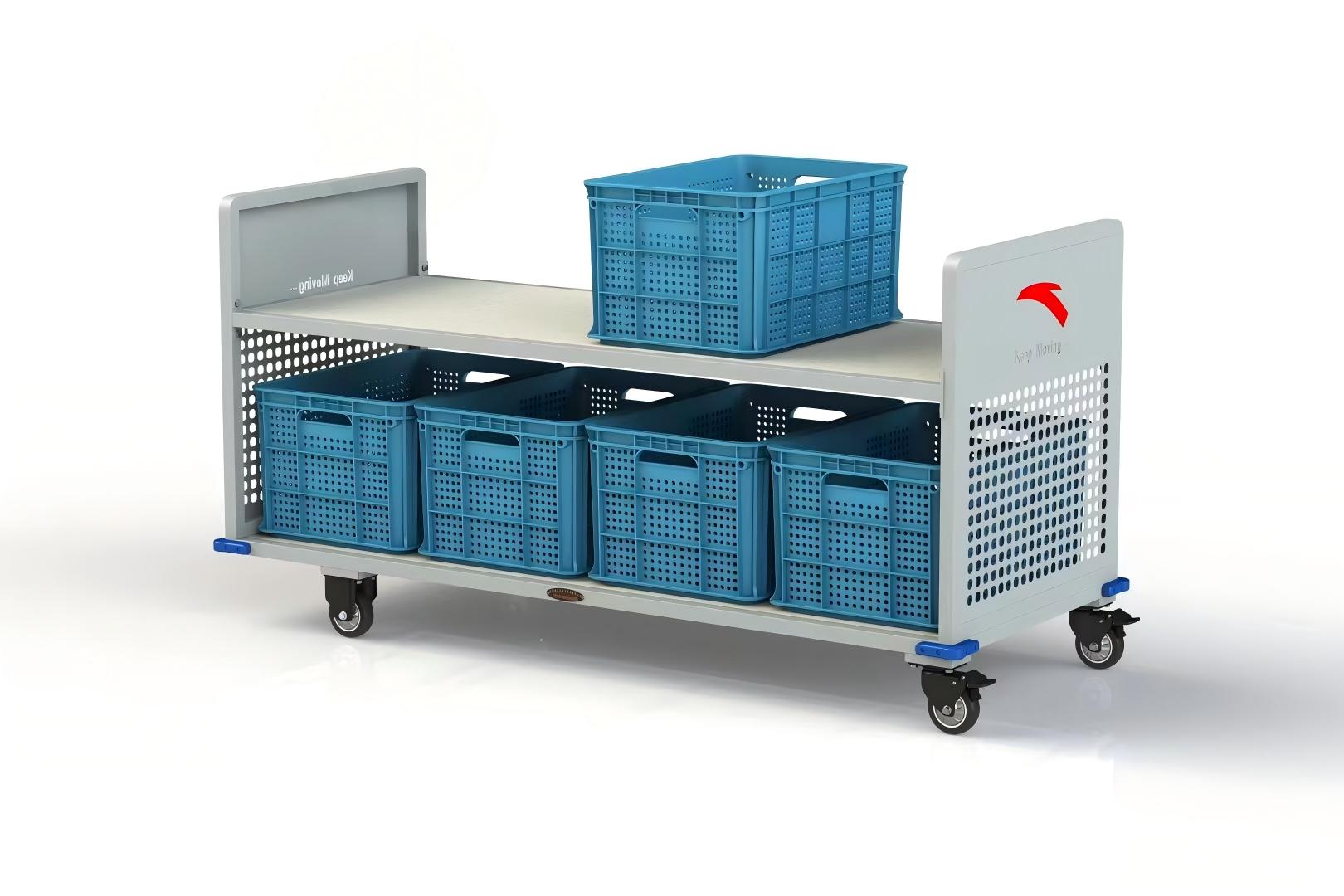
Quiet Operation
Noise in a hotel comes from two sources: the tread and the raceway.
A hard wheel on tile produces a sharp clatter at every joint, and a hollow cart amplifies it. A softer tread — rubber, TPR or soft PU — removes most of that, at the cost of slightly higher rolling effort on carpet.
The raceway is the second source. A loose or dry swivel rattles, and the sound travels through the cart frame. A sealed raceway with the correct preload is quiet; a worn one is not, which is why a caster that has become noisy is often also a caster that is about to fail.
Where a cart is used in guest corridors before seven in the morning, the combination that works is a soft tread, a sealed raceway and a cart frame with some mass. Noise control is a system property, not a wheel property.
Marks on Marble, Timber and Light Carpet
Non-marking is a real specification, not a marketing phrase, and it fails in three ways.
Black rubber leaves grey scuffs on light floors, especially when the wheel slides rather than rolls — which is exactly what happens on a tight turn in a corridor.
Soft treads can transfer pigment from a coloured floor or from a mat, and the mark appears on the next light surface the cart crosses.
Hard wheels on marble and polished timber leave fine scratches that are only visible under low light, and by then the floor has been damaged for months.
The practical answer is a grey or non-pigmented non-marking PU or TPR tread for guest areas, and a separate harder caster for back-of-house, where the floor is a service corridor and marking does not matter.
Kitchen Floors, Grease and Steam
The kitchen is the one genuinely harsh area in a hotel, and it has different requirements from the guest floors.
Floors are wet and often greasy. A rubber or soft PU tread grips better than a hard nylon one, and a hard wheel on a greasy tile will skid rather than steer.
Steam and heat from the dishwash area shorten grease life, and standard grease in an open raceway will emulsify within weeks.
And the equipment — pot racks, tray trolleys, dish carts — is washed down, so water reaches the caster directly. A sealed raceway is essential here, and stainless is worth considering in the dishwash area even where it is not needed elsewhere.
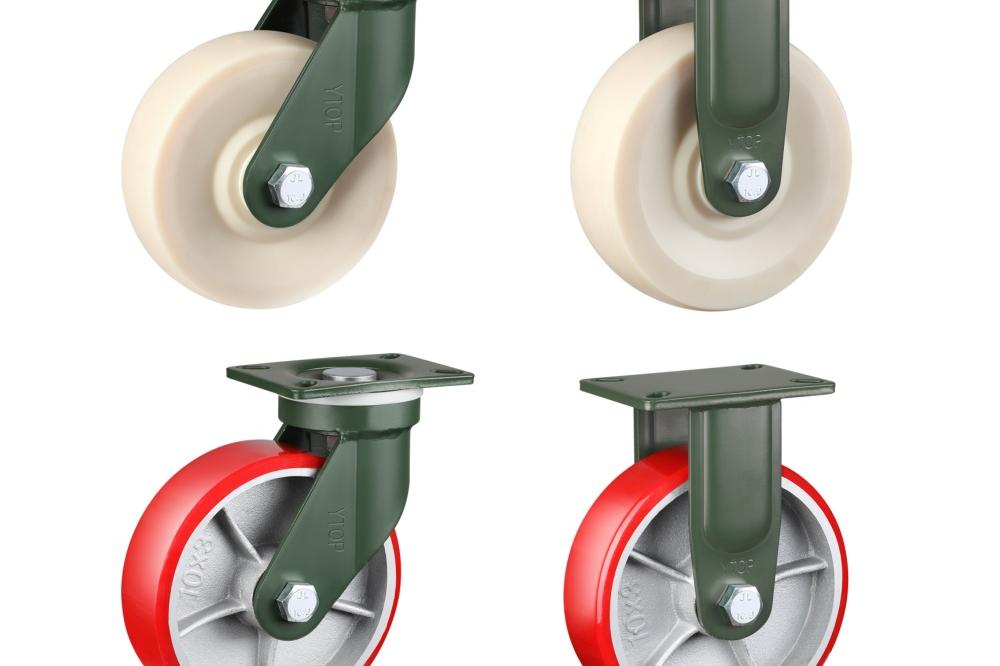
Banquet Tables, Folding Beds and Bell Carts
Three pieces of hospitality equipment have specific caster requirements that are often overlooked.
Banquet tables on casters are tall and top-heavy once stacked with chairs or linen, so stability depends on wheelbase rather than on capacity. Brakes on all four casters are essential, because a stacked table that rolls in a service corridor is a genuine hazard.
Folding beds and rollaway cots need casters that are quiet and that do not mark, and they need a brake that holds when the bed is occupied, which a swivel-only lock does not provide.
Bell and luggage carts take impact at kerbs and lift doors, so the bracket matters more than the wheel. A formed bracket with a thicker wall survives a cart that is pushed rather than lifted over a threshold.
Brakes and Slopes
Hotels have slopes: lift lobbies, ramps to service doors, and corridors with a fall toward drainage.
A loaded housekeeping cart on a lift lobby slope will move on its own, and the brake has to act on the wheel rather than only on the swivel. Where a cart is parked under a linen load for hours, the brake also protects the tread from taking a permanent flat spot.
Loads, Lifespan and Replacement Planning
Hospitality casters do not usually fail from overload; they fail from cumulative handling and from being ignored.
A housekeeping cart carries maybe 40 kg of linen, but it is pushed several hundred times a shift, over carpet, through doors and into lifts. Over a year that is more cycles than an industrial cart doing ten heavy trips a day, and the swivel raceway is what accumulates the wear.
That is the reason to plan replacement rather than wait for failure. In a hotel, a caster that fails during a morning shift is a room that is not cleaned on time, and the cost of that is not comparable to the cost of a wheel. Replacing the fleet on a fixed cycle — before the season, before the audit, before the busy period — is cheaper than reacting.
A rough number helps: a guest-area cart on carpet typically needs new casters within two to three years of daily use, a kitchen trolley in a wet area in half that. Confirm the actual interval from the fleet’s own history rather than from a general figure.
Maintenance Without a Maintenance Team
Hospitality casters are rarely serviced. The specification has to assume that.
That means a sealed raceway rather than a grease nipple, because nobody will grease it. It means a tread compound that does not harden in a few years of disuse. And it means a caster that can be replaced in minutes by a housekeeping supervisor with a spanner, rather than by an engineer.
A simple monthly check works in this environment: lift the cart, turn each fork by hand, and listen. A caster that is stiff, noisy or has vertical play is replaced. That one habit catches most failures before a guest notices them.
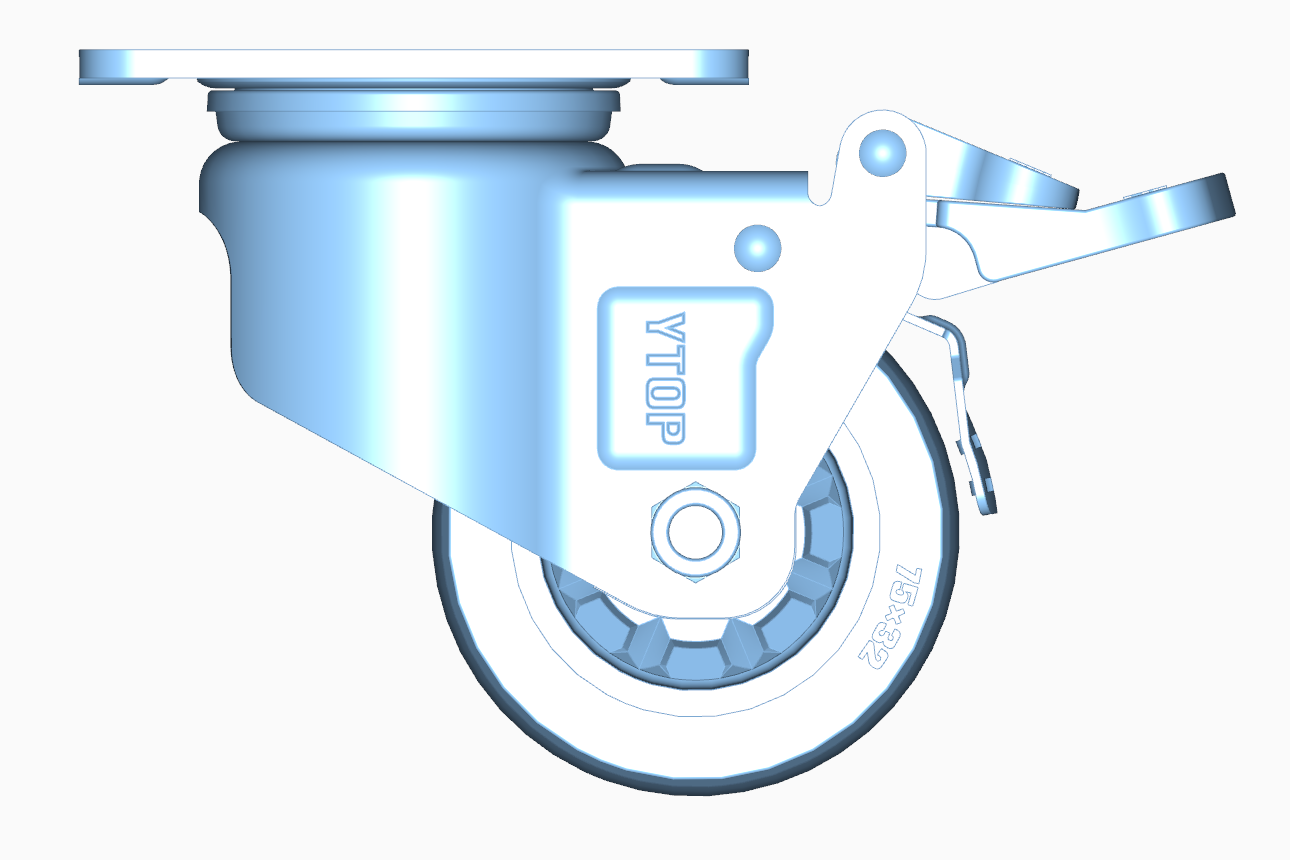
Specification Checklist
Six questions settle a hospitality caster order.
Which floors does the cart cross most often — carpet, tile, marble, timber, or a mix?
Does it enter guest areas, where noise and marking matter?
Does it enter the kitchen or dishwash area, where floors are wet and greasy?
Is the cart parked under load, which means brakes and flat-spot risk?
Does the route include lift thresholds or kerbs?
Who will maintain it, and how often?
Answer those and the usual outcome is two specifications: a larger non-marking soft wheel for guest-area carts, and a sealed wet-area caster with grip for the kitchen. The common error is buying the cheapest small black rubber caster for everything, which produces rumbling carts on carpet, scuffs on marble, and a replacement cycle that nobody plans for.
Related Reading
Two guides that support the choices above:
- How to Choose Silent Casters — tread, raceway and frame as the three sources of caster noise.
- Single Brake vs Dual Brake Casters — which brake actually holds a cart on a slope.
Explore our heavy-duty casters (150-610kg) and super heavy-duty casters (700-1600kg), or contact our engineering team with the floor mix, the load and the noise requirement.
Post time: Nov-20-2026